Here is some good news for new cat owners: most kittens arrive with the instinct already installed. From about three weeks of age, cats naturally seek out a soft, granular surface to eliminate in and then cover it up. Your job is not to teach the instinct — it is to build the setup that lets the instinct succeed, then protect the habit while it sets. The whole process usually takes about a week when the routine is consistent, and the same step-by-step plan works for re-training an adult cat after a move.
Start With a Setup Cats Actually Want
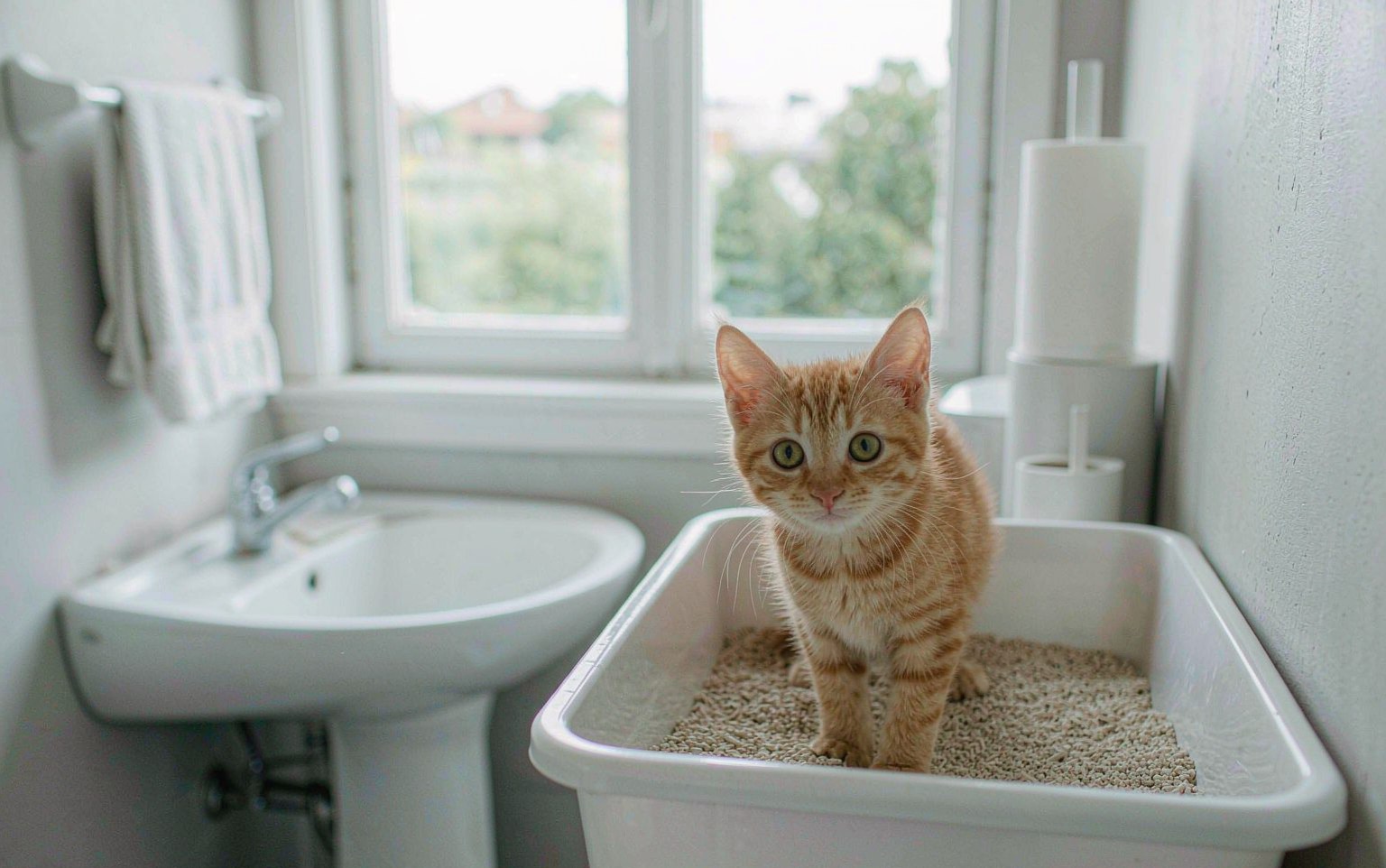
Before any training session, get the hardware right. Choose an uncovered box with low sides that a kitten can climb into easily, and plan on the classic ratio: one box per cat, plus one spare. Fill it with two to three inches of unscented, fine-grained litter — deep litter feels unstable to small paws, and strong fragrance is a common reason cats refuse a box. For kittens under four months, skip clumping clay, because kittens that taste-test their litter can develop blockages if the litter swells in the stomach; paper or pellet litter is the safe starting choice. Location does the rest of the work: quiet, easy to reach, and never next to food or water bowls.
| Setup item | What works | Common mistake |
|---|---|---|
| Box count | One per cat, plus one | One box for two cats |
| Litter depth | 2 to 3 inches, unscented | Deep, perfumed litter |
| Box style | Uncovered, low entry | High-sided lidded box |
| Location | Quiet, always open | Next to the food bowl |
The Routine That Builds the Habit
On arrival day, place your kitten in the box and let her sniff around. Then use timing to your advantage: kittens almost always need to eliminate shortly after eating, right after waking, and after a play session. Carry her to the box at those moments, and once she is in, gently take a front paw and make a digging motion in the litter — many kittens pick up the idea from that single demonstration. Keep her confined to one easy-to-clean room for the first week so every success happens in the right place. When she uses the box, mark the moment with calm praise; loud celebrations can startle a young kitten and backfire.
- Place the kitten in the box after every meal, nap, and play session.
- Demonstrate a digging motion with her front paw once or twice.
- Reward quiet success with soft praise within a few seconds.
- Scoop at least once daily so the box never becomes the problem.
- After seven consistent days, expand her territory room by room.
Fixing Slips Without Undoing Progress
Accidents in week one are normal, and how you respond decides whether they repeat. Never punish or rub a nose in it — cats do not connect scolding to a past act, they connect it to you, and the result is a cat that hides to eliminate instead of one that uses the box. Clean accidents with an enzymatic cleaner so no odor trace marks the spot as acceptable. Then troubleshoot the setup itself: an accident right beside the box usually means the sides are too high or the box is too dirty; a sudden refusal after a litter change means the new texture is the problem. An adult cat re-learning after a house move follows the exact same routine — one room, one box, timing placed visits, seven days of consistency.
When the Setup Is Right but Habits Slip
If a correctly set up box keeps being avoided for more than two weeks, or you notice straining, repeated trips with little produced, or crying in the box, stop treating it as a training problem and call your vet. Urinary and digestive issues are a well-known cause of box avoidance, and no amount of training fixes a physical problem. For everything else, patience plus routine wins: most kittens are reliably trained within a week, adult cats within two, and the habit — once installed in a clean, quiet, well-placed litter box — tends to hold for life.