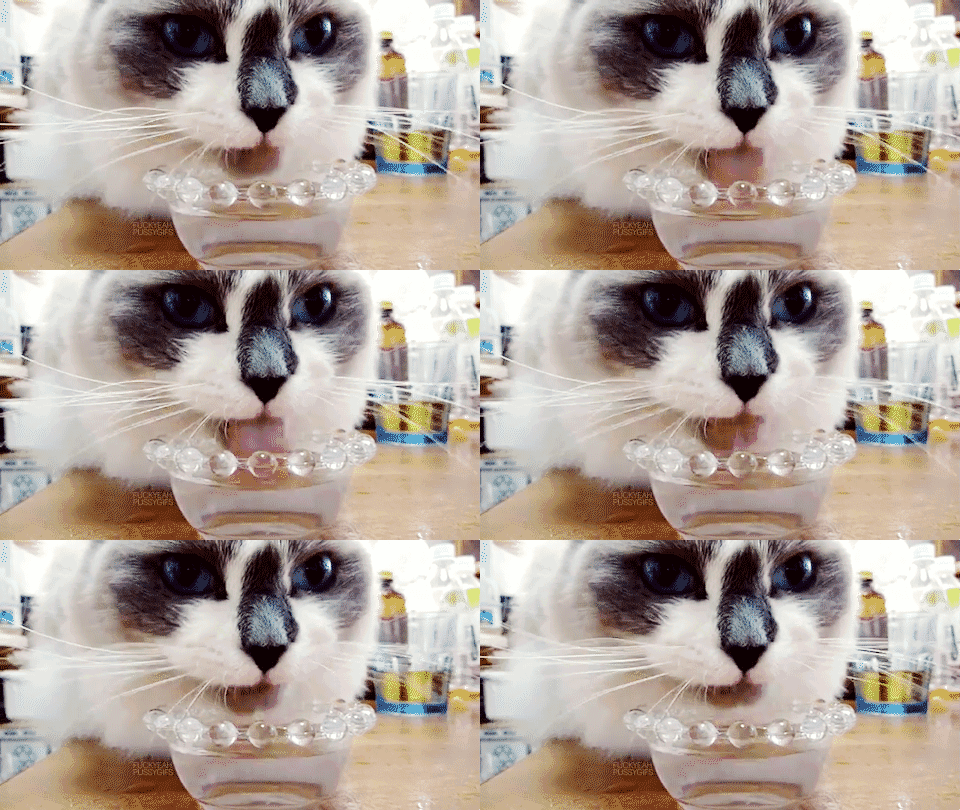
Few images are as familiar as a cat lapping from a saucer of milk. The picture survived because it looked harmless, not because it was good advice. For most adult cats, milk is a sugary, fatty drink they cannot fully digest — and it is not a treat they need.
Why Adult Cats Struggle With Milk
Kittens produce lactase, the enzyme that breaks down lactose, because their mother’s milk is their only food. Production of that enzyme normally falls away after weaning, so by adulthood many cats have little ability to digest milk sugar. When undigested lactose reaches the lower gut, it draws in water and ferments, which is where the trouble comes from.
Signs usually appear somewhere between a few hours and half a day after the milk: loose or watery stool, gas, a rumbling belly, sometimes vomiting. Milk is not toxic to cats — a single sneaky lick from a cereal bowl is unlikely to do harm — but a saucer offered as a daily treat is a different matter, and repeated upset is harsh on a small animal.
Which Milks Do What
People often ask whether another type of milk is safer. Here is the practical picture.
| Drink | For an adult cat | Why |
|---|---|---|
| Cow’s milk (whole, semi-skimmed, skimmed) | Not recommended | High lactose, plus calories with no nutritional need |
| Lactose-free or cat-formulated “cat milk” | Occasional teaspoon at most | Gentler on the gut, still a calorie top-up |
| Goat’s milk | Tiny amounts only | Less lactose than cow’s milk, but not lactose-free |
| Almond or soy drinks | No | Added sugars and flavourings, poorly suited to a meat eater |
| Kitten milk replacer | Kittens only | Formulated for orphaned kittens, not a treat for adults |
| Fresh water | Yes, always | The only drink an adult cat actually needs |
The Calories Nobody Counts
Milk is not a free gesture. A cup of skimmed milk carries roughly 80 calories, and an average adult cat needs only about 200 to 250 calories a day, so that single cup could be close to a third of the daily budget. Whole milk and cream are richer still. Since treats are generally kept under about 10 percent of daily calories, milk has very little room in that allowance.
The other problem is nutritional: milk adds energy without adding anything a complete cat food has not already supplied. It is filler that competes with the food doing the real work.
Kittens Are a Separate Case
Young kittens do rely on milk, and their enzyme levels are still high enough to handle it far better than an adult. That does not make cow’s milk suitable. It is too low in the fat and protein a growing kitten needs and can still trigger diarrhoea, which is dangerous in something that small. A kitten without a mother needs a proper kitten milk replacer, with feeding amounts and frequency set by a veterinarian — never cow’s milk, human baby formula or a plant drink.
What to Offer Instead
If the goal is a small moment of attention, the alternatives are simpler and safer than dairy.
- Water, in more places. A wide shallow bowl, refreshed daily, away from the food and the litter box, does more for a cat than any milk product.
- A spoon of wet food as the day’s treat rather than kitty milk — same excitement, food the cat is already built for.
- A few pieces of dry food saved from the daily ration as rewards, so total calories stay flat.
- A lick mat with a small smear of plain cooked pumpkin or plain wet food, which stretches the treat over minutes instead of seconds.
- Play before the treat. A short wand session then a small food reward copies the hunt-eat-sleep rhythm and reduces begging at the fridge.
If your cat already had some. Do not panic over one lap of milk. Offer water, watch the litter box for a day, and skip dairy from then on. Get veterinary help if diarrhoea or vomiting is severe, continues past a day, or comes with lethargy — especially in a kitten or a senior cat, where fluid loss adds up quickly.
The saucer of milk belongs with the image of the farm cat: it happened because milk was available, not because it was right. Water first, food that is complete and balanced, and treats that fit inside the calorie budget — that is the version of the tradition worth keeping. General husbandry information only, not veterinary advice.