Bringing a new dog home while a cat rules the roost is one of the most common multi-pet challenges, and the first few interactions matter more than most owners realize. RSPCA guidance is clear that gradual, owner-managed introductions are far more likely to end in peaceful coexistence than simply letting the animals work it out. The good news: the plan is simple, even if the patience it demands is not.
Before Day One: Set Up Separate Territories
Preparation starts before the dog walks through the door. Your cat needs a genuine dog-free zone: a room with its litter box, food, water, bed, and hiding spots, plus elevated perches elsewhere in the house. Cats feel safest when they can look down on a situation, so cat trees and shelves near the introduction area are valuable. On the dog side, have a leash, harness, baby gates, and high-value treats ready, and refresh basic cues like sit and stay so you can reliably interrupt excitement later.
Week One: Scent Before Sight
Cats and dogs read the world through their noses, so let them meet each other’s smell first. Keep the animals in physically separated parts of the house, ideally with a buffer space like a corridor between them. Then begin the scent swap:
- Rub a clean cloth gently on your dog and place it in the cat’s area, and do the same in reverse. Keep scented cloths away from food bowls, water, and litter trays at first so they do not feel like intrusions.
- Repeat over several days until both animals investigate the scent calmly or simply ignore it.
- Next, secure the cat comfortably in its retreat and let the dog explore the whole house, then swap. Each animal learns the other’s smell is simply part of the home now.
Never force an interaction and never punish either animal for growling, hissing, or barking; punishment only teaches them that the other pet predicts bad things.
Week Two and Beyond: Visual Contact Through a Barrier
Once both animals are relaxed about the scent, arrange visual contact through something see-through and solid: a baby gate, a screen door, or a cracked door. Pick a moment when your dog is at its calmest, and a long walk beforehand helps. Keep the dog on a loose leash with a harness as a safety net, but if you are actually using the leash to hold the dog back from lunging, the session is too advanced, so end it and try again later with a puzzle feeder.
Give both animals something pleasant to do during these sessions, such as eating or playing on their own side of the barrier, and keep the first sessions short. Over repeated calm sessions, gradually let them be closer to the barrier. The cat must always have an escape route and should never be confined in a carrier or crate while the dog approaches; that is threatening for the confined animal and can backfire badly.
Face-to-Face Meetings
After several relaxed barrier sessions, allow brief face-to-face contact with the dog on a loose leash and the cat free to leave whenever it wants. The goal is not nose-to-nose friendship on day one.
- Keep sessions short and always end on a good note, before either animal becomes overwhelmed.
- Reward the dog for looking at the cat and then looking back at you; calm behavior around the cat should always pay off.
- Feed them separately and keep litter boxes in dog-inaccessible spots permanently, not just during introductions.
- If the dog freezes, stares hard, stalks, or lunges, calmly end the session and return to barrier work.
Reading Body Language
| Pet | Good signs | Slow down if you see |
|---|---|---|
| Dog | Loose body, soft eyes, able to look away, responds to cues | Stiff posture, intense staring, whining, pulling, lunging |
| Cat | Normal grooming, relaxed ears, stays in the room, curious approach | Crouching, hissing, swatting, pinned ears, hiding for days |
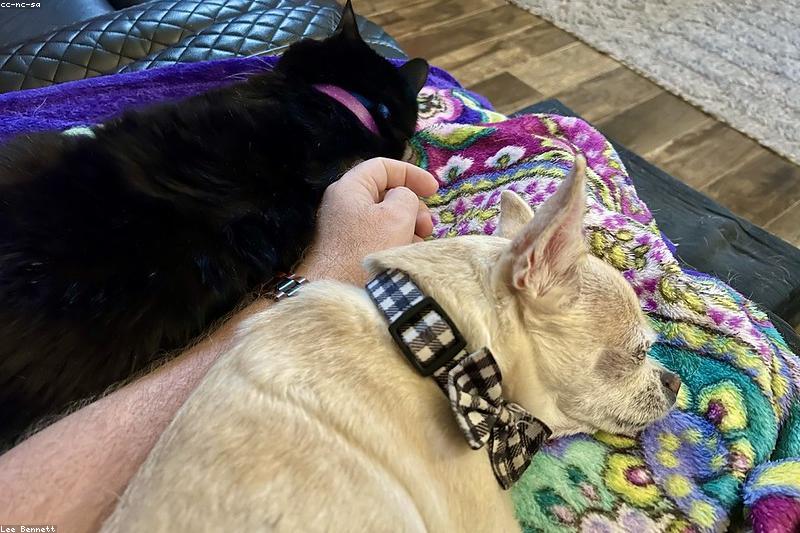
Success does not have to mean cuddling on the sofa. In many homes, the realistic and perfectly acceptable outcome is two pets who share space calmly, pass each other without tension, and rest in the same room. Some pairs settle in days, others need weeks or months, and a dog with a strong chase history may need help from your vet or a qualified behaviorist. Go at the pace of the animals in front of you, and the household you build will be a stable one.