If you have ever watched a ferret explode out of a hammock at six in the morning, tumbling over its own feet and dooking down the hallway, you already know ferrets do not live on a nine-to-five schedule. New owners often panic the first time their ferret sleeps through an entire afternoon, then sprints laps around the living room at sunrise. Both behaviors are completely normal, and understanding the rhythm behind them makes daily care far easier.
Why Ferrets Sleep 14 to 18 Hours a Day
Ferrets are among the champion sleepers of the pet world. Healthy adults typically snooze 14 to 18 hours per day, and kits and seniors can sleep even more. This is not laziness; it is biology. Ferrets evolved as burrow-dwelling hunters with explosive bursts of intense activity followed by long recovery periods. Their metabolism runs hot, their hunts were short and energetic, and their bodies are built to recharge in dark, enclosed dens between those bursts.
In captivity that translates to a simple pattern: long, deep sleeps in a cozy hide, then one or two wide-awake windows where they eat, play, explore, and get into everything within reach.
The Crepuscular Rhythm: Dawn and Dusk Zoomies
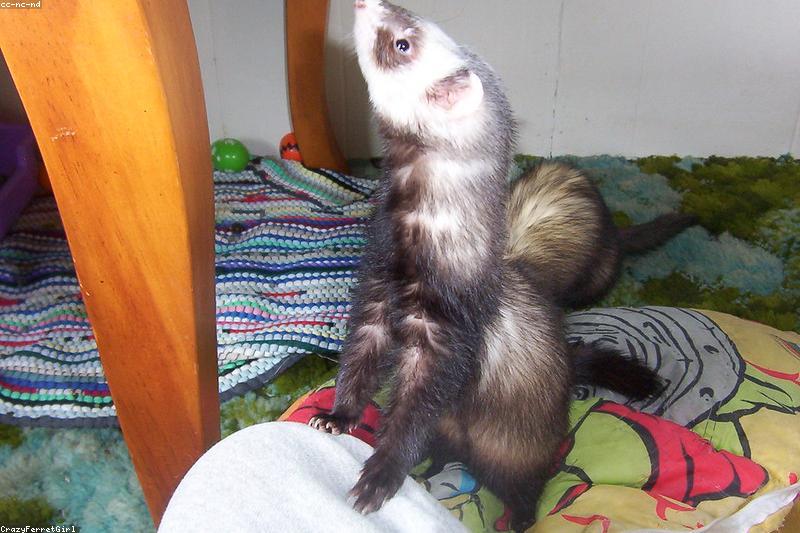
Technically, ferrets are crepuscular rather than truly nocturnal, meaning they are most active at dawn and dusk. That is when the famous zoomies happen: the arched-back war dance, sideways hops, dooking sounds, and full-speed laps that end in a crash into the sofa. Many ferrets also adapt somewhat to their owner’s schedule, but the morning and evening energy peaks usually stay.
The practical takeaway is to plan interaction around those peaks. Twenty to thirty minutes of intense play before work and another session in the evening will satisfy most ferrets far better than spreading attention thinly across the day when they would rather be asleep anyway.
Building a Sleep-Friendly Home
Because ferrets spend most of their lives sleeping, the sleeping area deserves more attention than almost anything else in the setup:
- Dark, enclosed hides. Hammocks, tunnel beds, and enclosed dens let them burrow in the way instinct demands.
- Cool room temperature. Ferrets tolerate cool rooms well but overheat quickly; aim for roughly 15 to 21 degrees Celsius and never above about 27 degrees.
- Stable darkness at night. A room with streetlight through thin curtains is fine, but constant bright light disrupts their rhythm.
- Quiet but not silent. Ferrets sleep through ordinary household noise; total silence is unnecessary.
- Multiple sleep spots. A spare hammock or second hide lets them choose based on temperature.
What Healthy Sleep Looks Like
First-time owners are often alarmed by how deeply ferrets sleep. The table below separates normal quirks from real warning signs:
| Observation | Normal or not | What to do |
|---|---|---|
| Limp “dead sleep”, hard to wake | Normal deep sleep | Nothing; some ferrets need gentle handling to wake |
| Twitching paws and whiskers while asleep | Normal dreaming (REM) | Nothing |
| Sleeps most of the day, wild at dawn and dusk | Normal crepuscular rhythm | Plan play sessions around peak times |
| More sleep than usual plus loss of appetite | Possible illness | Vet visit, especially with weight loss |
| Lethargic even during awake windows | Possible heat stress or illness | Check room temperature, then call a vet |
One more seasonal note: ferrets in naturally lit homes may gain a little weight and sleep slightly more in winter, mirroring light-driven hormonal cycles. A gradual seasonal drift is normal; sudden changes are not.
In the end, a ferret that sleeps like the dead for most of the day and detonates into a dooking sprint at dawn is telling you it is healthy and content. Build the home around that clock instead of against it, and both of you will rest better for it.