A budgie that screams all day, snaps at fingers, and dozes fluffed up on its perch is often diagnosed by owners as naughty or sick, when the real problem is simpler: the bird is chronically short of sleep. In the wild, budgerigars rise with the sun and roost with the sunset, getting long uninterrupted darkness every night. Living rooms are far less predictable, and that gap is behind many common behavior complaints.
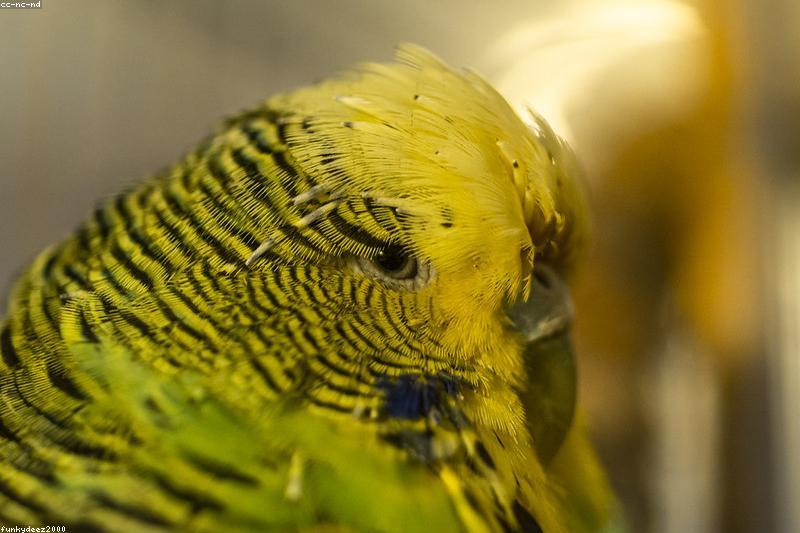
How Much Sleep a Budgie Actually Needs
Most aviculturists recommend 10 to 12 hours of genuine darkness per night for budgies. Genuine is the key word. A bird perched in a covered cage in a room where the television glows, phones buzz, and streetlights leak through curtains is not getting 12 hours of sleep; it is getting 12 hours of interrupted dozing.
Budgies also take short naps during the day, often one-footed and slightly fluffed, which is normal and healthy. Daytime naps supplement nighttime sleep; they do not replace it. Chronic short nights show up as irritability, reduced interest in foraging and toys, feather-destructive habits in susceptible birds, and lowered immune function.
Light, Noise, and the Modern Living Room
The biggest modern sleep thief is ambient light. Budgies’ eyes are far more sensitive than ours, and a room that looks dim to you can look like daylight to a bird. Streetlights, LED indicator dots on electronics, and even router lights can keep a budgie half-awake. The second thief is late-evening activity: budgies need a wind-down period, so a party or late movie night next to the cage resets their internal clock.
The simplest solution is a consistent bedtime. Pick a time, dim the room, cover the cage, and stick to it. Budgies thrive on predictability, and within a week most birds start settling on their own at the usual hour.
Covering the Cage the Right Way
Cage covering is simple, but a few details separate a good dark room from a stuffy box:
- Use a breathable cover. A lightweight dark cotton or purpose-made cage cover, never plastic or airtight fabric.
- Leave a small gap at one side. Air must keep moving, especially in warm weather.
- Block streetlight, not all air. If the room is already truly dark and quiet at night, a cover is optional; darkness is the goal, not the cloth.
- Keep the bedtime consistent. Same time every evening, including weekends.
- Never use the cover as punishment. The sleep space must stay a safe place, not a cage-within-a-cage for time-outs.
Sleep Problems and What They Mean
| Symptom | Likely cause | Fix |
|---|---|---|
| Midnight thrashing and wing-flapping (night fright) | Sudden noise or light in a fully dark room | Very dim nightlight near the cage; remove the trigger |
| Sleeping fluffed and sluggish all day | Chronic sleep debt, or illness | Improve nights first; see a vet if it persists |
| Irritability and biting in the evening | Bedtime routine too late or inconsistent | Move bedtime earlier and keep it fixed |
| Restless, repositioning all night | Light leak, noise, or too warm a room | Fix the environment, not the bird |
Note the night-fright row carefully: unlike some species, budgies in pitch-black rooms can panic at sudden sounds. A faint nightlight, dim enough that you can barely see the perches, often reduces these episodes dramatically while still counting as “night”.
Small Changes, Noticeable Results
Owners who fix budgie sleep usually report the same sequence: within a few days the bird is calmer, within two weeks it is more willing to try new foods and toys, and morning calls become cheerful rather than frantic. Twelve dark hours is not a luxury; it is the cheapest welfare upgrade you can give a pet bird. If you change only one thing about your budgie’s care this month, make it the bedtime.