A hamster’s four incisors never stop growing — roughly one to two millimetres every week. In the wild that is no problem, because gnawing on roots, husks and twigs files them down as fast as they appear. In a cage, that balance is entirely up to you. When wear falls behind growth, the teeth curve inward, press into the lips and gums, and eating becomes painful. Dental disease is one of the most common — and most preventable — health problems in pet hamsters.
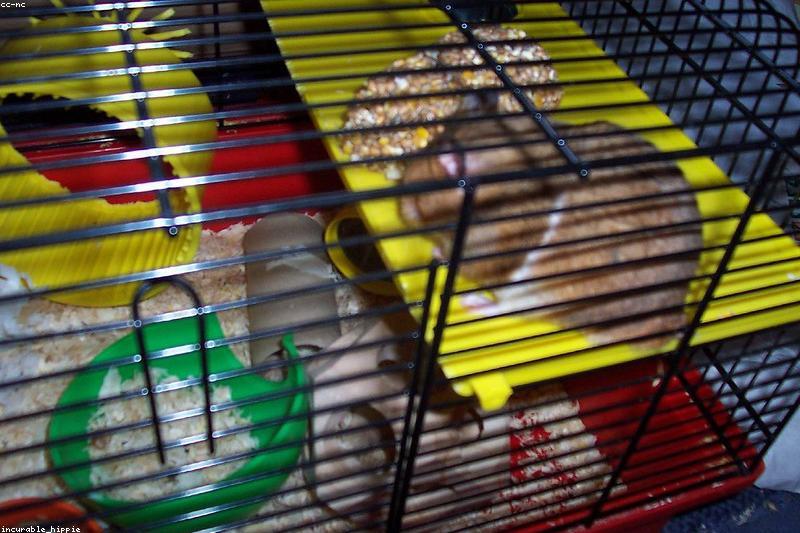
Why Hamster Teeth Keep Growing
Hamsters are rodents, and their incisors are open-rooted, meaning the tooth keeps erupting for life. A healthy upper and lower pair meets at a slight angle and grinds against each other with every chew, so length stays stable. Once that meeting point is lost, both teeth grow out of control. The cheek teeth sit further back and can develop sharp points or trap food, even when the front teeth look perfectly normal.
Warning Signs Your Hamster’s Teeth Are Overgrown
Hamsters hide discomfort, so the earliest clues are small changes in how they eat:
- Drooling, or a wet and matted chin and chest
- Dropping food, or eating much more slowly than usual
- Refusing hard items such as seed sticks, hard pellets or chew blocks while still eating soft food
- Pawing at the mouth or rubbing the face
- Weight loss despite an apparently good appetite
- Incisors that are visibly long, curved, crossed or uneven
- Swelling on the jaw, cheek or under the eye, or foul breath
- Smaller droppings, a hunched posture, less grooming
Any of these deserves a vet visit within a day or two. Because hamsters carry very little energy reserve, a short spell of not eating can slide into serious dehydration and weight loss surprisingly fast.
What Breaks the Normal Wear Cycle
| Cause | What happens |
|---|---|
| Malocclusion | Inherited or injury-related misalignment; the teeth miss each other and stop self-trimming |
| Soft diet | Mashes and soft pellets give almost no grinding action |
| Fractured tooth | A fall or bar chewing snaps an incisor; the uneven pair then grows crooked |
| Age | Older hamsters chew less and wear teeth down more slowly |
| Cheek pouch or mouth injury | Pain changes chewing patterns and makes alignment worse |
Do Not Trim Teeth at Home
Clipping incisors with nail clippers is genuinely dangerous. Rodent incisors split vertically, and a cracked tooth can expose the pulp, become infected and cause a permanent problem. A small-animal vet trims with a dental burr, usually under gas anaesthesia, and takes the chance to inspect the back teeth and soft tissues. The procedure itself is quick, and most hamsters are back to normal eating within a day or two on softened food.
Preventing Overgrown Teeth, Day by Day
- Offer safe chew items daily: untreated apple or willow branches, hard wooden blocks, unflavoured hard biscuits or a mineral gnawing block.
- Feed a quality pelleted mix instead of a seed-only diet, and scatter part of the food so your hamster has to work for it.
- Keep sugary treats and soft human food as rare extras — they add calories but almost no tooth wear.
- Confirm the water bottle flows freely; a hamster whose mouth hurts will stop drinking before it stops eating.
- Weigh your hamster monthly. A slow, steady drop is often the first detectable sign of dental pain.
- Manage cage chewing: boredom bar-biting can chip incisors, so fit a correctly sized wheel and add enrichment.
Continuous growth is normal; unchecked growth is not. A few minutes a week checking the mouth, the incisors and the scales, plus a steady supply of real chew items, keeps a hamster’s bite doing exactly what it evolved to do.