Ask ten bird owners whether a budgie or a cockatiel is the better first bird and you will get ten confident answers and no agreement. That is a useful signal: neither species is objectively better. They are simply different commitments, and the owners who end up unhappy are almost always the ones who chose on price or looks rather than on noise tolerance, handling expectations, and lifespan. Here is the honest comparison.
Size, Cage Space and Bar Spacing
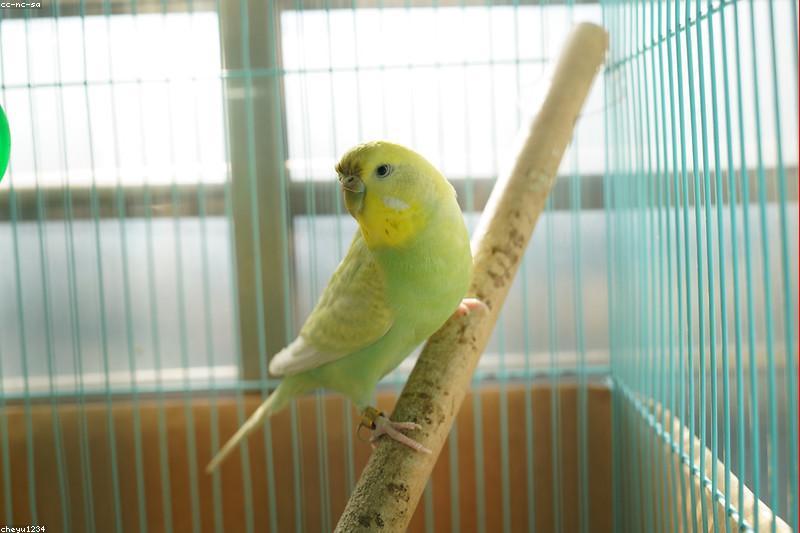
A budgie is roughly the size of your palm; a cockatiel is about three times heavier, and most of that extra length sits in a long tail. That changes what they need from housing. Budgies fly horizontally, so a wide cage beats a tall one — a narrow tower is nearly useless to them. Cockatiels climb and need enough height to raise their crest without brushing the roof, plus enough depth that that tail does not fray against the bars. Bar spacing is a safety issue rather than a preference: budgies need 0.5 inch or narrower, while cockatiels take 0.5–0.625 inch. Putting a budgie in a cockatiel cage risks a trapped or escaped head. Measure the cage with perches, food bowls and foraging toys already inside — a crowded cage has far less usable space than an empty one.
Noise: The Difference Most People Regret Ignoring
Budgies chatter almost constantly, but at roughly conversation volume. It is background noise you can live with; it will not reach the neighbours. Cockatiels are quieter most of the time and go long stretches in near silence, which makes the contrast deceptive. Their contact call — a sharp, repeated shriek used to locate flock members — is considerably louder, and you are the flock member. Walk out of the room and a bonded cockatiel may call for you at a volume that cuts through a quiet apartment. If you rent a flat with thin walls, weigh this seriously before choosing.
Talking, Whistling and Affection
The assumption that a bigger bird talks better is wrong here. Male budgies are among the most capable mimics relative to body size of any commonly kept bird, regularly building dozens or even hundreds of words. Cockatiels are far better whistlers — many learn full melodies — but are mediocre at spoken words. Handling differs just as much. Cockatiels have a reputation as the cuddlier bird: shoulder-sitting, head scratches and a strong one-person bond come naturally, and many hand-raised birds step onto a finger on day one. Budgies are equally social but express it through activity rather than physical affection, and they often do best kept in a pair. Cockatiels also have an advantage for mood-reading: the movable crest flattens when a bird is frightened or aggressive and rises when it is curious, giving you an obvious visual cue that budgies lack.
Comparing the Two Side by Side
| Feature | Budgie | Cockatiel |
|---|---|---|
| Adult size | About 7 inches, 30–40 g | 12–13 inches, 80–120 g |
| Lifespan | Roughly 7–15 years | Roughly 15–25 years |
| Minimum cage | Wide rather than tall, 0.5 inch bar spacing | Larger footprint and height, 0.5–0.625 inch spacing |
| Noise | Constant, gentle chatter | Quiet baseline, loud contact calls |
| Talking vs whistling | Excellent mimic (males) | Best at whistling tunes |
| Temperament | Independent, busy, needs a mate or lots of attention | Affectionate, bonds to one person, easier to handle |
| Dust | Low | High — powder-down species |
| Best for | Smaller space or budget, shorter commitment, want a talker | Someone wanting a cuddly companion for decades |
The Commitment Nobody Warns You About
A budgie’s lifespan is already a real commitment at up to fifteen years with good care. A cockatiel’s is closer to that of a dog, and that single number should drive the decision more than anything else on this page. Both species are flock animals: a lone bird needs daily interaction or a companion of its own kind, or it will develop behavioural problems. Both need out-of-cage flight time, a varied diet built on pellets and vegetables with a cuttlebone for calcium, and regular rotation of enrichment. And both must be kept away from the kitchen — fumes from overheated non-stick cookware are frequently fatal to birds.
The bottom line. Choose a budgie if you have less space or a tighter budget, want the better talker, and are ready for a commitment of roughly a decade. Choose a cockatiel if you want an openly affectionate bird you can handle from the start, can accept louder contact calls and higher dust, and are prepared for twenty years. This is general guidance rather than veterinary advice — for any health question, see an avian veterinarian.