A hamster cage is only as good as the space it sits in. You can buy the biggest enclosure on the market, fill it with 25 cm of paper bedding and a correctly sized wheel, and still end up with a stressed, sleep-deprived hamster if the cage is parked next to a television or under a window that bakes all afternoon. Location is the cheapest upgrade available, and it costs nothing but a walk around your home.
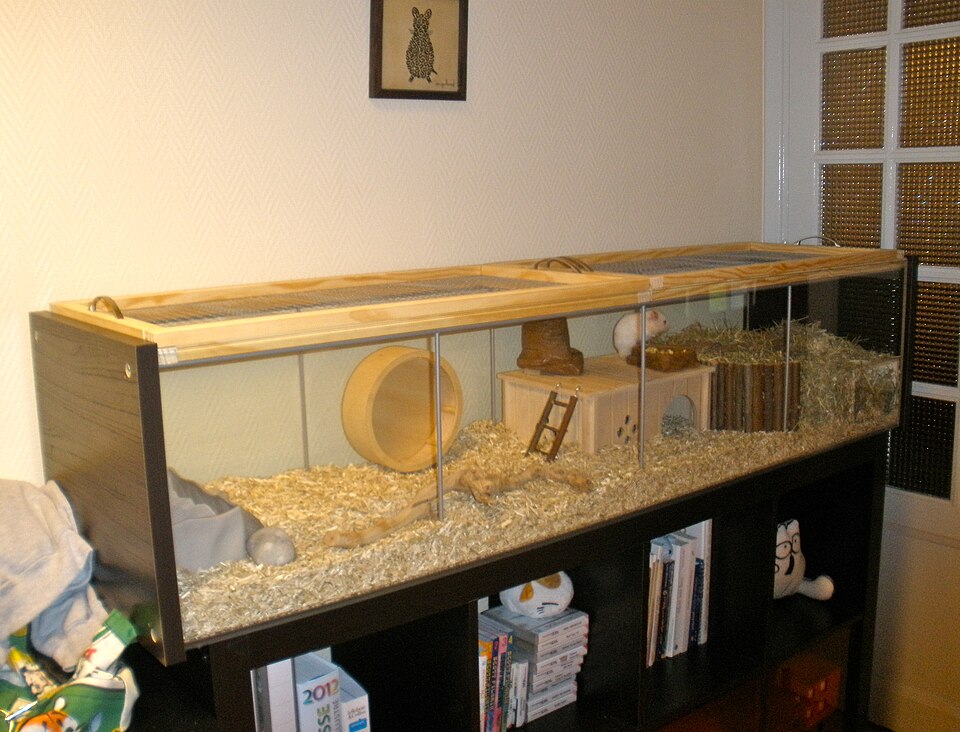
Placement Is Welfare, Not Decoration
Hamsters are prey animals that evolved underground. In the wild they spend most of their lives in burrow systems where temperature, light and sound stay remarkably stable. Your cage is the substitute burrow, and the room around it decides how stable that environment really is.
Two sensitivities drive most placement mistakes. First, hamsters hear into the ultrasonic range, so devices that seem silent to us – televisions on standby, monitors, vacuum cleaners, running taps – can be genuinely stressful for them. Second, cold is dangerous: a hamster that gets too cold can slide into torpor, a hibernation-like state that pet hamsters usually cannot recover from because they lack the fat reserves to survive it. Welfare bodies such as the RSPCA list a quiet, dry, draught-free spot with a predictable light cycle among the basics of hamster housing, not among the nice-to-haves.
The Five Placement Rules
- Quiet: away from speakers, slamming doors and appliances that start without warning.
- Stable temperature: roughly 18-24 °C year-round, never beside a radiator, heater or air-conditioning vent.
- Draught-free: no open windows, doorways or floor-level airflow.
- Predictable light: bright daylight is fine, direct sun on the cage is not, and lights that go off at about the same time each night suit hamsters best.
- Off the floor and secure: a low table or cabinet keeps the cage away from cold floors, cats, dogs and toddlers.
Room by Room: What Actually Works
| Room | Verdict | Why |
|---|---|---|
| Spare room or home office | Excellent | Quiet, low traffic, stable temperature |
| Bedroom | Good | Calm, but expect wheel noise after dark |
| Living room | Workable | Only if the cage is far from the TV and evening foot traffic |
| Kitchen | Poor | Heat, cooking fumes, blenders, a sink that runs at random |
| Bathroom | Poor | Humidity swings and constant disturbance |
| Garage or conservatory | Poor | Wild temperature swings and real overheating risk |
Open-Plan Flats and Small Rooms
If you live in one big room, you do not need a separate hamster room – you need the quietest corner of the one you have. Aim for distance from the stove, oven, dishwasher, sink and any appliance that runs unpredictably. A solid, stable stand beats the floor. A bright corner that never catches direct sun beats a windowsill every time.
When you do move a cage, keep some clean used bedding and the same hides. Hamsters navigate largely by scent, and familiar smells noticeably shorten the settling-in period.
The two-minute test. Stand where the cage sits and listen. If you can hear a fridge, a television, a washing machine cycle or a tap running, your hamster can hear it more sharply. If the spot feels warm or draughty to you, it is worse for a 30-gram rodent. Fix the location before you add another toy.