A cat that starts leaving food, chewing on one side, or crying near the bowl is often accused of fussiness. More often it hurts to eat. Two conditions dominate feline mouth pain: tooth resorption and stomatitis — both painful, both easy to miss, because cats hide oral pain remarkably well. Many owners only discover the problem during a routine dental cleaning, when the vet finds lesions the cat never complained about.
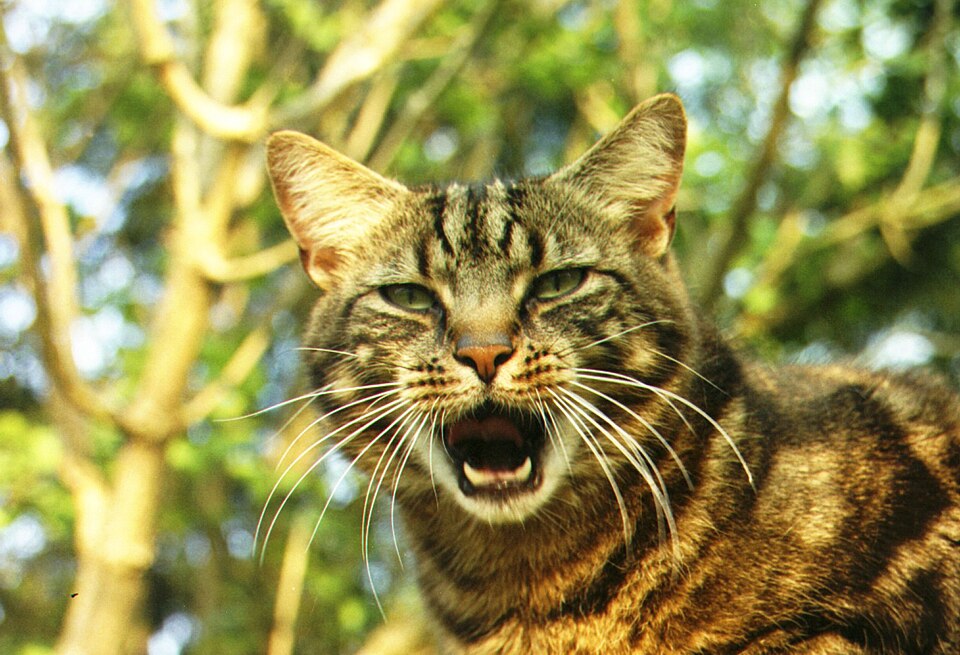
Tooth Resorption: The Vanishing Tooth
Feline odontoclastic resorptive lesions (FORLs) are among the most common dental diseases in cats — estimates run from 20 to 60 percent of cats developing at least one in their lifetime, rising with age. Cells called odontoclasts dissolve the tooth structure, starting at or under the gumline. The result looks like a pink-red spot where gum tissue creeps into a hole in the tooth. As the defect deepens it exposes the nerve; eventually the crown can snap off entirely. The cause is still unknown, and it is not a cavity — cavities are rare in cats.
Stomatitis: The Whole Mouth on Fire
Feline chronic gingivostomatitis is different: a severe, immune-mediated inflammation of the gums, cheeks, and the tissue at the back of the mouth, which turns angry red and ulcerated. Some cases are linked to viruses such as calicivirus, FIV, or FeLV, but in many cats the immune system simply overreacts to plaque. Affected cats drool, sometimes with blood-tinged saliva, flinch at touch, and may become withdrawn or irritable.
The Signs Overlap — That Is the Point
| Sign | Tooth resorption | Stomatitis |
|---|---|---|
| Drooling, sometimes blood-tinged | Yes | Yes |
| Prefers soft food, drops kibble | Yes | Yes |
| Jaw chattering when the area is touched | Classic | Can occur |
| Red, ulcerated back of the mouth | No | Defining sign |
| Pawing at the mouth, weight loss, hiding | Advanced cases | Common |
Diagnosis and Treatment
Neither condition can be properly assessed in an awake cat. Definitive diagnosis requires anesthesia with full-mouth dental X-rays and probing of every tooth — resorptive lesions usually hide below the gumline, and probing an affected tooth often triggers that tell-tale chatter. Treatment differs. A resorbed tooth cannot be saved; extraction of the affected tooth, sometimes crown amputation with root removal assessed by X-ray, is the standard fix and relieves the pain immediately. Stomatitis is managed first with professional cleaning and diligent plaque control; when medical management fails, extracting the teeth behind the canines — or in severe cases all of them — brings lasting relief to a large majority of cats, and toothless cats eat happily.
Prevention is modest for both: daily or near-daily toothbrushing with pet-safe toothpaste, regular professional dental cleanings, and annual exams that include a look in the mouth. Do not start brushing a cat with a painful mouth before it has been evaluated — you will teach it that the toothbrush hurts.
The takeaway. Drooling, finicky eating, and jaw chattering are pain signals, not personality. Dental X-rays under anesthesia find what the naked eye cannot, and for most cats the right extractions bring back the eager eater you thought you had lost. This article is general information, not veterinary advice; a cat that has not eaten in more than a day needs an appointment now rather than a wait-and-see.