The California kingsnake has earned its beginner-snake reputation honestly: it is hardy, feeds reliably, tolerates handling well, and stays a manageable 90 to 120 cm long for a lifespan that can reach twenty years. But its two signature traits — a powerful appetite and a genius for escape — punish careless keepers. Set up the enclosure right from day one and this is one of the most rewarding snakes you can keep.
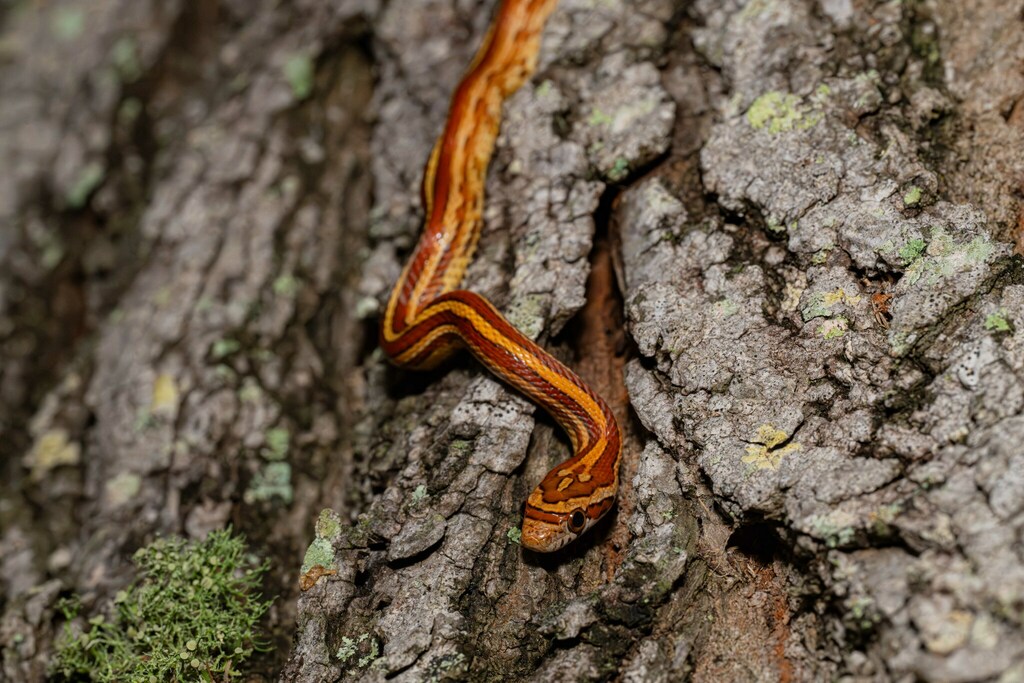
An Escape-Proof Enclosure Comes First
Kingsnakes are methodical escape artists. They will test every gap in a screen lid, every loose clip, every corner seam — and a lost kingsnake in a house can go months without being found. A front-opening enclosure with positive-latch doors beats a top-opening tank, and an adult needs at least 120 x 60 x 45 cm (a 40-gallon breeder as a floor). Inside, use a burrow-friendly substrate such as aspen shavings or coconut fibre (never cedar or pine, which are toxic), give at least two snug hides — one warm, one cool — plus a humid hide for shedding, sturdy branches to climb, and a heavy water bowl big enough to soak in. Clutter is comfort: tunnels, cork bark, and cover give this curious snake places to explore and reduce stress.
The Heat Gradient
Snakes cannot regulate their own temperature, so the enclosure must offer a choice. Aim for a warm end of 29–31°C (85–88°F), a cool end of 22–26°C (72–78°F), and a natural nighttime drop of a few degrees. Put every heat source — overhead or heat mat alike — on a thermostat, and skip heat rocks entirely: unregulated heat is the classic cause of belly burns. Ambient humidity of 40 to 60 percent suits them; raise it with the humid hide during a shed. UVB is not required, but a 12-hour light cycle and a low-output tube are a genuine welfare bonus.
Feeding: Enthusiastic and Reliable
Kingsnakes eat whole rodents and rarely refuse a meal. Offer frozen-thawed prey, warmed thoroughly and roughly as wide as the snake’s thickest point, with tongs rather than your hand. Feed hatchlings every 5 to 7 days and adults every 7 to 14 days, adjusting to keep good body condition. Their feeding response is strong enough that a hand that smells like rodent — or another snake — can get struck at, so wash your hands between animals.
| Life stage | Prey | Frequency |
|---|---|---|
| Hatchling | Pinkie mouse | Every 5–7 days |
| Juvenile | Fuzzy / hopper mouse | Every 5–7 days |
| Adult | Adult mouse or small rat | Every 7–14 days |
One Snake Per Cage, Always
The “king” in kingsnake is literal: they eat other snakes, including venomous ones, and they will happily eat a cage mate. Housing two together is not a bonding experiment; it is a countdown. Keep them strictly solitary, handle gently a couple of times a week once they are feeding well, and skip handling for 48 hours after a meal and while the snake is in blue, half-blind shed. A defensive kingsnake may musk first — a smelly warning that means give me a break. Respect that, and most settle into calm, curious companions within weeks.
Get security, heat, and solitude right, and the hard parts of kingsnake keeping are done. What is left is a tough, beautiful snake that happily eats on schedule and seems genuinely interested in its world — and in you.