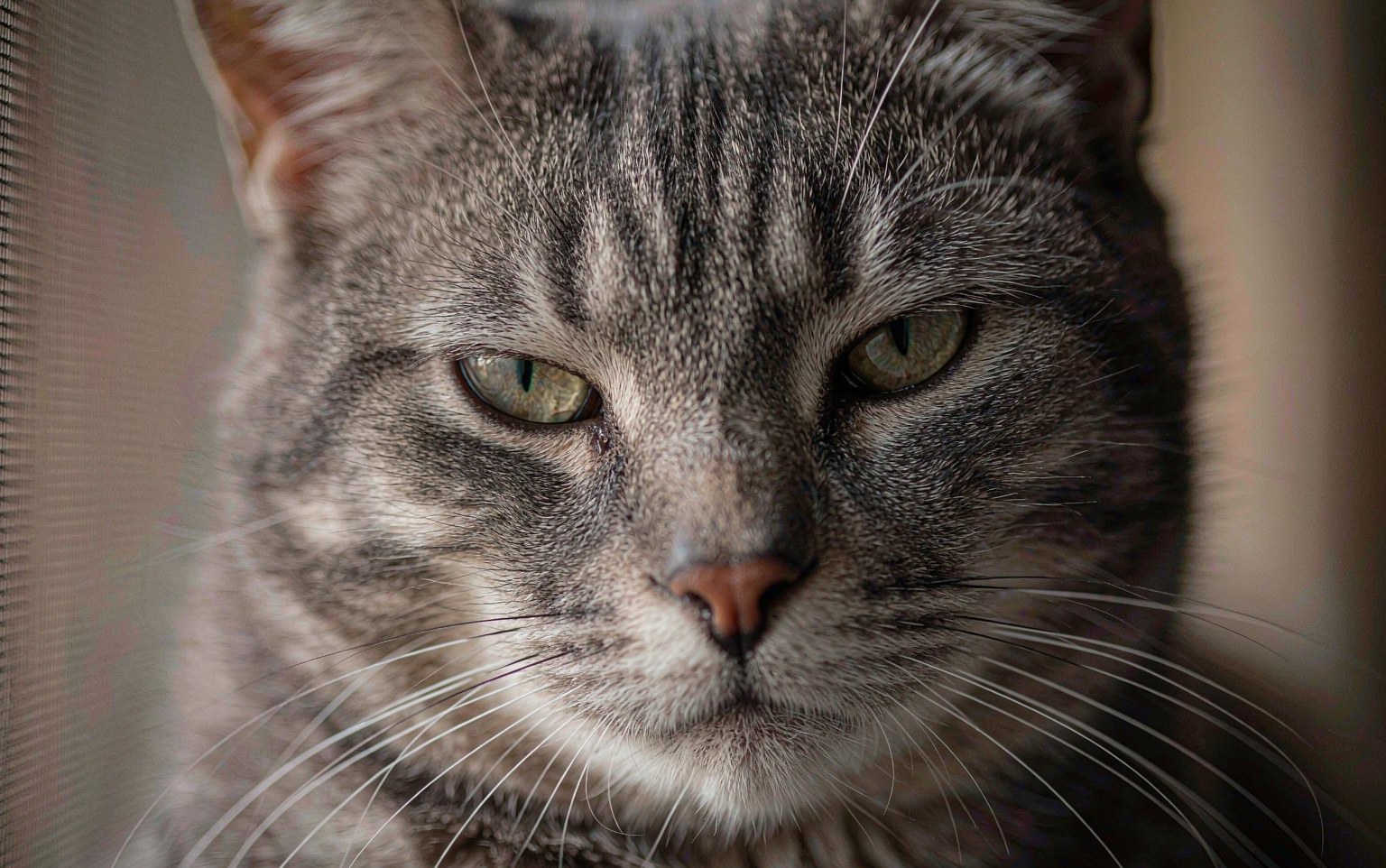
Every cat has a third eyelid. You are simply not supposed to see it. When the nictitating membrane — the pale, translucent tissue that normally hides in the inner corner of the eye — slides out and stays visible, the eye is reporting something.
Sometimes that something is trivial and self-limiting. Sometimes it is the first visible clue to a body-wide illness. Telling the two apart is the whole job.
What the third eyelid does
The membrane protects the surface of the eye, spreads tear film, and produces a meaningful share of the eye’s tears from a gland tucked at its base. In a healthy, alert cat it retracts out of sight and appears only for a moment during blinking, or when a cat is deeply relaxed.
Because it is controlled partly by the sympathetic nervous system, it can also slide across for reasons that have nothing to do with the eye at all. That is why a raised membrane is best read as a general health signal first and an eye problem second.
Common causes, from harmless to serious
| Pattern | Often points to | Urgency |
|---|---|---|
| Both eyes, no pain, cat eating normally | Haws syndrome, often gut-related | Monitor 24–48 hours |
| One eye, drooping lid, small pupil | Horner’s syndrome — a nerve problem | See a vet |
| Both eyes plus weight loss or thirst | Dehydration or systemic illness | See a vet promptly |
| Redness, discharge, squinting | Conjunctivitis, ulcer, foreign body | See a vet |
| Fleshy pink lump in the corner | Prolapsed gland, not the membrane itself | See a vet |
Eye pain is not part of uncomplicated Haws syndrome. If your cat is squinting, rubbing, or producing discharge, treat it as an eye problem rather than a mystery.
When both eyes are affected
Symmetrical protrusion in both eyes, with a cat that is otherwise bright and eating, most often turns out to be Haws syndrome. It is common in young to middle-aged cats and is frequently linked to gastrointestinal upset or intestinal parasites. It is usually painless and typically settles within a few weeks once the underlying trigger is treated.
The reason vets still want to look at these cats is that “probably Haws” is not the same as “definitely Haws”. Dysautonomia, a rare neurological condition, can also raise both membranes, but those cats usually have dilated pupils, difficulty swallowing, constipation, or urinary problems.
What to check at home, and when to call
- Check hydration — tacky gums or skin that does not spring back suggests dehydration.
- Check appetite — a cat that is eating, playing, and using the litter box normally is reassuring.
- Check the weight trend — gradual loss behind a visible membrane matters more than the membrane itself.
- Check the eye itself — redness, cloudiness, or a lump is a same-day call.
Book an exam if the membrane is still up after two to three weeks, if it affects only one eye, if it keeps returning, or if anything else has changed. And never use leftover human eye drops on a cat.
Bottom line. A brief appearance of the third eyelid in a sleepy cat is normal. A membrane that stays out, appears on one side only, or arrives with any other symptom is a sign to have your vet look — because in cats, the eye is often the messenger, not the problem. General information only; not a substitute for veterinary diagnosis.