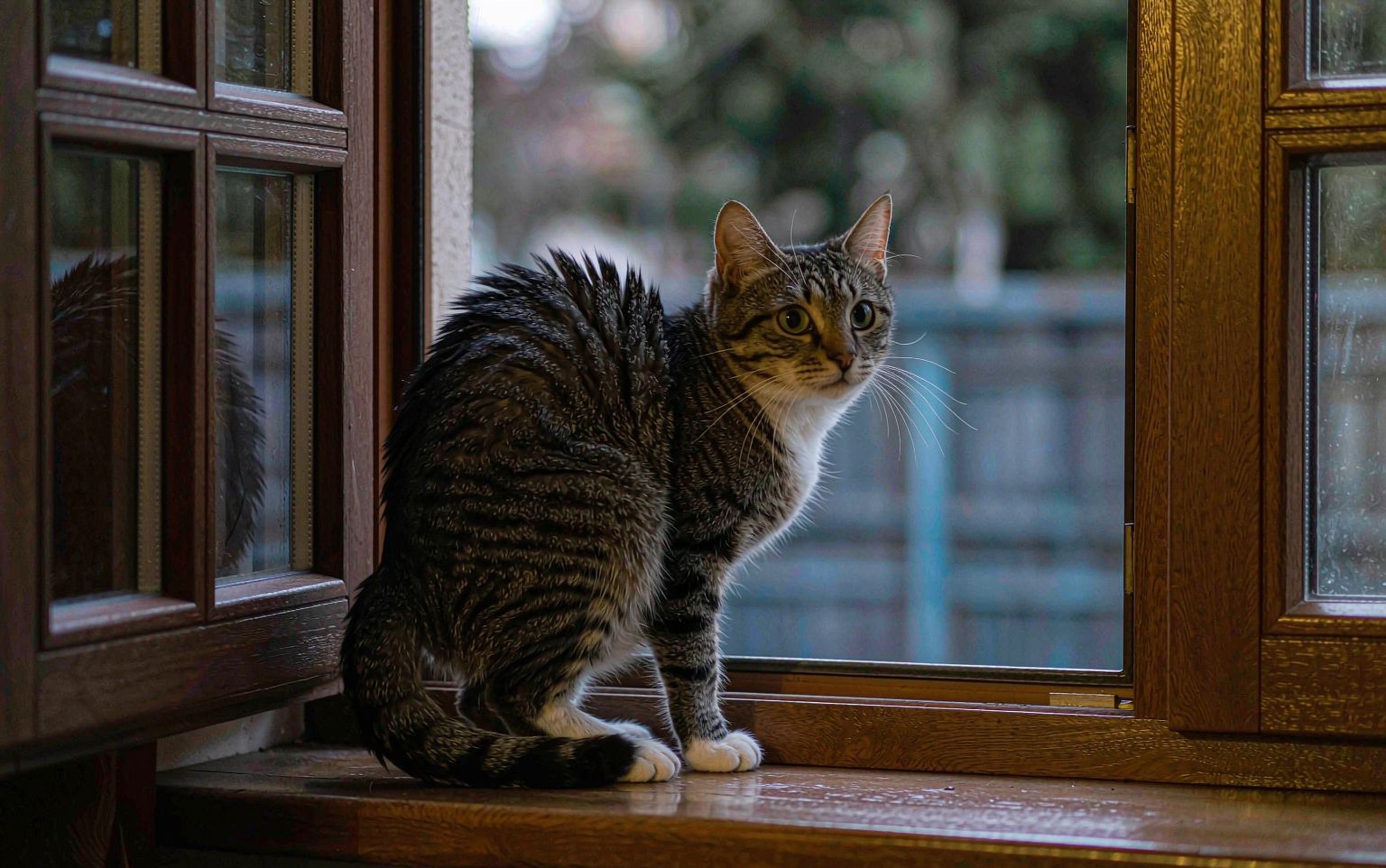
One moment your cat is asleep on the sofa. The next, the skin along her back ripples as if something is moving under it, her tail whips from side to side, her pupils blow wide, and she bolts — sometimes biting at her own flank as she goes. Feline hyperesthesia syndrome is the name for this cluster of signs, and it is one of the more unsettling things a cat owner can witness.
What an Episode Actually Looks Like
- Rippling or rolling skin along the lower back, usually just ahead of the tail base.
- A sudden burst of frantic running, jumping or dashing.
- Licking, chewing or biting at the flank and tail, sometimes hard enough to strip hair or break the skin.
- Dilated pupils, vocalising, and a staring, trance-like expression.
- Skin that seems painful or hypersensitive to touch during the episode.
- Episodes lasting seconds to a couple of minutes, with the cat completely normal in between.
Why It Takes So Long to Diagnose
There is no test that confirms hyperesthesia, so it is a diagnosis of exclusion. Before the label sticks, your vet has to rule out fleas and other parasites, allergic skin disease, and spinal pain from disc disease or arthritis — all of which can produce the same frantic grooming. Expect bloodwork, skin scrapings and a neurological examination, with spinal imaging or an MRI if structural disease is suspected. Most cats are first affected between one and five years old, and Siamese, Burmese, Himalayan and Abyssinian cats appear over-represented. The syndrome is best understood as a mix of neuropathic discomfort, seizure-like activity and compulsive behaviour, which is why no single treatment works for every cat, and why vets often describe it as several conditions wearing one label.
Start With the Environment
Environmental work is not a soft option; it often determines how well medication performs. Keep meals and play at predictable times, and feed several small meals rather than one large one. Look for the obvious stressors and remove them: a noisy room, a tense relationship with another cat in the house, an uncovered window onto a neighbouring dog. Never punish an episode, because punishment adds stress and tends to increase their frequency. Keep a log of every episode with the time, duration and what happened beforehand, since patterns are what your vet will work from. Some owners find that a gentle tap on the rump or a treat tossed across the room can interrupt an episode before it builds. Video is worth more than memory here: film the episodes as they happen and note the trigger, because owners rarely recall the detail accurately by the time they are in the consulting room.
Medication and Realistic Expectations
| If the vet suspects | Typical options |
|---|---|
| Neuropathic discomfort | Gabapentin or pregabalin |
| Anxiety and compulsive element | Fluoxetine or clomipramine |
| Seizure-like activity | Levetiracetam or phenobarbital |
Finding the right drug and dose usually takes a trial period, and many cats stay on treatment long term. The prognosis is good as long as self-trauma is controlled; the real risk of unmanaged cases is repeated skin damage, infection and chronic hair loss rather than the syndrome itself.
Twitchy skin is not just a quirk. If your cat’s back ripples, her tail lashes and she attacks her own flank, film an episode on your phone and book an appointment. A short video is often more useful to a vet than any description, and with the right mix of routine and medication most cats settle into a manageable rhythm.