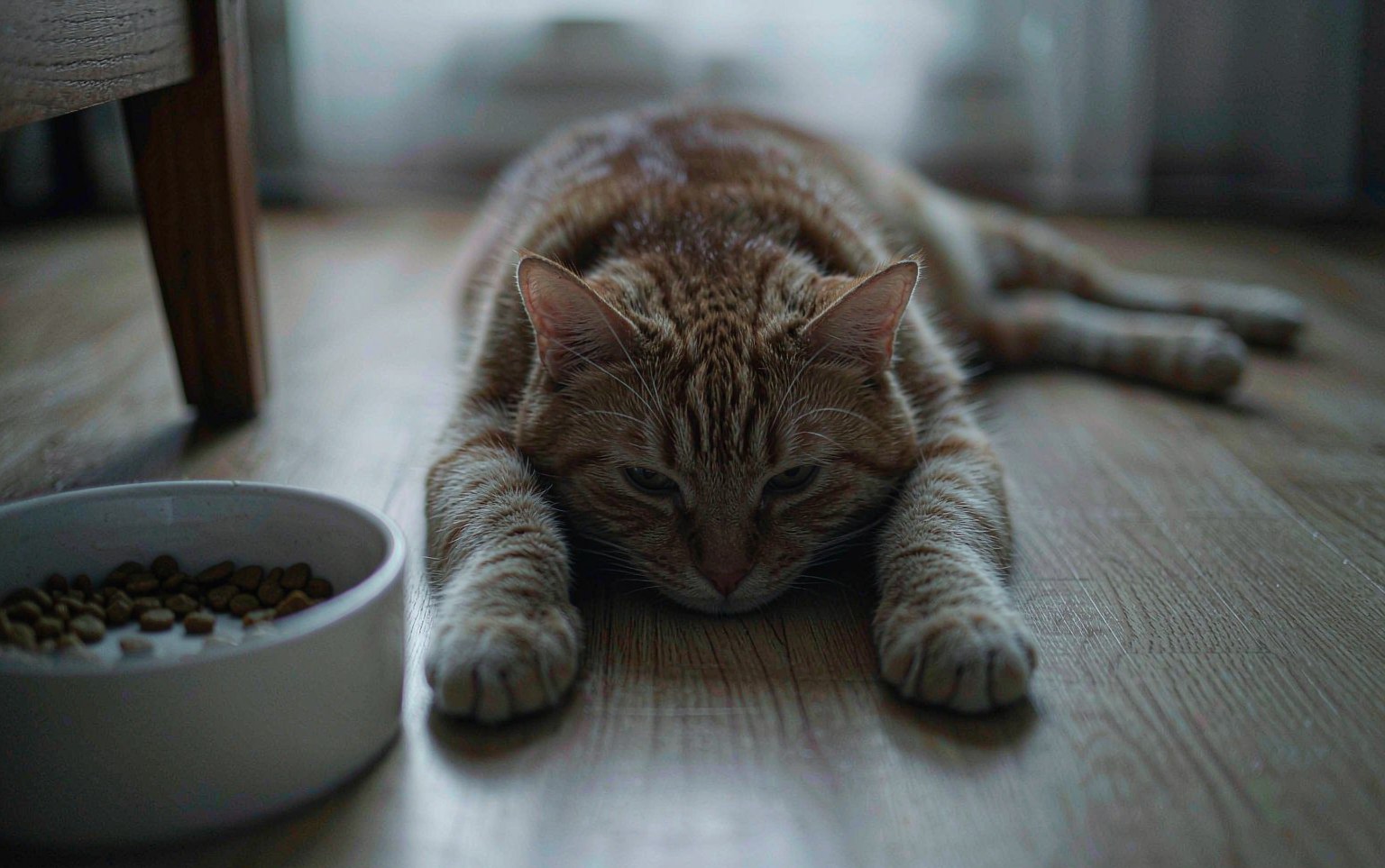
A cat that turns up its nose at dinner is treated as a minor drama in most households. In cats, refusing food is a medical event. No other companion animal develops hepatic lipidosis, fatty liver disease, the way cats do: when a cat stops eating, fat floods the liver, the liver fails, and the process can begin within just two to three days of not eating. Knowing why it happens and what the early signs are turns this from a fatal condition into a very treatable one.
What happens inside the liver
When food stops coming in, the body mobilizes fat stores for energy. A cat’s liver, unlike a dog’s or a human’s, cannot process a large flood of fat quickly. Fat accumulates inside liver cells until the organ swells and stops working. Then a vicious circle starts: a failing liver causes nausea, nausea kills what little appetite remains, and the cat eats even less. The condition favors middle-aged, overweight cats, because they have the most fat to mobilize, but any cat can develop it, including lean ones.
Why cats stop eating
The trigger list is longer than most owners expect, and often several small stresses stack together:
- Stress: a house move, a new pet or baby, boarding, renovation noise, a houseguest
- A sudden change of food, or simply a new bag the cat refuses
- Pain anywhere, dental pain especially, which is extremely common and easily missed
- Underlying illness such as pancreatitis, inflammatory bowel disease, or kidney disease
- Nausea from another condition or from medication
- Getting trapped somewhere outdoors, or an indoor cat shut in a room by accident
The warning signs
Early signs are easy to dismiss: eating noticeably less or skipping meals for more than two days, rapid weight loss, hiding, low energy, occasional vomiting. The emergency sign comes late but is unmistakable: jaundice, a yellow tinge in the gums, the whites of the eyes, or the inside of the ears. By the time yellow shows, the liver is already in real trouble. Other red flags at that stage include drooling, marked weakness, and confusion or head-pressing. Because cats instinctively hide illness, the most reliable early-warning system an owner has is simply watching the food bowl and weighing a cat every month or two.
Treatment is nutrition
The cornerstone of treatment is getting calories back in, and that usually means a feeding tube. Most affected cats will not eat on their own while nauseated, so vets place one: a soft tube through the nose for short-term hospital use, or, far more commonly, an esophagostomy tube placed in the neck under brief anesthesia, which sits comfortably for weeks and lets owners feed at home. Feeding starts gently and builds up to full needs on a high-protein recovery diet. Alongside nutrition, treatment corrects dehydration and potassium, controls nausea, supports the liver with supplements such as SAMe and vitamin E, and pursues whatever underlying problem started the hunger strike. Force-feeding with a syringe is discouraged, because it builds a lasting aversion to food. The tube typically stays four to eight weeks; appetite usually returns gradually, and liver values normalize over months.
The prognosis justifies the effort: with early, aggressive nutritional support, 60 to 90 percent of cats recover fully. The rule that makes that possible is simple. A cat that has eaten little or nothing for 24 to 48 hours needs a veterinary visit, even if it seems perfectly fine otherwise. In cats, the food bowl is a vital sign.