Addison’s disease — hypoadrenocorticism — is a shortage of the hormones the adrenal glands produce. It is uncommon, but it matters far out of proportion to its frequency, because it is both easily missed and, once identified, very manageable. Veterinarians call it the great pretender: its signs are vague, they come and go, and they resemble a dozen other problems.
What the Adrenal Glands Stop Making
Two hormone groups are involved. Glucocorticoids, chiefly cortisol, help the body handle stress, metabolism, and blood sugar. Mineralocorticoids, chiefly aldosterone, regulate sodium, potassium, blood pressure, and hydration. In the typical form of the disease both are deficient, so sodium falls while potassium rises — a combination that can disturb heart rhythm and circulation.
In most canine cases the cause is thought to be immune-mediated destruction of the adrenal cortex, with a hereditary component documented in several breeds. Less common causes include drugs used to treat Cushing’s disease, infiltration of the glands by cancer or granulomatous disease, adrenal haemorrhage, and abruptly stopping long-term steroid medication. When only cortisol is affected, the disease is called atypical Addison’s, and electrolyte values can stay normal, at least for a while.
Why It Is Called the Great Pretender
Signs are non-specific and tend to wax and wane, often worsening under stress. They can include:
- Lethargy and depression
- Poor appetite and weight loss
- Vomiting and diarrhoea, sometimes bloody
- Increased thirst and urination
- Trembling, weakness, and dehydration
- Collapse with a weak pulse or a slow, irregular heart rate
Because gastrointestinal signs dominate early on, many dogs are treated for ordinary stomach upset, sometimes repeatedly, before the endocrine problem is recognised. The acute form, an Addisonian crisis, is a genuine emergency and can look like shock.
The Clues in Routine Bloodwork
Addison’s disease often announces itself in tests run for other reasons:
| Finding | Why it appears |
|---|---|
| Low sodium, high potassium | Loss of mineralocorticoid regulation |
| Metabolic acidosis | Electrolyte and acid-base disturbance |
| Azotaemia | Reduced circulating volume and dehydration |
| Low blood glucose | Cortisol deficiency |
| No stress leukogram | A sick dog without the expected white cell changes is a red flag |
| Dilute urine | Impaired ability to concentrate urine |
On an electrocardiogram, severe potassium elevation can produce a slow or irregular rhythm. Some dogs also show a smaller-than-normal heart silhouette on radiographs. Because these findings overlap with primary kidney disease, a clinician has to keep Addison’s disease on the list of possibilities.
How It Is Confirmed
An ACTH stimulation test is the confirmatory test. It measures cortisol before and after an injection of synthetic ACTH and shows whether the adrenal glands are able to respond. A baseline cortisol value can help screen a patient out of the picture, but on its own it cannot diagnose the disease. Additional imaging is sometimes used to rule out other causes of the same signs.
Treatment Direction
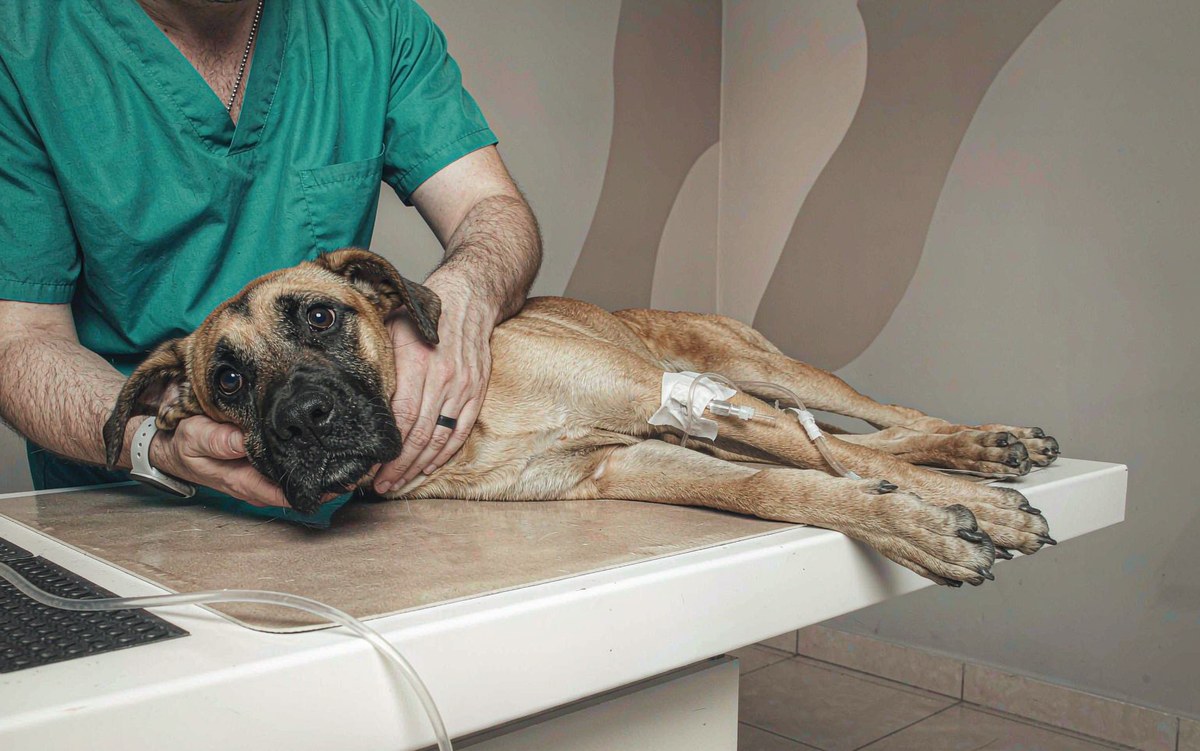
Treatment has two phases. In a crisis the priority is intravenous fluid therapy to restore circulating volume, together with correction of blood sugar, management of potassium’s effects on the heart, anti-nausea medication, and gastrointestinal support; glucocorticoids are given after diagnostic samples are collected. In the chronic phase every affected dog needs glucocorticoid replacement, usually a daily oral steroid, and most also need mineralocorticoid replacement — either a long-acting injection given roughly monthly or a daily oral tablet. Dogs with the atypical form may need glucocorticoid replacement only, but their electrolytes are still monitored in case mineralocorticoid deficiency develops later.
Two rules matter for the rest of the dog’s life: never stop or adjust replacement hormones without veterinary advice, and plan ahead for stress, because boarding, travel, surgery, and illness often require therapy to be adjusted.
When to Call Your Veterinarian
Recurring stomach upset in a young to middle-aged dog, especially one that seems weak or wobbly between episodes, is worth investigating rather than treating symptom by symptom. With prompt diagnosis and consistent treatment the outlook for dogs with Addison’s disease is excellent — most live long lives and eventually die of something unrelated. Left undiagnosed, an Addisonian crisis can be fatal. If your dog collapses, cannot stand, or has a weak pulse, treat it as an emergency and go now.