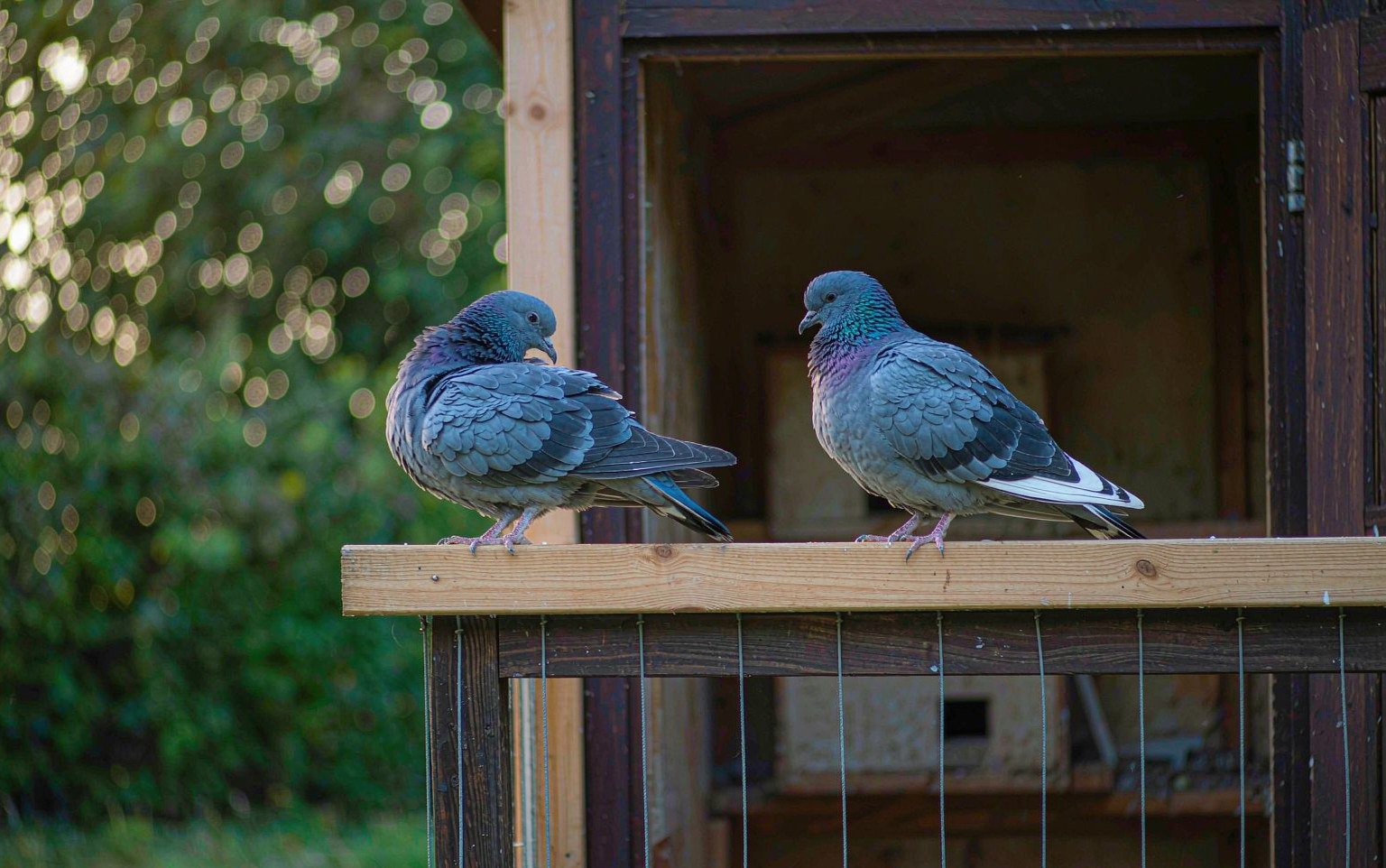
Long before there were backyard chickens, there were backyard pigeons. Domestic pigeons have lived alongside humans for thousands of years, and it is easy to see why: they are gentle, form strong pair bonds, need modest space, and reward even small lofts with a calm, fascinating hobby. If you are considering your first birds, here is what a sound setup and a sustainable routine actually look like.
Start by Choosing Your Type
Hundreds of breeds exist, but nearly all beginners land in one of three groups:
| Type | Examples | Best for |
|---|---|---|
| Sporting | Racing Homers, Rollers, Tumblers | Flight training and the classic homing experience |
| Utility | King, Carneau, Mondain | Calm, hardy, large birds; easy first flock |
| Fancy | Fantail, Jacobin, Modena | Looks and showing; often content in smaller aviaries |
For a first flock, Racing Homers or Kings are the usual advice: hardy, forgiving, and reasonably priced. Whatever you choose, buy from a reputable breeder rather than an unknown source, and start with five to ten birds rather than a crowd.
Building a Loft That Keeps Them Healthy
The loft is the entire world of a pigeon, so most beginner problems trace back to it. Aim for these basics:
- Space: roughly 2 to 4 square feet of floor area per bird, more for large utility breeds
- Ventilation without drafts: fresh air moving above the birds, never a wind tunnel at perch level
- Perches: flat boards beat round dowels, and more perches than birds prevents squabbles
- One nest box per pair, about 12 inches square, plus nesting material
- Predator-proofing: hardware cloth instead of chicken wire, secure doors, and protection from rats, cats, and hawks
- A shallow bath pan once or twice a week for feather care
Keep the floor dry, whether you scrape daily or use replaceable bedding, and give the loft morning sun if you can; dampness breeds disease faster than cold ever will.
Feeding: Simple but Specific
Pigeons eat a grain mix of corn, wheat, barley, peas, and millet, roughly 30 to 40 grams per bird per day, fed once or twice daily. Breed-specific maintenance blends are widely available and easier than mixing your own. Two supplements matter more than beginners expect. First, grit: pigeons have no teeth and need insoluble grit in a separate dish to grind grain and source minerals like calcium. Second, clean water in a gravity waterer, refreshed daily. Skip bread and table scraps entirely; they fill birds up without feeding them. Increase pea content during breeding and molting, when protein demand rises.
Routine Care and Health Watch
Daily care is short: feed, refresh water, and observe. Weekly, remove droppings; monthly, do a deeper clean. Quarantine any new bird for a few weeks before it joins the flock, and talk to an avian vet about paramyxovirus (PMV) vaccination, which is standard in many regions, plus pox where relevant. Watch for fluffed, hunched birds, changes in droppings, or breathing noise, and separate any bird acting off. Healthy pigeons are active, sleek, and enthusiastic eaters, so a quiet bird on the floor is your early signal.
Bottom line. Pigeons ask for surprisingly little: a dry, draft-free, predator-proof loft, a grain mix with grit, clean water, and a few minutes of observation each day. Start with a small flock of hardy birds, keep their home clean, and you will discover why generations of keepers consider pigeons one of the most rewarding backyard species.