A parrot’s beak is a nutcracker with a brain behind it. Whatever you hang in the bird cage will be chewed, unknotted, dismantled, and occasionally swallowed — that is the point of toys, and also the risk. Toy safety is less about brand names and more about four checks: the materials, the metal, the construction, and the size match.
Heavy Metals: The Hazard You Cannot See
The most common toy-related poisonings in pet birds come from zinc and lead, and both hide in plain sight. Zinc coats galvanized wire, cheap clips, and shiny “silver” chains that are not stainless steel. Lead turns up in old painted parts, soldered joints, fishing weights, and costume-jewelry trinkets repurposed as toys. Signs of heavy-metal toxicity include vomiting, unusual thirst, greenish droppings, weakness, and seizures — and it is an emergency that progresses fast. The rule is simple: every metal part a beak can reach should be stainless steel, or clearly labelled zinc-free and lead-free. Rusted or flaking hardware gets replaced, not cleaned.
Safe Materials, Suspect Materials
| Component | Safe choices | Avoid |
|---|---|---|
| Wood | Untreated pine, balsa, birch, manzanita | Treated lumber, plywood glues, cedar |
| Metal | Stainless steel quick links, chains, bells | Galvanized zinc, lead solder, split key rings |
| Fiber | Sisal, jute, seagrass, paper rope, vegetable-tanned leather | Long cotton strands, synthetic rope, chemically tanned leather |
| Plastic | Hard acrylic puzzle and foraging toys | Brittle plastic that shatters into shards |
| Filler | Palm leaf, corn husk, loofah, food-grade dye | Glues, scented items, paint that runs when wet |
Construction Traps That Catch Toes
- Open rings and wide bell slots can trap a toe or beak — pinch quick links fully closed.
- Jingle bells with removable clappers get swallowed; choose welded stainless bells instead.
- Frayed rope is a strangulation and crop-impaction risk — trim strands weekly, retire shaggy toys.
- Glued parts are the most common DIY mistake; build with knots and stainless wire instead.
- Brittle plastics and mirrors crack into sharp fragments some birds then chew.
Size the Toy to the Bird
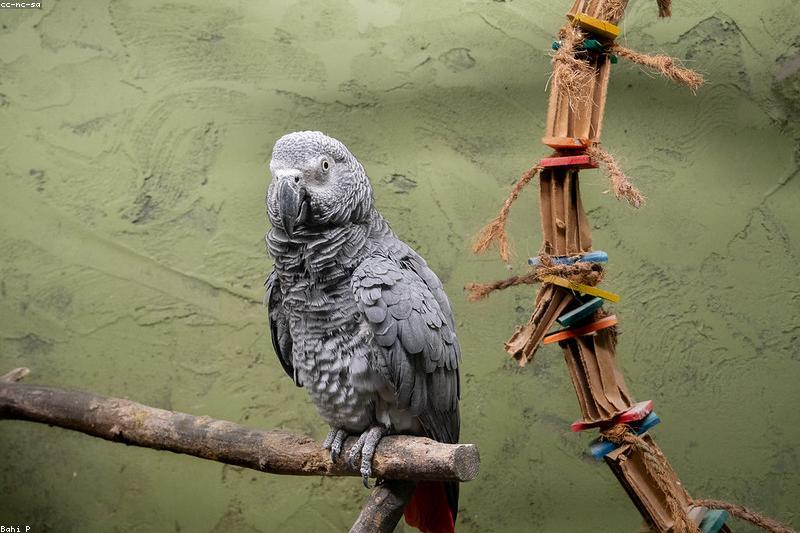
A macaw toy in a budgie’s cage is a foot-trap; a budgie toy in a macaw’s cage is confetti that gets swallowed. Small birds such as budgies, cockatiels, and lovebirds need lightweight balsa, paper, and small shredders. Medium birds like conures handle hardwood chunks and foraging boxes. Large parrots — African greys, amazons, cockatoos, macaws — need dense hardwood blocks and heavy stainless hardware, inspected often because they destroy toys faster. Keep three to five toys in the cage at once and rotate weekly so everything stays interesting; enrichment, not just safety, is why foraging toys and chewables earn their shelf space.
A Weekly Inspection Routine
- Tug every rope and fabric part — remove anything loose or fraying.
- Check metal hardware for rust, flaking coatings, or bent links.
- Look for cracks, splinters, or small swallowable pieces that have broken free.
- Smell for mold or chemical odor on damp toys — discard if present.
- Retire anything chewed down to its wire core.
No toy stays safe forever, and every shredded toy is proof the enrichment is working. Inspect weekly, replace on schedule, and default to stainless steel and untreated wood — the checklist takes five minutes and prevents the emergencies no bird owner wants to meet.