Bone broth and meal toppers now occupy their own shelf section, and for good reason: a warm, aromatic pour can turn an ignored bowl into an empty one. But broth looks like water, so it tends to be poured with a generous hand — and a gelatin-rich broth still carries calories, sodium, and protein that count against your pet’s daily budget. Used well, toppers are a genuinely useful tool; used carelessly, they unbalance a complete diet. Here is how to keep them in their lane.
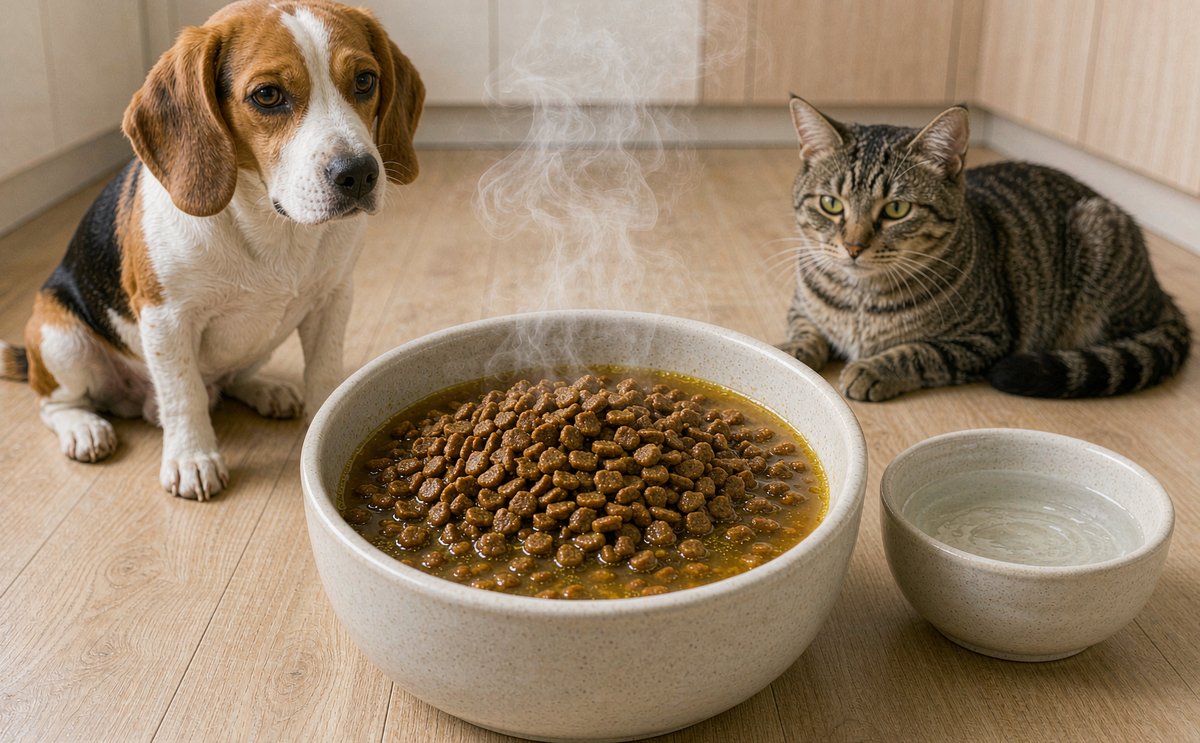
What Broth Actually Adds
A cup of plain, unsalted bone broth is modest food: roughly 13 to 17 calories, 2.5 to 4 grams of protein, and more than 90 percent moisture. Its real value is aroma and warmth: poured over kibble, it softens the pieces and spreads smell across the bowl, one of the fastest and cheapest ways to interest a reluctant eater. It also adds fluid to the diet, which most pets welcome.
What it does not do is work miracles. Broth is often marketed for joints and gut health, and while it does supply gelatin, collagen-derived amino acids, and trace minerals, the evidence for dramatic health benefits in dogs and cats is thin. Treat broth as a tasty, hydrating extra — not a therapy and never a meal replacement.
Why Extras Can Unbalance a Complete Food
A food labeled complete and balanced under AAFCO nutrient profiles supplies every essential nutrient your dog or cat needs in the right proportions — adult maintenance minimums are 18 percent crude protein and 5.5 percent crude fat on a dry-matter basis. No broth can meet those profiles, which is why topper products carry the statement “intermittent or supplemental feeding only,” and why AAFCO’s 2024 labeling update formalizes their identity as mixers rather than meals.
The working rule from veterinary nutritionists is simple: keep treats, toppers, chews, and table extras to about 10 percent of daily calories. Beyond that, the extras start diluting the carefully balanced calcium, phosphorus, vitamins, and amino acids your pet actually needs.
The Safety Short List
The risk with broth is almost never the bones once the liquid is strained — it is the ingredient list.
- Alliums are toxic. Onion, garlic, leeks, shallots, and chives damage red blood cells in dogs and cats. Most human broths and bouillon cubes contain them.
- Sodium adds up. Human cartons often run 300 to 600 mg of sodium per cup, and stock cubes can exceed 800 mg each. Pet-formulated broths are typically low or sodium-free.
- Xylitol and heavy seasoning have no place in anything you pour over food.
- Fat matters. Simmered broth develops a fat cap; skim it before serving, since rich, fatty broth is a poor fit for dogs prone to pancreatitis. Pets with kidney or heart disease should only get broth with a veterinarian’s approval.
If you offer diluted broth as a drink, use a second bowl and keep plain fresh water available; wash the flavored bowl promptly, because broth supports bacterial growth.
How Much Is Reasonable
Start small and treat the amounts below as ceilings, not targets — one common veterinary ceiling is a quarter cup of broth at a single meal.
| Dog’s weight | Broth per day (max) | Start with |
|---|---|---|
| Under 10 lb (4.5 kg) | 1–2 tbsp (15–30 mL) | 1 tsp |
| 10–25 lb (4.5–11 kg) | 2–4 tbsp (30–60 mL) | 1 tbsp |
| 25–50 lb (11–23 kg) | ¼ cup (60 mL) | 2 tbsp |
| 50–75 lb (23–34 kg) | ⅓–½ cup (80–120 mL) | ¼ cup |
| Over 75 lb (34 kg) | ½–¾ cup (120–180 mL) | ¼ cup |
For cats, one to two teaspoons of warmed broth stirred into dinner is plenty. To see whether the extras fit, do the arithmetic: a dog eating 800 calories a day has an 80-calorie topper budget, and everything outside the bowl — chews, biscuits, broth — shares it.
Don’t Teach Refusal by Accident
One caution worth its own section: if a topper only appears when your dog refuses food, refusal becomes a strategy. Add toppers routinely to every meal rather than as a rescue, put the food down for 15 to 20 minutes, then pick the bowl up. Most dogs settle into a consistent pattern within a week or two. And never mask a sudden appetite change with broth — mouth pain, nausea, and illness can all look like picky eating, so repeated skipped meals are a reason to call your veterinarian, not the pantry.
The bottom line: broth and toppers are tools for appetite, moisture, and variety. Keep them plain, keep them small, count them inside the ten percent line, and let a complete and balanced food do the nutritional heavy lifting.