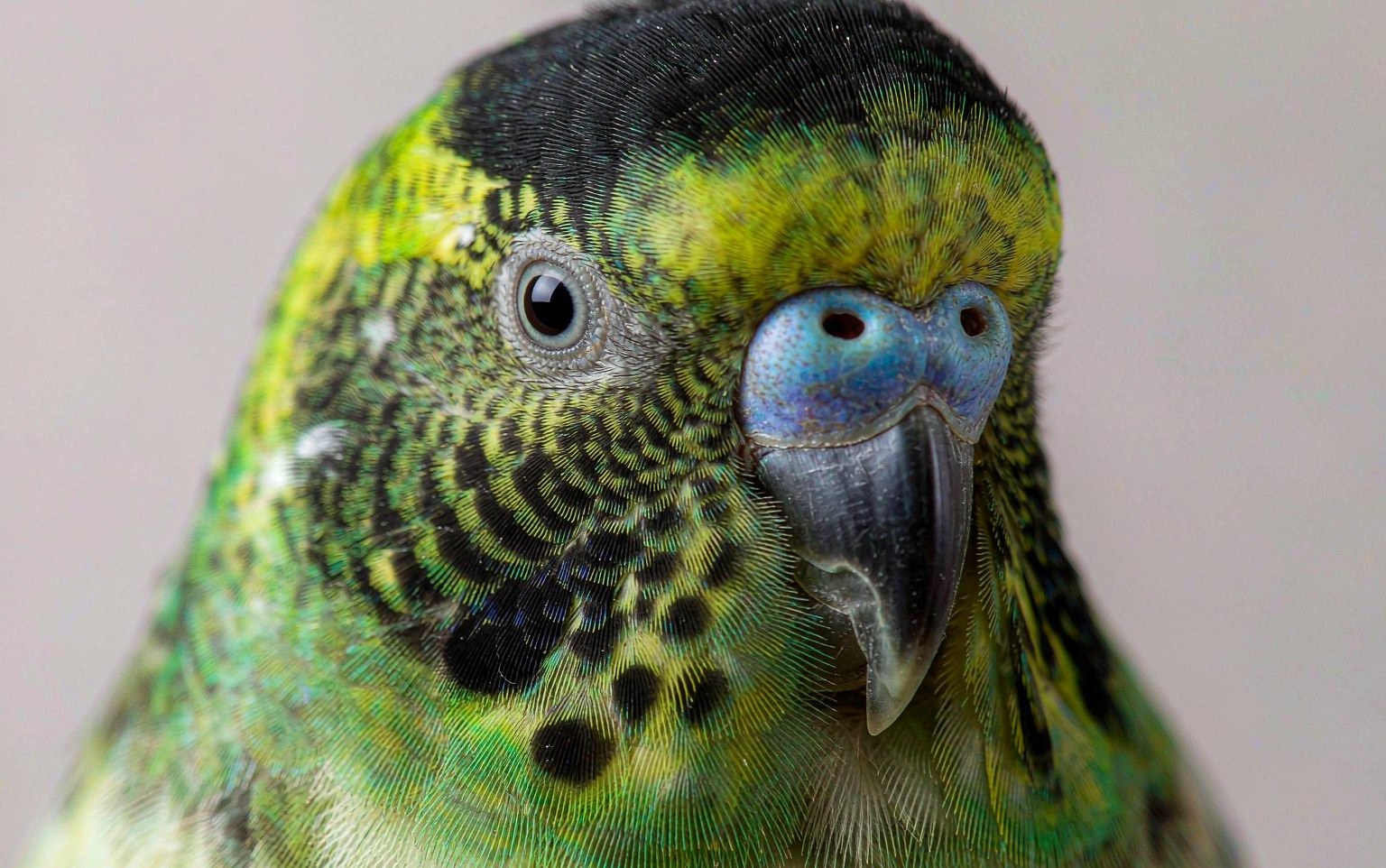
No other pet bird broadcasts information the way a budgie does. The cere — the fleshy band around the nostrils above the beak — changes with sex, age and hormonal state, which makes it one of the few health indicators you can assess in ten seconds from across the room. It is also the single most misread feature in budgie keeping, because the normal changes and the alarming ones sometimes look similar.
Reading Sex and Breeding Condition
In standard-coloured budgies the pattern is reliable once the bird is mature. Colour becomes a rough guide to the bird’s hormonal state rather than a fixed label, so it is worth checking every few months rather than once.
| Cere appearance | What it usually means |
|---|---|
| Smooth, deep blue | Mature male, hormonally settled |
| Brown, thickened, crusty | Hen in breeding condition, or an ageing hen with a keratinised cere |
| Pale blue to whitish | Hen out of breeding condition |
| Pink or pale purple | Juvenile of either sex, before adult colour settles |
Two caveats matter. Juvenile birds cannot be sexed reliably by cere; the adult pattern usually appears somewhere between six and twelve months. And several colour mutations — albino, lutino, and recessive pied among them — never develop the standard adult colours at all, so only a DNA test will settle the question.
Brown in a Hen: Usually Hormones, Sometimes More
A hen’s cere going brown and slightly rough is normal breeding condition, and it pales again when the season passes. Older hens often develop a thicker, more crusty cere as keratin builds up, and this is generally benign.
It needs a vet when the thickened tissue is blocking a nostril or the bird is breathing through its mouth, or when the change travels with chronic egg laying, straining, or a swollen abdomen. Long nights and an absence of nest-like hidey-holes — plus avoiding strokes down the back and tail — help keep a hen out of permanent breeding condition. Do not pick at the cere yourself: it is well supplied with blood.
The Change That Is Never Normal: A Male Going Brown
A cere that was dependably blue and begins turning brown in an adult cock bird is a recognised warning sign of an estrogen-producing testicular tumour. Because the mass itself is invisible, the cere is often the first place it shows. Watch for one-sided leg weakness, a sharper keel from weight loss, a bird that has stopped singing, or a change in posture.
If you see it, photograph the cere in daylight from the front — “it used to be bluer” is far more convincing with a dated image — and book an avian appointment. Expect radiographs or ultrasound rather than a diagnosis from the cere alone.
Crusty and Spreading: Mites, and the Nostril Check
A honeycombed, chalky crust that spreads beyond the cere onto the beak, around the eyes or down to the legs points at scaly face mites rather than hormones, and it is contagious to cage mates. The useful rule of thumb: hormonal change is smooth thickening confined to the cere, while mite crust is rough, honeycombed and spreading.
Do a fast nostril check every week as well. The openings should be clear, with smooth even edges, and you should be able to see into them. Blocked or crusted nostrils, discharge, or a bird that sneezes repeatedly with wet feathers above the beak all deserve a vet visit, as does any bleeding from the cere after a collision or a squabble — that area bleeds heavily and a budgie has little blood to spare.
This article is general information and not a substitute for an avian veterinary examination.