Halloween is one of the most fun nights of the year for people, and one of the most stressful for dogs. Strangers in costumes knock on the door all evening, the house smells like chocolate, and glowing pumpkins sit at nose height. Veterinarians see a predictable spike in emergencies every October, and almost all of them are preventable. Here is how to keep your dog safe, calm, and accounted for from the first decoration to the last piece of candy.
Why Halloween Is Riskier for Dogs Than You Think
Dogs do not understand costumes. A person your dog has known for years can become frightening simply by putting on a mask, and unfamiliar visitors arrive in shapes and silhouettes your dog has never seen. Add a doorbell that rings constantly, and many dogs tip from alert into genuine distress. The Kennel Club and the American Kennel Club both warn that the combination of unusual visitors, food temptations, and repeated door openings makes Halloween a uniquely hazardous holiday for pets.
Candy: The Treats That Can Send Your Dog to the ER
Candy is the single biggest Halloween danger for dogs. Chocolate contains theobromine, a stimulant that dogs metabolize very slowly, and sugar-free candies often contain xylitol, an artificial sweetener that is toxic even in tiny amounts. Keep the candy bowl up high and off the coffee table, and remind children that sharing their haul with the dog is never allowed.
| Treat or item | Main hazard | Warning signs |
|---|---|---|
| Chocolate (dark is worst) | Theobromine toxicity | Vomiting, restlessness, tremors, rapid heart rate |
| Sugar-free candy and gum | Xylitol toxicity | Weakness, vomiting, collapse, seizures |
| Raisins and grapes | Kidney injury | Vomiting, lethargy, increased thirst |
| Candy wrappers and lollipop sticks | Intestinal obstruction | Vomiting, loss of appetite, straining to defecate |
| Candles in jack-o’-lanterns | Burns and fire risk | Singed whiskers, burned paws or muzzle |
If you suspect your dog has eaten something dangerous, call your veterinarian or a pet poison hotline immediately, and do not try to make your dog vomit unless a professional tells you to.
Costumes: Cute Until It Isn’t
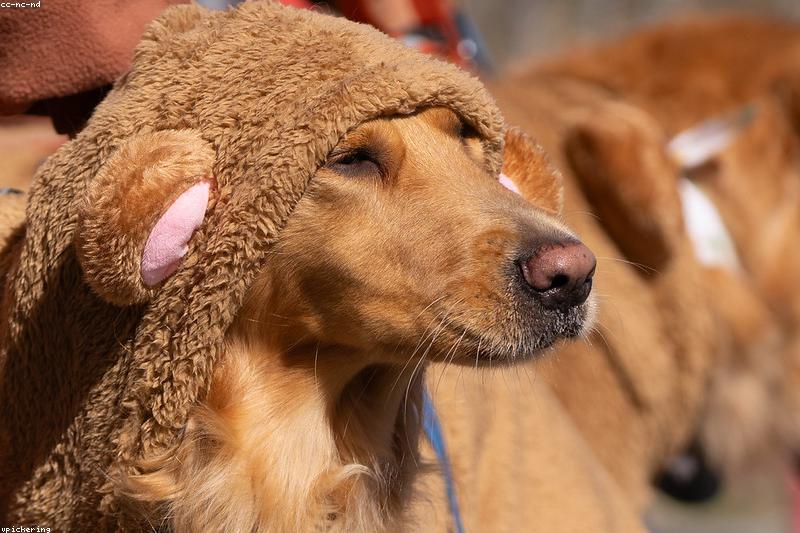
Some dogs tolerate a costume; many hate it. A safe costume never restricts breathing, movement, hearing, or vision, and it has no loose parts that can be chewed off and swallowed. Do a trial run days before Halloween, watch your dog’s body language, and if there is any sign of stress, swap the costume for a festive bandana. Never leave a costumed dog unsupervised, and remember that your dog may not recognize family members in costume, so approach calmly rather than surprising them.
Doorbells, Decorations, and Escapes
With the front door opening dozens of times, Halloween night is one of the biggest escape risks of the year. Frightened dogs bolt through open doors, and some run simply because the chaos overwhelms them.
- Set up a quiet room away from the door with water, a bed, and a long-lasting chew, and keep your dog there during peak trick-or-treat hours.
- Walk your dog earlier in the evening, before the costumes come out, so the doorbell chaos finds a tired dog.
- Keep wires, light-up decorations, glow sticks, and small costume parts out of reach; chewing them can cause burns or blockages.
- Check that your dog’s collar, ID tag, and microchip information are current before the holiday, not after.
The Takeaway
Halloween should be a treat for everyone in the family, and that includes the four-legged one. Stash the candy, skip the costume if your dog dislikes it, give your dog a quiet retreat, and double-check their ID. A few minutes of preparation protects you from a night in the emergency room and lets your dog sleep through the spookiest night of the year.