Few things drain the joy out of a daily walk faster than a dog who drags you down the street. Pulling is not a personality flaw and it is not dominance. It is simply what happens when a dog learns that tension on the leash is the fastest way to move forward. Loose-leash walking is a trainable skill, and it is built on reward, consistency, and short focused sessions rather than strength.
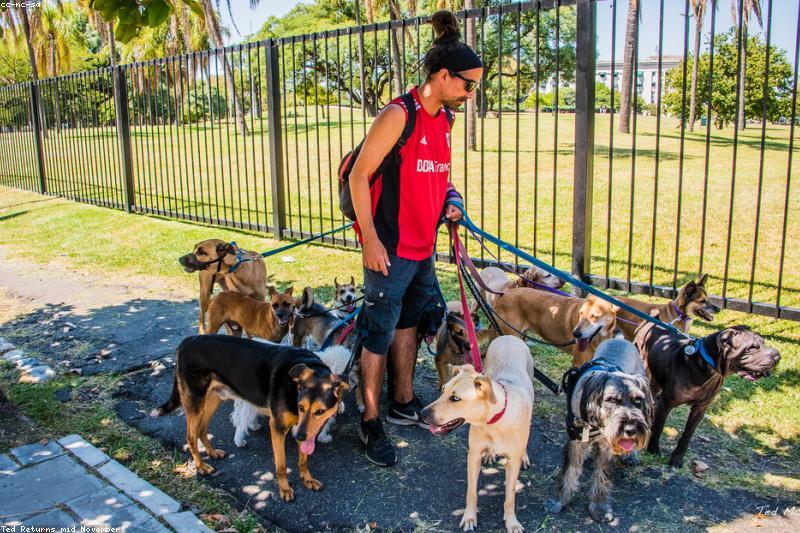
Why Dogs Pull in the First Place
Dogs naturally walk faster than humans and they experience the world through their noses. Every step forward leads to another smell, another dog, another interesting patch of grass. When a dog leans into the leash and the walker follows, pulling is rewarded instantly. Retractable leads make this worse because they teach a dog that pulling literally buys more freedom.
Equipment can also work against you. A back-clip harness lets a strong dog lean into the chest strap like a sled dog, while a tight flat collar can be uncomfortable enough that a dog pulls harder simply to escape the pressure.
Gear That Makes Training Easier
Equipment will not train your dog for you, but the right setup removes obstacles:
- A flat collar or Y-shaped harness that does not restrict the shoulders
- A fixed six-foot leash – not a retractable one
- A front-clip harness for dogs who lunge or are physically stronger than their handler
- Pea-sized treats in a pouch you can reach without bending down
Treat value matters more than treat volume. Kibble is fine indoors; boiled chicken, cheese, or freeze-dried liver is what competes with a park full of squirrels.
Three Drills That Do the Work
Almost all loose-leash progress comes from a handful of simple drills repeated in easy environments first:
- Be a tree. The instant the leash goes tight, stop moving. Wait for your dog to release the tension by turning back or stepping toward you, then mark it and walk on. Tension means the walk pauses; slack means it continues.
- The magnet hand. Hold treats at your knee and pay your dog every three to five steps for staying beside you. You are building the idea that the space next to your leg is the best place in the world.
- The 180-degree turn. If your dog locks onto something and surges, say a cheerful lets go, pivot, and walk the other way. When your dog catches up, reward generously.
Keep active training sessions to ten or twenty minutes. Long, frustrating walks teach both of you the wrong lesson.
A Four-Week Progression
| Week | Where to practise | Goal |
|---|---|---|
| 1 | Living room and hallway | Dog follows the magnet hand for ten steps |
| 2 | Backyard or driveway | Leash stays slack for most of a short session |
| 3 | Quiet residential streets | Recovers from one or two distractions |
| 4 | Busier streets, park edges | Slack leash around moderate distractions |
If your dog regresses badly at a new location, you increased difficulty too quickly. Drop back a step for one or two sessions and stack up easy wins before pushing forward again.
Mistakes That Stall Progress
- Letting the dog pull sometimes because you are in a hurry – inconsistency resets the lesson
- Holding the leash arm out in front of you instead of keeping your hand near your hip
- Scolding instead of simply stopping the forward motion
- Training only when your dog is already over-excited, such as at the front door before a walk
A short settle routine before you clip the leash on – asking for a sit, then opening the door only when your dog is calm – makes the first thirty seconds of every walk far easier to manage.
If your dog lunges aggressively at people or other dogs, drags you off your feet, or shows fear-based reactivity, the drills above are not enough on their own. Owners in that situation usually make faster progress with a certified force-free trainer or a veterinary behaviourist who can watch your dog in your own neighbourhood.
Loose-leash walking is not a weekend project. Expect several months of consistent practice for a dog with a long pulling history, and measure progress by trends – how many times the leash went tight on a walk, and the longest stretch of slack – rather than by any single messy outing.