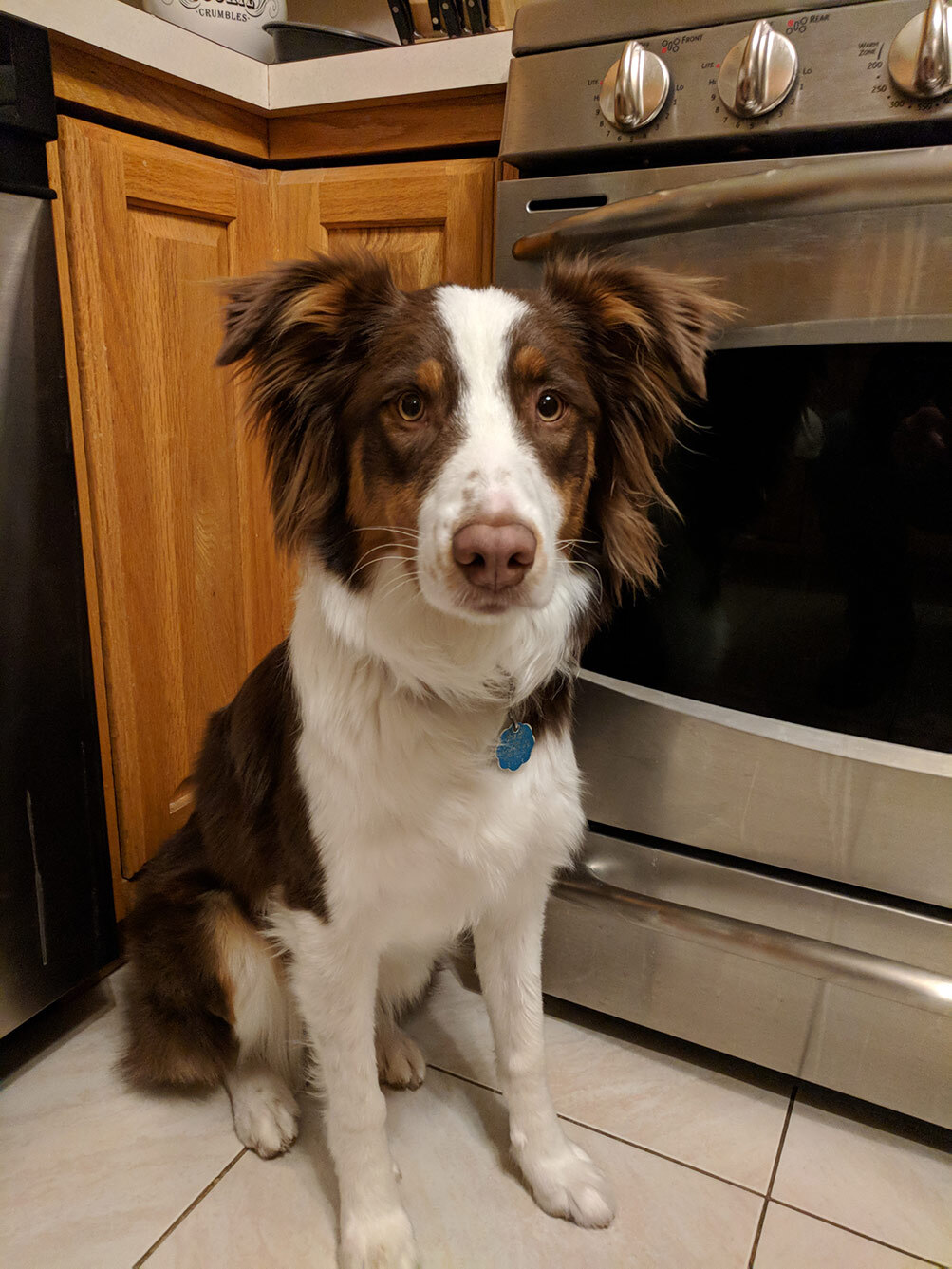
There is a specific look a dog gives you when training has quietly stalled. He hears the cue, glances at your hand, sees nothing, and goes back to sniffing the kerb. Owners usually read this as stubbornness or as proof that their dog is only in it for the food. It is neither. It is the predictable result of staying on one payment schedule for too long.
Why Treats Stop Working
When you teach a brand-new behaviour, you pay every single time. That is called continuous reinforcement, and it is exactly right for the learning phase, because it makes the pattern obvious fast: this behaviour produces that reward.
The problem is that continuous reinforcement is also a contract. Your dog learns not just the behaviour, but the conditions — food in hand, pouch unzipped, kitchen, training voice. Change any one of those and the behaviour looks like it evaporates. The dog has not forgotten the cue. He has learned that the cue pays only under specific circumstances.
The fix is not to remove rewards. It is to change the schedule.
Four Schedules, One Goal
| Schedule | What it looks like | When to use it |
|---|---|---|
| Continuous | A reward for every correct response | Brand-new cues, first week of teaching |
| Fixed ratio | A reward every third response, predictably | Short bridge while the cue stabilises |
| Variable ratio | Unpredictable — sometimes twice in a row, sometimes the sixth | Once the cue is reliable; the long-term default |
| Life rewards | Access to what the dog wants anyway | Proofing outdoors and in real situations |
Variable schedules are the ones that stick. Behaviour paid unpredictably is more durable than behaviour paid every time, for the same reason people keep feeding a slot machine: the possibility of a payout keeps the behaviour alive between payouts. Occasionally drop a jackpot — three or four treats in a row, plus real praise — after a genuinely fast response. That single moment buys you weeks of enthusiasm.
The Step-Down Plan
Fading has to be gradual. Reliability first, reduction second. Go from one hundred percent to zero and you will simply lose the behaviour and have to rebuild it.
- Reward every rep. Stay here until your dog responds correctly nine times out of ten in a quiet room.
- Move to about three in four. Reward most responses, and mark the rest with a bright “yes” and praise. Keep the pouch closed and out of sight.
- Drop to about half. Vary which reps pay. Never reward the same position in a sequence twice in a row, or you have built a pattern rather than a schedule.
- Shift to random. One in three or one in four, with jackpots on the best responses. Hold this level long-term.
- Step back if you see hesitation. A slow response, a confused look or repeated testing means you faded too fast. Return to rewarding every rep for five repetitions, then try again.
Where the Treat Comes From Matters
This is the detail that decides whether your dog becomes treat-dependent. Never hold food in your hand while giving a cue. Ask for the behaviour first, mark it, and only then reach for the reward — from a pocket, a treat pouch, or a shelf across the room.
That order changes what your dog is learning. Food shown before the cue is a bribe: he behaves because he can see payment. Food produced after the marker is a consequence: he behaves because behaving has historically paid. Same food, completely different lesson.
Life Rewards: When the World Pays
Food is not the only currency. For most dogs it is not even the best one outdoors. Sniffing, greeting, going through a doorway, getting on the sofa and a thrown ball are all things your dog wants, which makes them excellent pay. Ask for a sit before you open the door. Mark it and open the door. Ask for a hand touch before you release him to sniff. The environment becomes the reward, and your pocket stays empty.
Never Fully Fade These
Some behaviours are worth paying for forever: coming when called, a fast response around a trigger, and calm behaviour near things that frighten your dog. Reward those generously and unpredictably, but often. Fading a recall to nothing is how people end up with a dog who ignores them at the park.
One week of paying for most responses instead of every response will change how your dog reads you. Keep a treat pouch nearby, but let him learn the cue works even when your hands are empty.