Few household habits are as quietly dangerous as a dog who launches through an open door. Door darting — bolting past you the moment the front door, garage door, or car door opens — is one of the most common reasons dogs end up loose near traffic. The good news is that it is also one of the most teachable habits, because the trigger is predictable: a door, a hand on the handle, and a dog who has learned that speed wins.
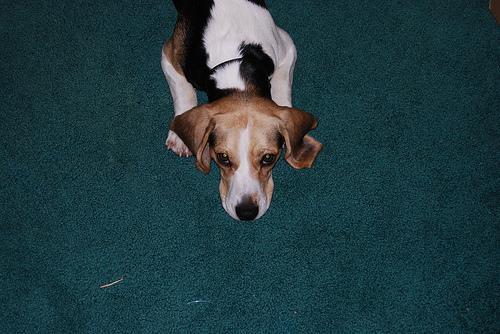
Why Door Darting Happens
Most darting is not defiance. It is rehearsal. Every time your dog slips through a doorway and gets to sniff the hallway, chase a leaf, or greet a neighbour, the behaviour is rewarded. After a few repetitions, the sequence “door opens, push through” becomes automatic.
Two other factors make it worse. First, excitement: leaving the house is the best part of the day, so arousal is already high before you touch the handle. Second, a moving target: if you reach for the collar while your dog is already surging, you are teaching that the doorway is a contest of momentum.
Change the Doorway Before You Train
Training a calm exit is far easier when your dog cannot practise the wrong version. Before your first session:
- Use a baby gate or an exercise pen so your dog can watch the door from a few feet back.
- Keep a treat pouch and a leash by the door so you are not fumbling with three things at once.
- Practise when you are not actually going anywhere. Ten short sessions beat two rushed departures.
- If your dog wears a harness for walks, put it on well before you approach the door, not at the threshold.
The Four-Step Door Routine
The goal is a dog who waits while the door opens, then moves on your cue.
- Reach, do not open. Put your hand on the handle. If your dog stays back, mark and reward. If your dog surges, remove your hand and wait. The door only moves when the dog is calm.
- Open an inch. Crack it and close it. Reward any pause, even a short one.
- Build to a fully open door. Widen the gap only while your dog can hold position. If your dog breaks, close the door and lower the difficulty.
- Add the release cue. Choose one word or hand signal that means “now you may pass.” Until you say it, the door stays shut.
| Situation | What to do next |
|---|---|
| Surges at the handle | Hand off the handle, wait, restart |
| Holds, then breaks at the crack | Shrink the opening next repetition |
| Waits but whines | Reward quieter moments, shorten sessions |
| You are in a rush | Use the gate or a leash instead of skipping the routine |
If Your Dog Already Got Out
Do not chase. A loose dog is usually excited, and chasing turns the moment into a game with a moving prize. Instead, turn away and move in the opposite direction, pat your leg, and use a bright, high-pitched recall voice — many dogs come back to a person who appears to be leaving. Keep a spare leash and high-value treats by the door for exactly this situation.
Prevention still matters more than recovery: keep identification tags current, check that your gate latches, and give your dog a predictable exit routine so leaving the house is never a surprise race.
Bottom line. Door darting is a rehearsed habit, not a personality flaw. Manage the doorway so mistakes are rare, pay the pause, and release your dog through the door on your cue — then repeat it often enough that waiting becomes the default.