Fish food is the one supply most aquarists buy once and then forget about. A tub of flakes lasts months, the expiry date is a small printed blur, and it feels wasteful to throw out something that looks perfectly dry. So it sits next to the tank — warm, humid, brightly lit — quietly losing the vitamins your fish actually need.
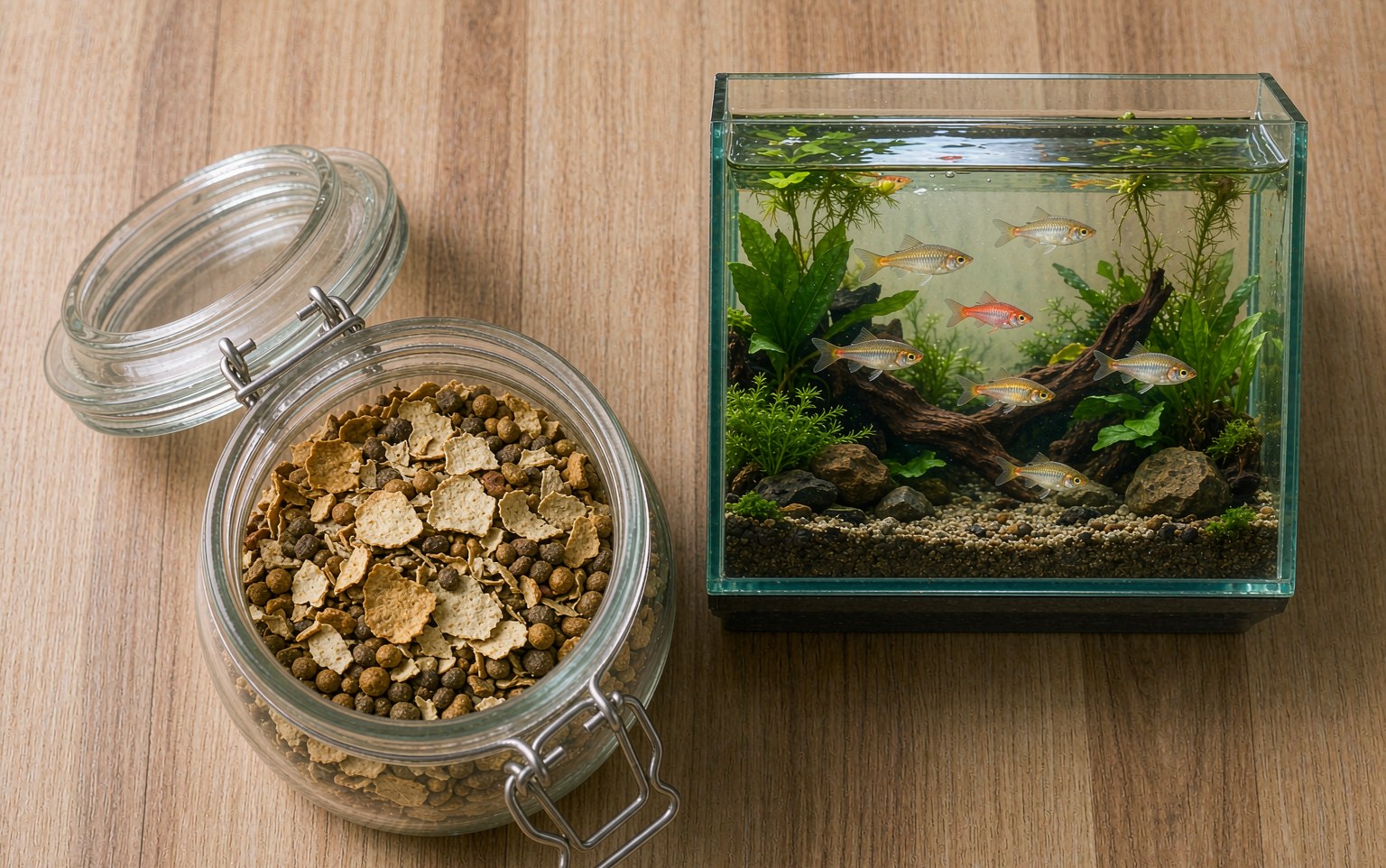
Fish food does not usually become dangerous the day after its best-before date. It does lose nutritional value far sooner than most people expect, and under bad conditions it can grow mould that produces genuinely harmful toxins. The practical question is not “is it expired” but “has it been stored well enough to still be worth feeding”.
What actually degrades in fish food
Two processes run in parallel from the day the container is opened. Vitamins — vitamin C especially — break down on contact with air, and the fats oxidise in the same way cooking oil goes rancid. Both are accelerated by heat, light, and moisture.
The numbers are not trivial. Studies of commercial flake food have found vitamin C content can fall by more than half within about three months of opening under ordinary household storage. The printed date on the tub assumes it stays sealed, cool, and dry — which is the opposite of life on a tank lid.
Shelf life by food type
| Food type | Sealed | After opening | Main risk |
|---|---|---|---|
| Flakes | 1–2 years | 3–6 months | Fast vitamin loss, clumping |
| Pellets and granules | 2–3 years | 6–12 months | Slower loss, rancid fats |
| Freeze-dried | 2–3 years | 6–12 months | Moisture ingress |
| Frozen | 6–12 months | Use promptly once thawed | Never refreeze |
| Live | — | Feed while alive | Disease introduction |
Flakes degrade fastest because of their huge surface area. Soft-moist pellets are the most moisture-sensitive of the dry foods and are best used within a month or two of opening.
Storage: the single biggest variable
The same product stored two different ways will have two different nutritional profiles at the same age. Keep it in an airtight container, in a cool dark cupboard away from the tank, and never dip wet fingers or a wet scoop into the tub.
- Do not refrigerate dry food. Condensation when you move it in and out introduces moisture, which is the opposite of what you want.
- Keep the original packaging inside the airtight container so the batch date travels with the food.
- Buy smaller tubs more often if you only keep one small tank.
Three signs it is time to throw it out
You do not need a laboratory. Trust your senses.
- Smell. Fresh food smells mildly fishy. A sharp, acrid, or old-oil smell means the fats have oxidised.
- Texture. Dry food that has gone soft, sticky, or hard-clumped has taken on moisture and is a mould risk even before you can see mould.
- Colour and growth. Fading, darkening, or any fuzzy growth means bin it immediately.
One more clue worth heeding: if fish that used to rush to the surface suddenly lose interest in a food they know, the food may be the variable that changed.
Bottom line. Buy in smaller amounts, store it away from the tank in something genuinely airtight, and replace flake food every few months. The cost of a new tub is trivial next to the cost of treating a tank full of fish with deficiencies or a mould-related outbreak. General information only — not veterinary advice.