Sometimes it is planned, and sometimes the pet shop’s “two sisters” turn out to be less sisterly than labelled. Either way, hamster pregnancies move fast: the whole journey from conception to independent young runs about a month. Knowing the timeline turns a panic into a plan – and the first week after birth, when the litter is most fragile, is decided almost entirely by what you do not do.
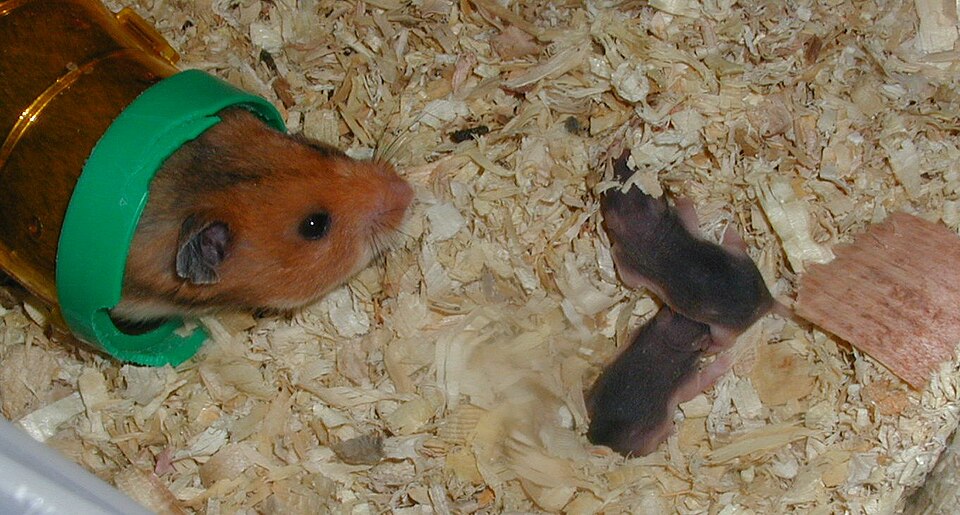
How Long Is a Hamster Pregnant?
| Species | Gestation | Typical litter |
|---|---|---|
| Syrian hamster | 16-17 days | 6-10 pups |
| Dwarf and Chinese hamsters | 18-21 days | 4-8 pups |
| Roborovski hamster | 23-30 days | Small litters, often 4-6 |
Pregnancy is hard to confirm early. The reliable signs arrive near the end: a visibly rounded belly in the last few days, restlessness, sudden hoarding of every scrap of nesting material, and sometimes a clear or bloody discharge shortly before birth. If you keep a dwarf pair together, note that the female can conceive again almost immediately after giving birth – another reason to separate adults early.
Preparation: The Last Week of Pregnancy
- Separate the male. For Syrians, remove him well before the birth; for dwarfs, at the latest straight after it. She can be fertile again within about a day.
- Upgrade the diet. Extra protein helps – a little boiled egg or plain cooked chicken alongside her normal mix – with constant fresh water from the water bottle.
- Supply nesting material (unscented paper tissue works well) and deep, soft bedding for the nest she will build.
- Stop handling beyond what is necessary, and move the cage to a quiet, warm room with a stable temperature.
- Do a full clean a couple of days before the due date – you will not touch the cage for the first week after birth.
The First Week: Hands Off
Birth usually happens overnight and needs no help. From then on the rule is simple: do not disturb the mother and pups for at least seven days – longer is better for a first-time mother. Stress in this window is the leading cause of mothers abandoning or eating their litter. Limit yourself to topping up food and water quietly, and skip cage cleaning entirely. Resist the urge to peek into the nest; what the mother cannot see or smell cannot worry her.
Growing Up: Days 7 to 28
Pups are born hairless, blind and deaf, though their front teeth are already present. Around day 7 they develop pigment, and most breeders begin very brief, gentle handling once the pups are furred and crawling well. From about day 10, offer softened pellets within reach of the nest; the mother will keep nursing. Eyes open near two weeks, and weaning completes between days 21 and 28. By four weeks, separate the sexes – Syrian brothers and sisters each need their own cage, and dwarf males should at minimum leave their sisters. Book a vet check for the litter around one month, and keep handling short and low to the ground while they learn what hands mean.
One more thing. Young hamsters are prone to wet tail, a serious diarrhoeal disease triggered by stress and crowding, so keep the growing litter clean, warm and calm. Do that, and four weeks after a nighttime birth you will have a box of confident, weaned youngsters – and a mother who has earned her rest and her own cage back.