Walk down any pet food aisle and you will see the word protein in large letters on nearly every premium bag. Some labels brag about high meat content, while older advice warned that too much protein would strain a dog’s kidneys. Both messages cannot be right, and the confusion has real consequences at the checkout. Here is what current veterinary nutrition sources actually say about high-protein diets for dogs.
Where the Kidney-Damage Myth Came From
The idea that dietary protein harms kidneys traces back to older laboratory research, much of it conducted in rats, whose kidney physiology differs significantly from dogs. When researchers later studied dogs with normal kidney function, they did not find that higher protein intake causes kidney disease. Veterinary nutrition sources, including the MSD Veterinary Manual, note that healthy kidneys simply excrete the nitrogen from protein the dog does not need. The myth persists in part because it sounds intuitively careful, like eating less salt for the heart.
What the Evidence Actually Shows
Current consensus can be summarized in three points. First, there is no evidence that high-protein diets damage the kidneys of healthy dogs. Second, extra protein beyond what the body uses is not stored; it is broken down and excreted, so very high protein offers no proven extra health benefit either. The World Small Animal Veterinary Association (WSAVA) notes that nearly all complete-and-balanced commercial diets contain sufficient protein, and that extremely high protein levels confer no demonstrated advantage. Third, protein quality matters as much as the percentage on the guaranteed analysis, because dogs need amino acids, not just crude nitrogen numbers.
When Protein Restriction Really Is Needed
Protein moderation is a medical tool, not a default. It applies to dogs with a veterinary diagnosis that calls for it, most commonly confirmed chronic kidney disease, certain liver conditions, or a history of some bladder stones. Even then, sources such as the Merck Veterinary Manual emphasize that restriction must be controlled, because cutting protein too far causes muscle loss. Dogs in these situations should eat a veterinary therapeutic diet prescribed and monitored by a veterinarian, not a generic senior or light formula chosen from a shelf.
Protein Needs by Life Stage
| Life stage or condition | Crude protein guidance (dry matter) |
|---|---|
| Healthy adult dog | AAFCO minimum 18%; most quality foods supply more |
| Puppies and pregnant dogs | AAFCO minimum 22.5% for growth |
| Healthy senior dog | Do not restrict without diagnosis; adequate protein helps maintain lean muscle |
| Diagnosed kidney or liver disease | Veterinary therapeutic diet, protein level set by the vet |
These numbers come from AAFCO nutrient profiles and veterinary nutrition guidance, and they explain why a healthy senior dog does not automatically need the lowest-protein food on the shelf.
How to Judge a High-Protein Claim
- Check the first ingredients: a named animal protein such as chicken, beef, or salmon should appear near the top of the list.
- Watch for plant protein concentrates such as pea protein or potato protein, which can inflate the protein number without a complete amino acid profile.
- Compare foods on a dry matter basis when moisture levels differ, since a canned food and a kibble cannot be compared directly.
- Ignore the marketing word “premium”; rely on the nutritional adequacy statement and the manufacturer’s nutritional expertise instead.
The bottom line: for a healthy dog, a higher-protein food is not dangerous to the kidneys, but it is also not a magic ingredient. Choose a complete-and-balanced diet that suits your dog’s life stage, confirm kidney health with routine veterinary checkups, and let bloodwork rather than bag marketing drive any decision about protein restriction.
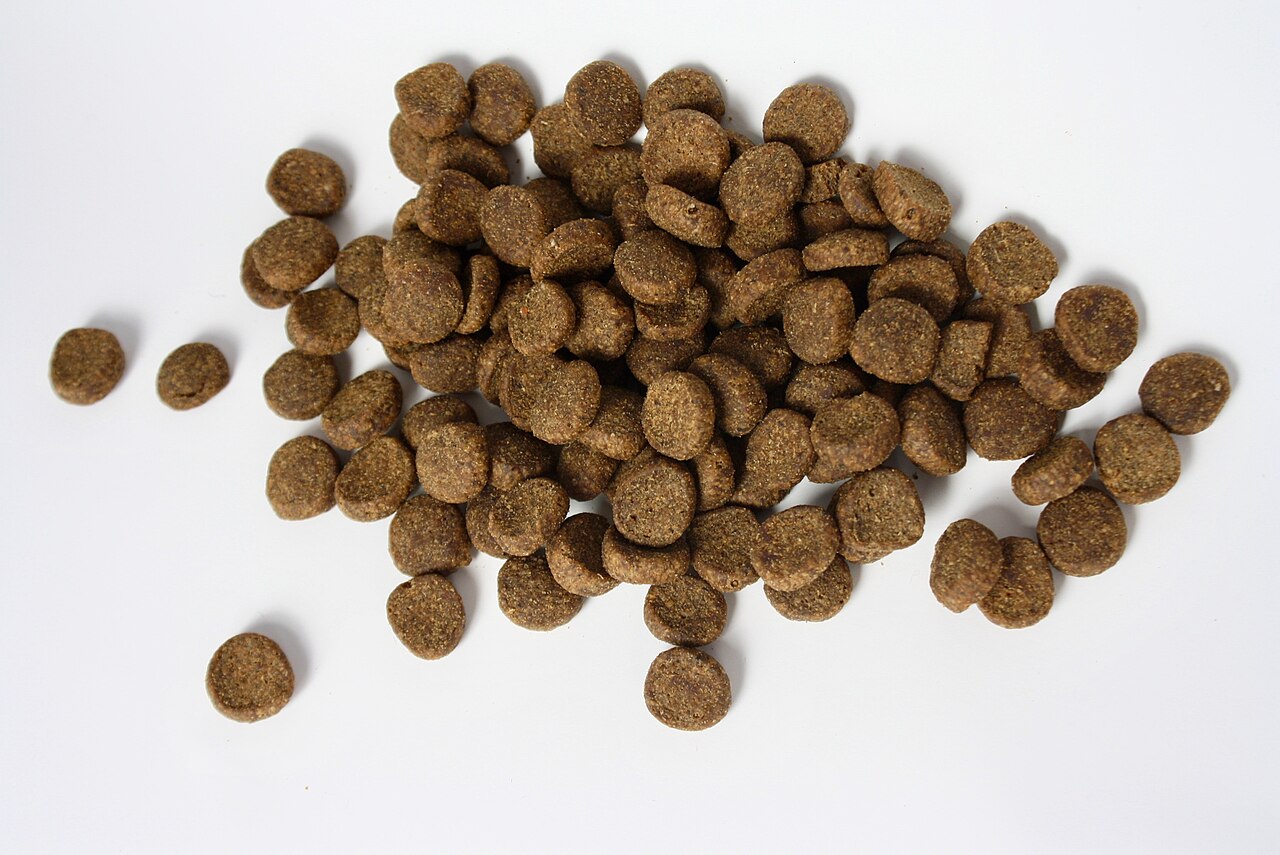
Photo: Megan Marrs / CC BY 2.0 / Wikimedia Commons