Most people choose a dry food by reading the ingredient list. The part you can actually see — the piece itself — gets far less attention, even though size and shape decide whether a cat or dog can pick the food up comfortably, chew it, and finish the bowl.
Why the Piece Matters More Than the Label
A kibble that is too wide for the mouth gets pushed around the bowl instead of lifted. A piece that is too small gets swallowed whole, which means no chewing and a meal that is over in seconds. Both problems look like picky eating or greediness, but neither is about appetite. The food simply does not fit the animal eating it.
Mouth width, muzzle length, jaw strength and tooth condition all shape the answer. A tiny toy breed and a giant breed can eat the same recipe from the same bag and have completely different experiences of it.
Matching Size and Shape to the Pet
Treat this as a starting point, then adjust by watching your own pet eat.
| Pet | What to look for | Warning sign |
|---|---|---|
| Cats | A piece about the size of the eye, firm enough to crunch | Pieces that vanish in a single gulp |
| Small dogs | Roughly 12 mm or less across | Coughing, or kibble carried out of the bowl |
| Large deep-chested dogs | Larger, irregular pieces that require chewing | Dinner finished in under a minute |
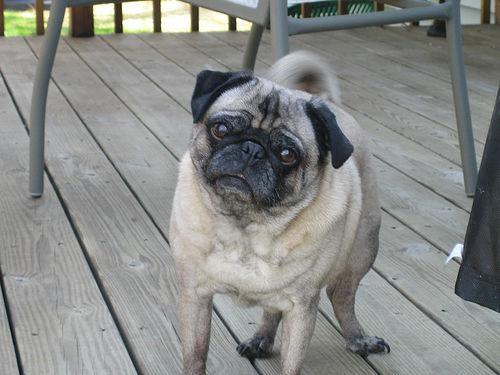
| Flat-faced cats and dogs | Small, rounded or almond-shaped, slightly softer | Wide flat pieces that cannot be gripped |
| Senior pets | Smaller pieces, or softened with warm water | Chewing on one side, food dropped on the floor |
How to Test the Fit at the Bowl
You do not need a tape measure. Watch the first few meals with any new bag and read what the bowl tells you.
- Good fit: pieces are picked up without chasing, chewing is audible, and the meal takes several minutes.
- Too large: food is carried away from the bowl, pieces are dropped, or the bowl is left half full.
- Too small: the meal is over in well under two minutes and your pet is back asking for more.
- Wrong shape: your pet paws food onto the floor, tips the bowl, or gives up partway through.
- Mouth pain: head tilting or chewing on one side points to a sore mouth, which is a vet question rather than a food question.
Changing Size Without Upsetting the Routine
Treat a new kibble size like a new food. Change one thing at a time, mix old and new together over seven to ten days, and keep the daily total the same so calories do not quietly drift upward. Weigh the portion instead of eyeballing it — a scale catches the drift a measuring cup hides.
If your pet eats too fast, a bigger piece is not always the answer; a slow-feeder bowl or scattering food across a tray often works better. If the problem is sore teeth or gums, softening kibble with warm water or moving to wet food for a while is kinder than forcing a hard piece.
Good kibble size is not a claim printed on a bag. It is a fit between one mouth and one piece, and it takes a single meal to check: watch the minutes, and look at what is left behind. General husbandry information only, not veterinary advice. New or worsening trouble with chewing or swallowing should be assessed by your veterinarian.