Itchy paws, recurrent ear infections, year-round scratching — sooner or later someone recommends a “limited ingredient” food. The shelf is full of them, along with “novel protein” formulas and prescription hydrolyzed diets, and the marketing implies they all do the same job. They do not. Understanding what each type actually delivers, and where each one fails, is the difference between a useful experiment and twelve wasted weeks.
Three Different Ideas, Often Confused
A limited ingredient diet (LID) simply shortens the recipe, usually to one main protein and one carbohydrate. A novel protein diet uses a protein your individual dog has never eaten — the immune system cannot react to something it has never met. A hydrolyzed diet attacks the problem chemically: the protein is processed into fragments, typically smaller than about 13 kilodaltons, that the immune system no longer recognizes as the original allergen. The categories overlap in practice, but their reliability for diagnosis is very different. Crucially, “novel” is relative to your dog’s history, not to the ingredient list: venison is not novel to a dog raised on venison food.
The Cross-Contamination Problem
The uncomfortable finding from veterinary dermatology literature is that many over-the-counter products marketed for sensitive dogs contain proteins that are not on the label. Published reviews report undeclared ingredients in roughly a third to four-fifths of limited and novel protein diets tested. In one study of eleven limited-antigen canned foods, six contained undeclared meats — including a formula labeled as duck-only whose DNA analysis found turkey, chicken and horse, with no duck detected at all. Another survey across fourteen brands found thirteen brands selling at least one mislabeled product. The cause is mundane: shared production lines. Prescription hydrolyzed diets are manufactured under strict controls specifically to prevent this, which is why dermatologists prefer them when the diet is meant to answer a diagnostic question.
Choosing the Right Tool
| Type | Best suited for | Main limitation |
|---|---|---|
| OTC limited ingredient | Long-term maintenance after an allergy is confirmed | Contamination risk; unreliable as a diagnostic |
| OTC novel protein | Suspected allergy when the diet history is certain | “Uncommon” proteins are now common; same risk |
| Hydrolyzed, prescription | Diagnostic elimination trials; multiple allergies | Cost; some dogs dislike the taste |
This does not make OTC options useless. Once you know your dog’s trigger, a reputable limited ingredient food can maintain the result for years. The rule of thumb: hydrolyzed for diagnosis, any well-tolerated food for maintenance.
Running a Trial That Answers Something
Start at the vet’s office: parasites, infections and environmental allergies mimic food reactions and will not respond to any diet. Then make the trial strict. Everything that enters the mouth counts as part of the test — flavored medications, dental chews, toothpaste, table scraps, the other pet’s food. The trial itself runs eight to twelve weeks, because skin and gut inflammation take that long to settle; giving up at week three proves nothing. Keep a simple weekly log of scratching, stool quality and ear condition. If signs improve, reintroducing the old food and watching them return confirms the diagnosis. If nothing changes by the end, the problem was probably never in the bowl, and the next step is a dermatology workup rather than another brand.
Read past the front of the bag. Count the protein sources actually listed, ask manufacturers about their production lines, and match the strictness of the diet to the question you need it to answer. The label can start the conversation, but the trial design is what produces an answer.
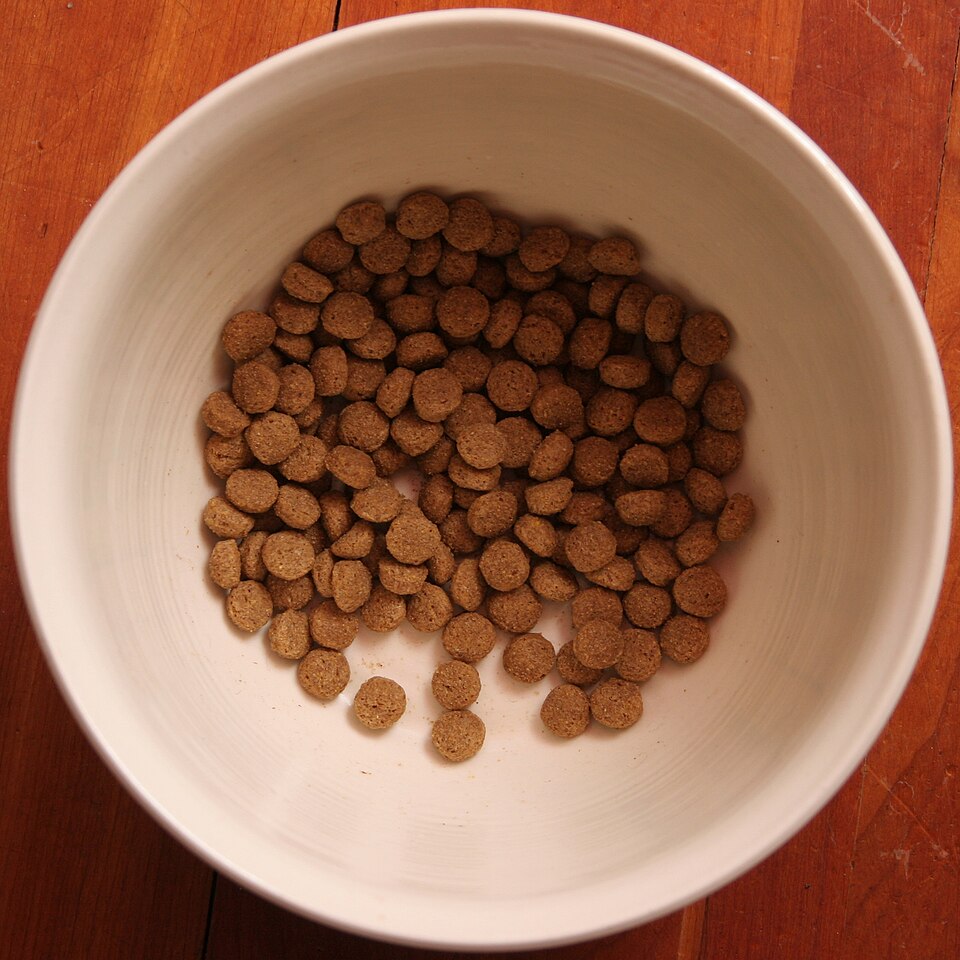
James Redekop / CC BY-SA 2.0 / Wikimedia Commons