When two or more pets share a home, trouble usually starts quietly rather than with a growl or a swat. A cat stops using the litter box. A dog starts guarding the sofa. A kitten hides under the bed all day. In almost every case, the missing ingredient is not affection or training, it is a place to go. Zoning the house means dividing it into clear areas so each pet has space of their own, escape routes to use, and fewer reasons to defend anything.
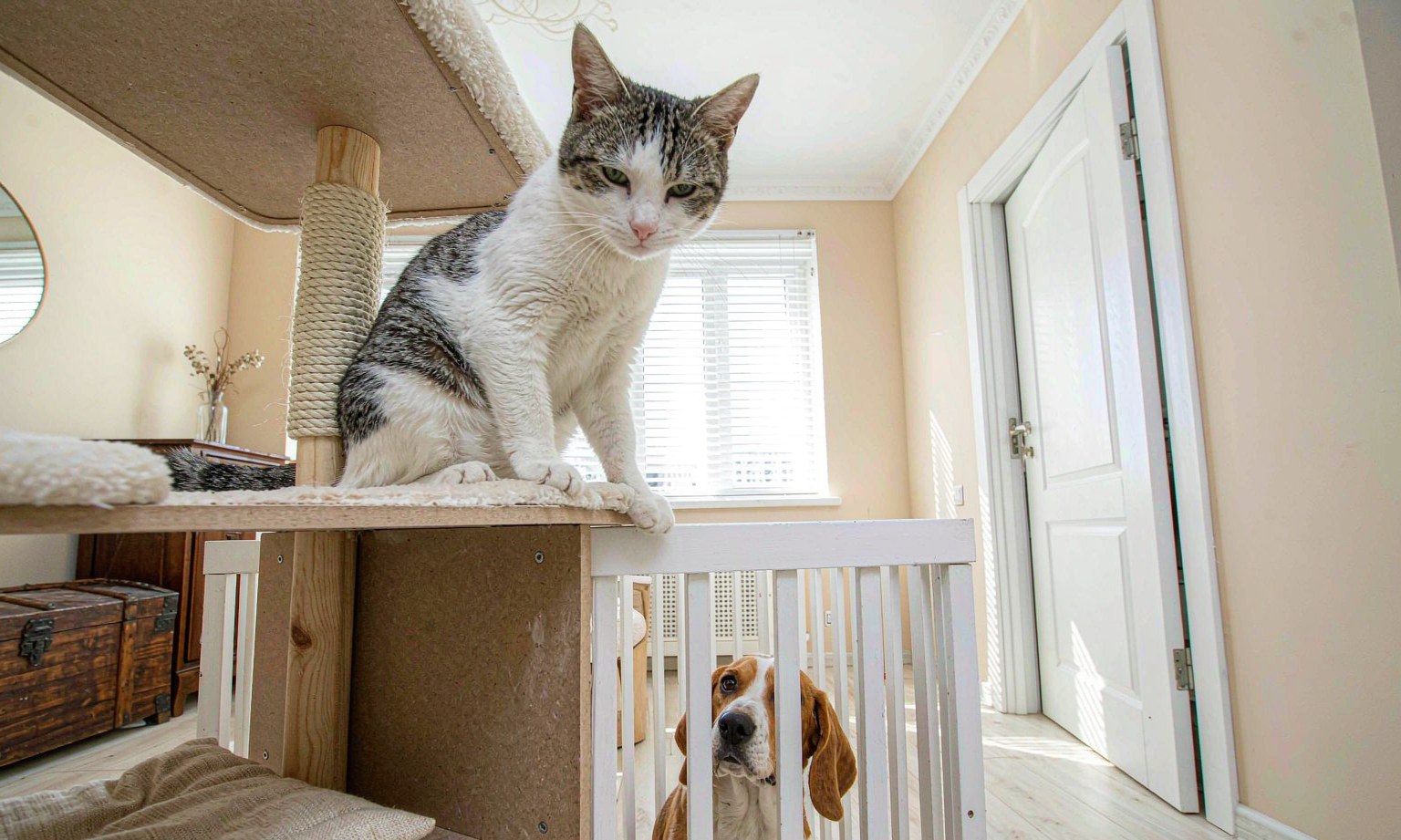
Pets resolve conflict in three ways: they avoid, they appease, or they escalate. Avoidance depends entirely on how the room is arranged. If a cat has no shelf to jump to and no clear way out of the kitchen, avoidance is impossible and the only remaining option is a swipe or a chase. Zoning works because it restores the first option instead of relying on the last one.
Give Every Pet a Core Zone
Each pet needs one area they can treat as theirs, and it does not require a spare bedroom. What matters is that the space is predictable, comfortable and not a corridor other pets pass through:
- A bed in the corner of a low-traffic room, with the bed against a wall rather than in the open.
- An open crate with a blanket over it, which becomes a den your dog can retreat to.
- A quiet room or hallway section for a cat, with the litter box, food and water inside it.
- Water available in more than one place, so no pet has to cross another pet’s area to drink.
- Toys stored per pet rather than in one shared basket, which reduces guarding and stops cats’ small toys from becoming a dog’s chew toy.
Use Barriers as Traffic Control, Not as Punishment
A gate or a door is a management tool, not a sentence. Set it up so the pet on the far side can still see, hear and smell the household, and feed or offer treats near the barrier so the barrier predicts good things rather than isolation.
| Barrier | Best use | Common mistake |
|---|---|---|
| Tall pet gate with a small cat door | Letting a cat into a dog-free room while the dog stays out | Using a gate far too short for a climbing or jumping dog |
| Baby gate at a doorway | Short, supervised separations during meals or introductions | Leaving a pet behind it for hours on end |
| Closed door with a scent gap | Early introductions between a new pet and a resident one | Skipping the scent and feeding steps and rushing to face-to-face meetings |
| Playpen or exercise pen | Keeping a puppy or a convalescing pet safely in the room with you | Making the pen too small to stand, turn and lie down in |
Give Cats the Vertical Advantage
Height is a cat’s insurance policy. A shelf, a cat tree or a cleared bookcase top gives a cat a vantage point where a dog cannot follow, and a cat who can watch from above is far less likely to react defensively on the floor. Place perches where the cat can see the room’s main entrance, keep at least two ways down so nobody can be cornered, and anchor heavy trees or wall shelves so they cannot tip under a sudden launch.
Rotate Access Instead of Running a Free-for-All
You do not have to separate your pets permanently, and you should not. A simple rotation gives each pet undivided access to the shared space without anyone having to compete for it. Put one pet in their zone with a chew or a puzzle toy while the other has the run of the living room, then swap after an hour. Rotating also means every pet gets one-on-one time with you, which is where most of the relationship actually gets built.
Signs Your Zoning Is Working
Litter box use returns to normal. Both pets sleep in the open rather than on high alert. Nobody guards doorways, food bowls or your lap. A cat walks past a resting dog rather than freezing or fleeing. If you see the opposite, if a pet hides constantly, stops eating or escalates at every meeting, the zoning is too restrictive, too open, or placed in the wrong spot, and it is worth a check-up with your veterinarian in case pain is driving the behaviour.
Zoning is not about keeping pets apart forever. It is about giving each of them a door to close, so the time they spend together is a choice rather than something they have to endure. Set up the zones, add the barriers, give the cat somewhere high to sit, and rotate access generously. Most households find that once everyone has an escape route, they need it far less often.