Few fish cause as much quiet frustration as the neon tetra. Sold by the thousands as a cheap, hardy beginner fish, it then fades or dies within weeks in tanks that seem perfectly fine for other species. The truth is that neon tetras are not fragile – they are simply intolerant of two things: unstable water and loneliness. Get those two right and they are among the most rewarding community fish you can keep, glowing blue and red under a dim light for years.
School Size Is Not Optional
Neon tetras are obligate shoaling fish. A single tetra is a stressed tetra, and stress is the gateway to nearly every problem that follows. Keep at least six together, but a school of ten or more behaves in a completely different way: tighter formation, brighter color, bolder swimming in the open water column instead of nervous hovering near the glass.
- Minimum group size: 6 – below this, expect hiding and washed-out color.
- Better: 10 to 12, in a tank of at least 20 gallons (75 liters).
- A 20 gallon long layout suits them better than a tall tank, because neons are horizontal swimmers.
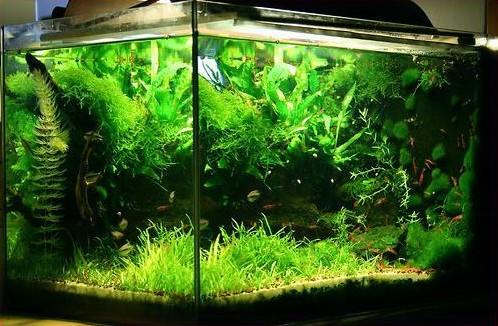
- Add floating plants and dim lighting so the school feels safe in open midwater.
Water: Stable Beats Perfect
Neon tetras come from soft, slightly acidic Amazon tributaries, but decades of captive breeding have made them adaptable. What they cannot adapt to is swing. A pH that jumps after every water change stresses them far more than a stable pH that is slightly off from the textbook value. Test before adding any fish, and aim for these targets:
| Parameter | Target | Why It Matters |
|---|---|---|
| Temperature | 72 to 76 F (22 to 24 C) | Warmer water speeds up disease and shortens lifespan |
| pH | 6.0 to 7.0 | Stability matters more than the exact number |
| Hardness | Soft to moderate (GH below 10) | Most tap water is fine if it is consistent |
| Ammonia / nitrite | 0 ppm, always | Neons tolerate almost no measurable ammonia |
| Nitrate | Below 20 ppm | Keep it low with weekly 25 percent water changes |
The Real Reason They Die in Week One
When someone says neon tetras die easily, the usual culprit is new tank syndrome: fish added before the biological filter has matured. Ammonia and nitrite spikes that a betta might survive will wipe out a school of neons quickly. Only add them to a fully cycled tank, acclimate them slowly with a drip or a long float, and never skip quarantine for new arrivals.
Feeding and Everyday Health
Neons have tiny mouths, so large flakes go uneaten and rot in the tank. Feed crushed flakes or micro pellets once or twice daily, only what they finish in under two minutes, with occasional frozen baby brine shrimp or daphnia for color and conditioning. Watch for the classic warning signs of neon tetra disease: a fading blue stripe, a lopsided swim, or white lumps under the skin. There is no cure, so prevention – quarantine, clean water, no live tubifex – is the entire strategy.
The Bottom Line
Give a school of ten neons a cycled, planted, gently filtered tank with stable soft water, and you will get five to eight years of one of the most beautiful sights in the hobby. Most early failures are not bad luck – they are a cycling problem or a group-size problem wearing a disguise.