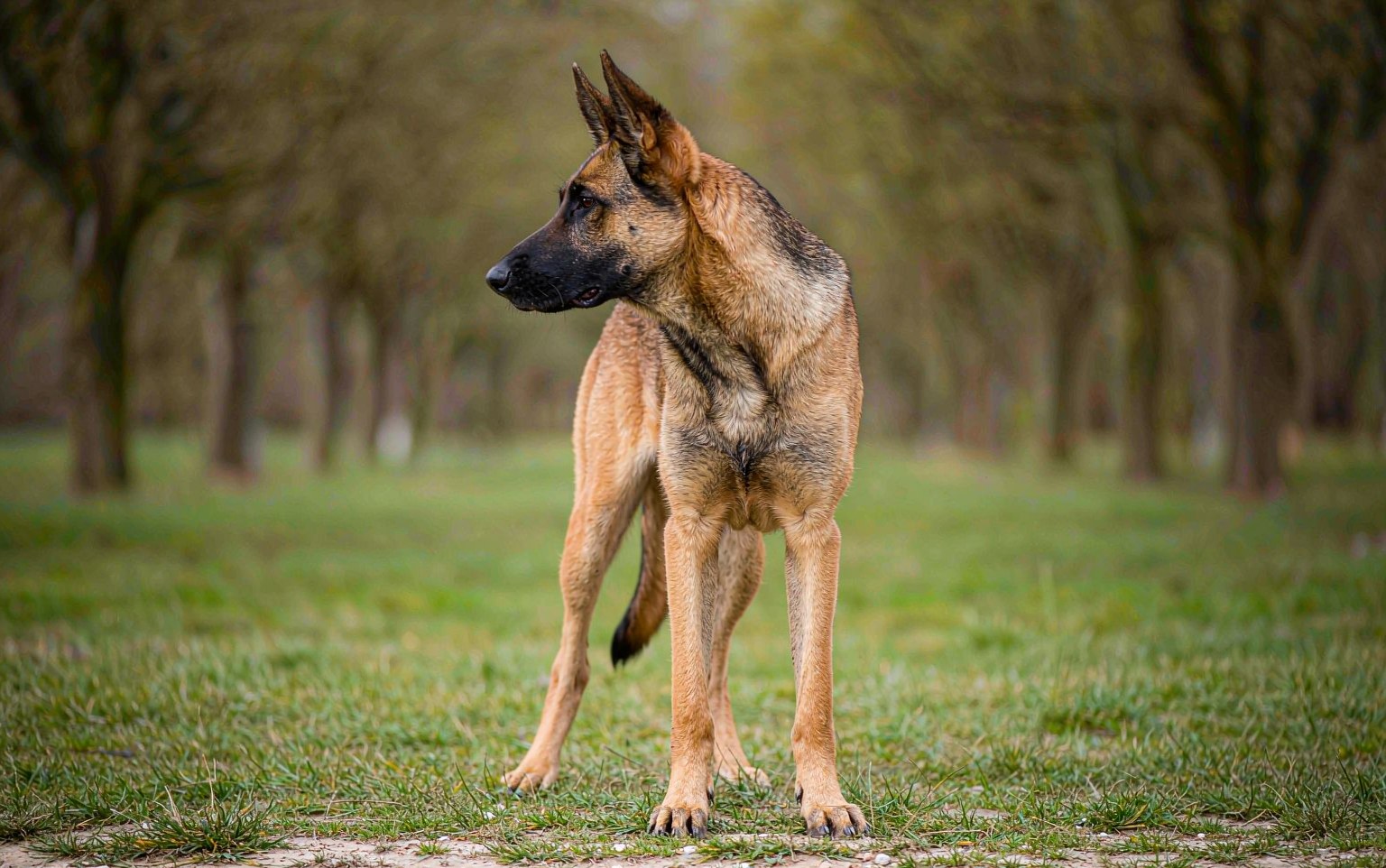
A six-month-old German Shepherd bounds through the yard on Sunday and limps on Monday. No fall, no twist, nothing on the stairs. Two weeks later the limp vanishes, only to reappear in a different leg. This shifting, unexplained lameness is the classic signature of panosteitis, a painful inflammation of the long bones of young, fast-growing dogs, so common in large breeds that it has earned the nickname “growing pains.”
What Panosteitis Is
Panosteitis affects the marrow cavity and inner lining of the long bones: the humerus, radius, ulna, femur, and tibia. New fibrous tissue and bone form inside the marrow space, and the rising pressure inside the bone is what causes the pain. The disease is self-limiting, meaning it burns out on its own, usually by the time the dog reaches skeletal maturity around two to two and a half years of age.
Which Dogs Get It
Large and giant breeds dominate the list: German Shepherds are the classic case, followed by Golden Retrievers, Labradors, Great Danes, Rottweilers, Dobermans, and Basset Hounds. Signs typically appear between five and eighteen months, and male dogs are affected more often than females.
The Signs That Fit the Pattern
- Sudden lameness in one leg with no history of trauma
- Pain when the middle of the long bone is squeezed or touched
- The limp shifting to a different leg over days or weeks
- Episodes lasting days to weeks, separated by pain-free gaps of a month or so
- Occasional fever, reduced appetite, or tiredness during an episode
- A puppy that refuses to walk far, hesitates on stairs, or cries when the leg is handled
Any puppy that limps deserves a veterinary exam; growing pains are a diagnosis of exclusion, not a guess.
How the Diagnosis Is Made
Vets localize the pain by pressing along each long bone, then confirm with radiographs, which typically show increased density inside the marrow cavity of the affected bone. The X-ray changes can lag behind the limping by up to ten days, so a puppy with a convincing exam may need repeat films two weeks later. Blood work helps rule out tick-borne infections and other causes of shifting lameness, such as immune-mediated joint disease.
Treatment Directions
Because panosteitis resolves on its own, treatment is about comfort, not cure.
- Pain control comes first. Veterinarians prescribe analgesics, typically non-steroidal anti-inflammatory drugs, at doses fitted to the puppy; owners should never dose human painkillers, which can be toxic to dogs.
- Exercise is restricted during episodes, with leash walks instead of hard running and jumping; between episodes, moderate activity is fine.
- Diet stays balanced. Growth-formula food in appropriate amounts matters more than supplements; excess calcium and rapid weight gain are linked to developmental bone problems in general.
Most puppies outgrow the disease completely, and X-rays normalize once it resolves. The prognosis is excellent, but the episodes are genuinely painful, so no puppy should be expected to simply push through them.
If your young large-breed puppy suddenly limps, or the limp keeps moving from leg to leg, have your veterinarian examine and image the legs. Ruling out the more dangerous causes of lameness is quick, and proper pain control makes the growing months far kinder.