The Russian tortoise is one of the hardiest and most beginner-friendly tortoises in the hobby, which is exactly why its diet gets taken for granted. Fed the wrong foods, this sturdy grazer develops shell deformities, obesity, and kidney trouble within a few years. Fed correctly, it can outlive its owner. The formula is simple to remember: high fiber, low protein, and a calcium-to-phosphorus ratio of at least 2:1.
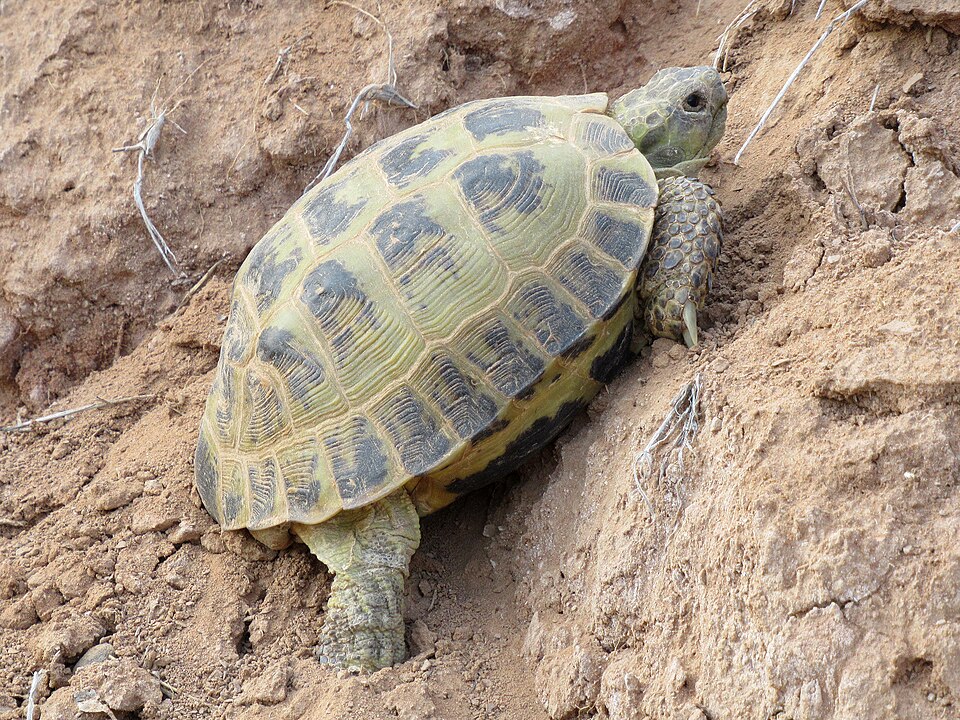
Built to Eat Weeds, Not Salad From a Bag
In the arid grasslands of Central Asia, Russian tortoises spend their days foraging on tough, dry weeds and flowers. Their digestive tract is a fermentation engine designed for fibrous plant material, not for sugary fruit or iceberg lettuce. Captive feeding works best when it mimics that wild menu: a wide rotation of dark leafy greens, edible weeds, and the occasional flower, chopped to shell size and served damp. Variety is not decoration here — no single green covers every vitamin and mineral a tortoise needs, so rotating three or four species each week does real nutritional work.
Safe Staples to Rotate
| Food | Role in the diet | Notes |
|---|---|---|
| Dandelion greens and flowers | Staple | Excellent calcium source; the single best weed |
| Endive, escarole, radicchio | Staple | Low oxalate, widely available year-round |
| Collard and turnip greens | Staple | Calcium-rich; feed raw and chopped |
| Plantain and clover (pesticide-free) | Staple in season | Only from lawns never treated with chemicals |
| Butternut squash, bell pepper | Supplement | Small amounts for variety and vitamin A |
| Hibiscus, rose petals, nasturtium | Treat | Edible flowers; pesticide-free only |
Foods to Leave Out of the Bowl
- Spinach, beet greens, and chard — high in oxalates, which bind calcium and block absorption.
- Fruit — the sugar disrupts gut bacteria; at most a tiny piece once a month.
- Animal protein and dog or cat food — excess protein causes shell pyramiding and kidney damage.
- Iceberg lettuce — nearly no nutrition; fills the belly without feeding the body.
- Rhubarb and avocado — toxic; never offer them.
Calcium and the 2:1 Rule
Every food you offer should carry more calcium than phosphorus, ideally twice as much or better. Phosphorus competes with calcium for absorption, so a phosphorus-heavy menu slowly starves the shell even when the tortoise eats well. Dust food with a plain calcium carbonate powder two to three times a week for adults and at most feedings for growing juveniles, and keep a cuttlebone in the enclosure for self-service. Remember that calcium only becomes bone and shell with proper UVB exposure — diet and lighting work as a pair.
How Often and How Much
Feed adults once daily or every other day, offering a pile of greens roughly as large as the tortoise’s shell; growing juveniles eat daily. Soak young tortoises in shallow warm water two or three times a week to support hydration, and remove uneaten food after a few hours. When autumn arrives and activity drops, shrink portions along with appetite rather than leaving food to rot. A tortoise that eats a rotating weed salad under good UVB rarely needs anything else — no pellets required, no shortcuts available. Get the weeds right and everything else — smooth shell, steady weight, a tortoise that meets you at the glass — tends to follow on its own.