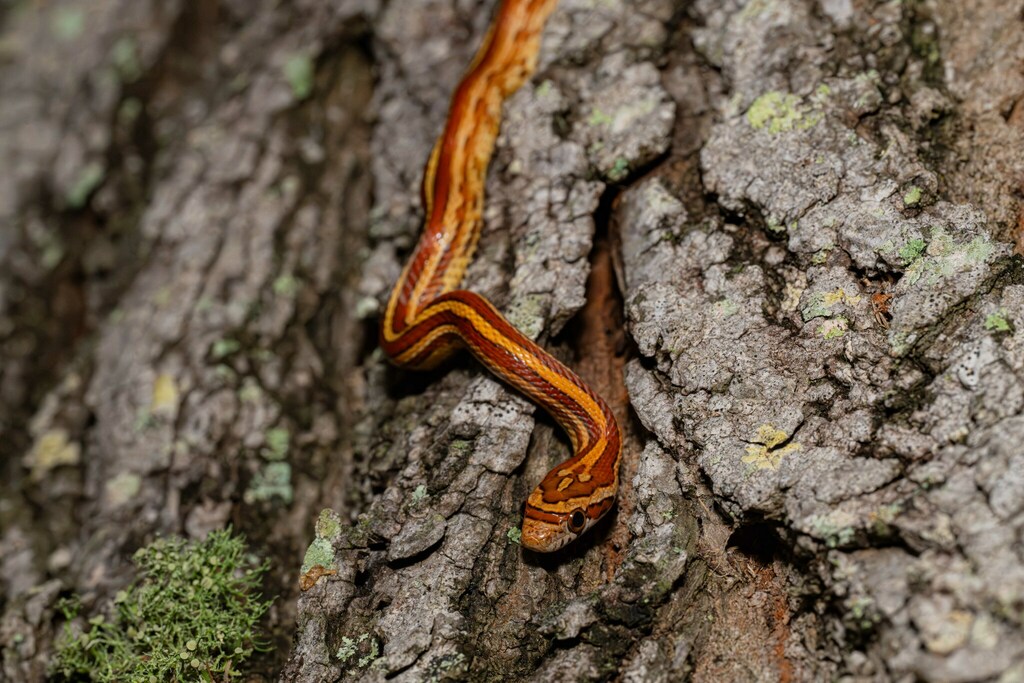
Your corn snake’s eyes have gone cloudy and it is hiding more than usual. New keepers panic; experienced ones check the humidity gauge and wait. Shedding — ecdysis — is a normal, lifelong process, and a healthy snake handles it alone. Your job is not to help the skin off. Your job is the environment that lets it slide off by itself.
The Cycle, Stage by Stage
From first sign to finished shed usually takes seven to fourteen days:
- In blue. Lymphatic fluid separates old skin from new; the snake’s eyes turn milky blue-gray and its colors dull. Vision is poor and tempers are short — a normally calm snake may act defensive.
- Clear-up. The fluid is reabsorbed, eyes brighten again, and the shed typically happens within days.
- The shed itself. The snake rubs its snout on rough surfaces to start a split, then crawls out of the old skin, turning it inside out like a sock — ideally in one complete piece, eye caps included.
Juveniles shed every few weeks as they grow; adults may go months between sheds. Appetite often drops beforehand and some snakes refuse food entirely — that is normal, and so is wanting less handling.
Setting Up a Clean Shed
Most shedding problems trace back to three fixable things: low humidity, no rough surfaces, and dehydration. During a shed cycle, keep humidity at the higher end of the species’ normal range (many common pythons and colubrids sit around 40–60%, temporarily higher when shedding), verify with a digital hygrometer rather than guessing, and make sure these are in place:
- A humid hide — a covered container with damp sphagnum moss or paper towel, refreshed often so it never molds.
- Rubbing surfaces — cork bark, branches, textured rocks for the snout-splitting stage.
- A large shallow water dish the snake can soak in, placed where it will actually use it.
When Shed Gets Stuck
Dysecdysis — retained shed — shows up as flaky patches, a tight ring of skin around the tail tip, or clouded retained eye caps. The tail ring is the urgent one: it can restrict circulation. Eye caps and tail tips are exactly where force does damage, so the first move is always moisture, never peeling:
| Method | How |
|---|---|
| Humid hide | Contain with damp moss; give 24 hours before anything else |
| Lukewarm soak | 10–20 minutes in 26–29°C water, shallow, always supervised |
| Damp pillowcase | 20–30 minutes of humid confinement, then re-check |
| Gentle towel rub | After soaking, wipe in the direction of scales — never pull |
Never grab and yank dry skin: it tears the new skin underneath, and retained spectacles pulled by force can permanently damage the eye. If stuck shed near the eyes or tail does not release after a couple of moisture cycles, that is a reptile vet visit, not a bigger tug.
Aftercare and the Real Diagnosis
Give the snake two to three quiet days post-shed before resuming handling, and offer the first meal about 48–72 hours later. One bad shed happens; repeated bad sheds are a symptom of something else — chronic low humidity, mites, scars, poor nutrition, or illness — and warrant a husbandry review rather than another soak. Nail the humidity, provide the hide and the bark, and shedding becomes what it should be: a quiet week of cloudy eyes, then one perfect sock of skin on the terrarium floor.