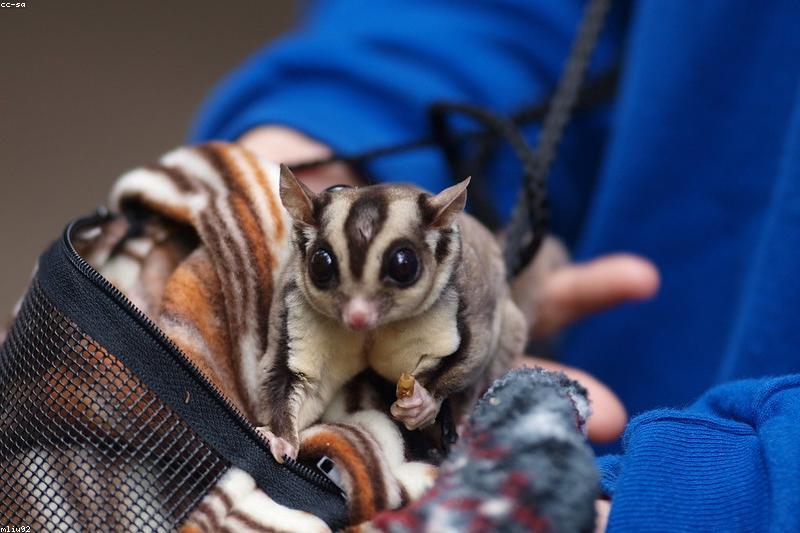
A sugar glider weighs about 100 grams and comes from warm, humid forests — which means a living room that feels fine to you can be genuinely cold to a glider, especially overnight. Cold rooms are the most common winter problem for this species, and they arrive quietly: less climbing, less appetite, longer hours curled in the pouch. With stable warmth and a few safety rules, winter is easy to manage.
How Cold Is Too Cold?
Veterinary references place a glider’s thermoneutral zone — the range where the body works without extra effort — at roughly 27–31 °C (80–88 °F) in the sleeping area, with the wider habitat kept in the mid-to-upper twenties.
| Zone | Target | Notes |
|---|---|---|
| Sleeping pouch area | 27–31 °C | The warm retreat that matters most |
| Main cage | 24–28 °C | Let your glider move between warm and cool spots |
| Absolute floor | Never below 18 °C | Sustained cold risks torpor and hypothermia |
Below about 18 °C, gliders can slip into torpor — a low-energy, hard-to-wake state that looks like illness and can turn dangerous in a home setting. Measure at pouch height with a digital probe thermometer, not a stick-on strip; rooms always feel warmer than cages do.
Set Up a Warm Sleeping Zone
Do not try to heat the whole cage — create one reliably warm retreat and let your glider choose. A fleece sleeping pouch is the core of the setup: provide two or three so a damp one can be swapped out daily, and check pouches for loose threads that snag toes. Warm that corner with an indirect source: a thermostat-controlled ceramic heat emitter or radiant panel positioned outside chewing reach, or a low-watt pad attached to the exterior of part of the cage. The golden rule is choice — your glider must always be able to move to a cooler spot. Spot-clean nesting areas daily, because damp bedding plus cool air strips heat away fast. Draping a blanket over part of the cage at night helps hold warmth, as long as ventilation stays open.
Heating Safety Rules
Small, curious animals and electrical heat need strict rules:
- Thermostat-controlled heat sources only; check readings morning and night
- Every cord protected or routed outside the cage — chewing a live cord is fatal
- No hot rocks, hot-water bottles, or unregulated heat pads inside the cage
- No exposed heat lamps that the animal or bedding can touch
- Keep the cage away from drafty windows, exterior doors, and heating or air-conditioning vents
- Never leave a glider in a cold car; use an insulated carrier for winter vet trips
Know the Warning Signs
A glider that is getting cold goes quiet before anything dramatic happens. Early signs: reduced activity, tighter and longer curling in the pouch, cool ears or feet, less interest in food and water. More serious: weakness, trouble gripping and climbing, abnormal breathing, being hard to wake, or a limp, unresponsive body — treat that as an emergency. Warm the glider slowly against your own body, and contact an exotic-animal vet. Never use a hairdryer or hot water. Dehydration often travels with cold stress, so a glider that also stops drinking needs professional care the same day.
Winter glider care is really about stability: one warm pouch, steady temperatures, protected cords, and a thermometer you actually check. Do that and your glider will sleep through the cold snap exactly the way nature intended — snug, warm, and waking up hungry at dusk.