Ask ten owners to scoop one cup of the same kibble and you will get ten different meals. Portion sizes look precise on the food bag, but the tool most owners use to deliver them, a scoop or measuring cup, is the least accurate part of the whole system. For small dogs and cats, whose entire daily ration may be a quarter cup, that error is enormous. The fix costs about the same as two cups of the food itself.
What the study found
Researchers at the University of Guelph asked 100 dog owners to measure a quarter, a half, and one full cup of dry food using three devices: a standard dry-food cup, a liquid measuring cup, and a commercial food scoop. Measured against a gram scale, individual results ranged from 47.8 percent under the correct weight to 152.2 percent over it. The smallest portions produced the biggest errors, which lands hardest on owners of toy breeds and cats. Earlier work had already shown that repeatedly using the same cup can overestimate portions by up to 80 percent. The authors’ takeaway was simple: use a gram scale or a volume-calibrated device, especially for small portions. Multiply one generous scoop by two meals a day, every day, and gradual weight gain is almost guaranteed.
Why cups drift
Kibble is irregular. Pieces settle differently, a shake of the cup compresses the food, and most people heap the top without noticing. Even the same owner drifts, because nobody scoops a heaped half cup twice, and humidity changes how kibble settles from one day to the next. Volume measures the space food takes up; calories follow its weight. Two cups of a large-bite kibble and two cups of a small-bite formula can differ by tens of grams and hundreds of calories.
Switching to grams in five minutes
- Find the calorie statement on the bag: kcal per kilogram, and kcal per cup or per can
- Weigh one level cup of your food on a kitchen scale and note the gram weight
- Convert your dog’s or cat’s daily calorie target into grams of that specific food
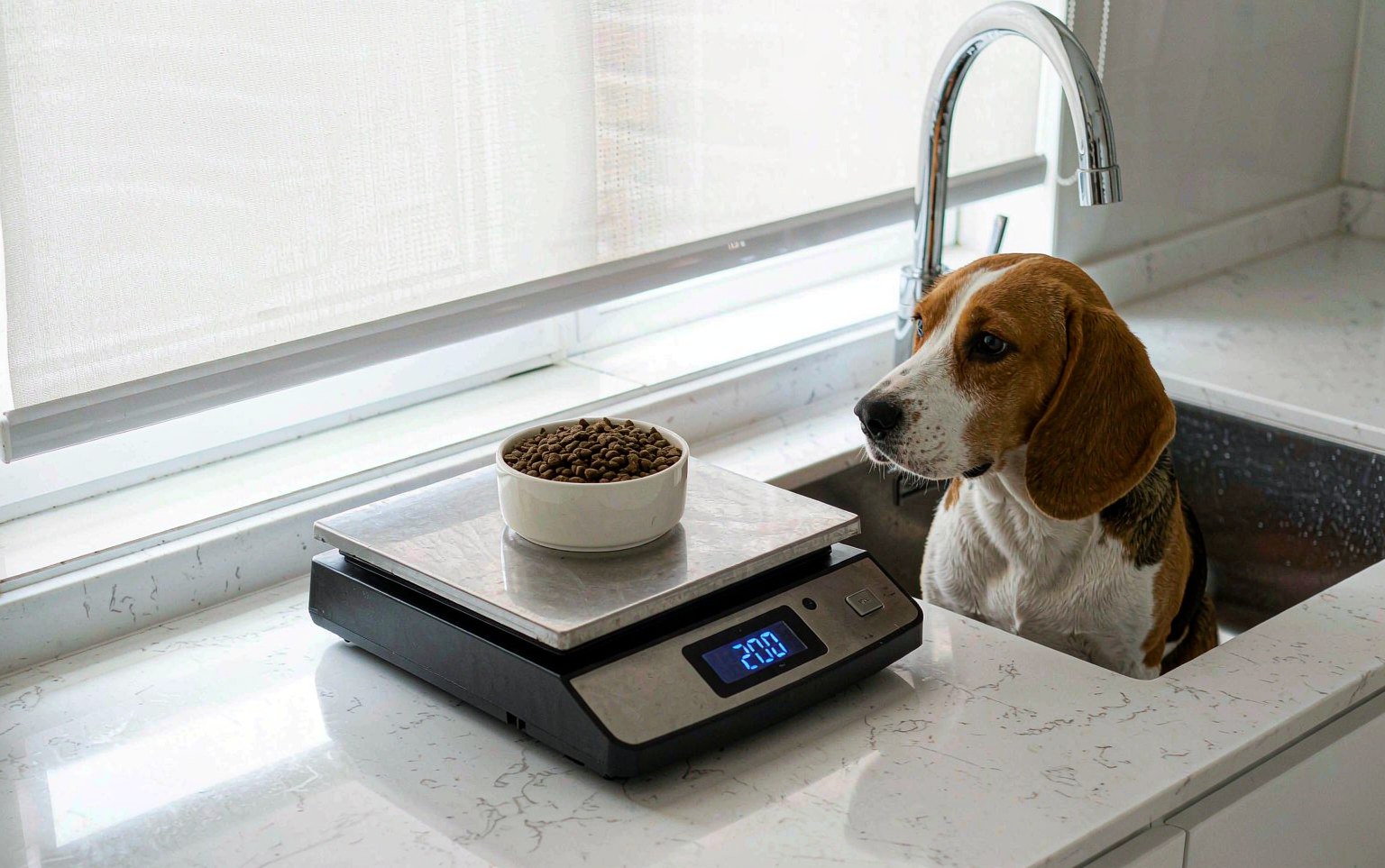
- Put the bowl on the scale, tare to zero, and pour to the target number; it takes seconds
- Weigh your pet monthly and adjust the gram target in small steps
Wet food and treats count too
A gram scale works just as well for wet food, which is far more accurate weighed than measured by the forkful. Treats deserve the same treatment, because they are the calories owners forget: keep rewards under roughly ten percent of daily calories, and weigh them rather than guessing. For a cat on a weight-loss plan, the difference between 5 and 10 grams of the wrong food can be the whole diet.
An ordinary digital kitchen scale costs less than a bag of premium food and lasts for years. It turns feeding from an eyeball estimate into a number, and numbers are the only thing the portion guide on a bag was ever meant to mean.