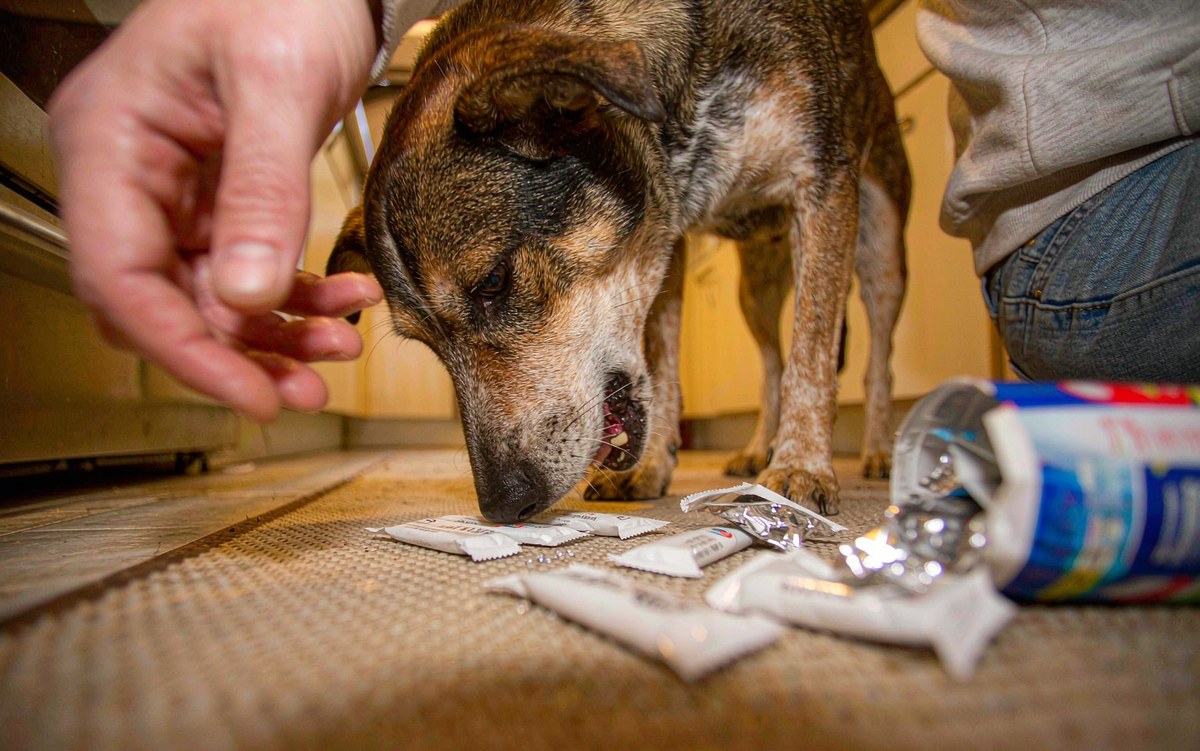
Xylitol is a sugar alcohol used to sweeten sugar-free gum, mints, candies, and a surprising range of everyday products. For people it is unremarkable. For dogs it is a fast-acting poison, and dogs are the only domestic species in which xylitol poisoning has been reported. Cats are not at risk for the blood sugar and liver effects seen in dogs.
Why It Hits Dogs So Hard
In most mammals xylitol has little effect on insulin. In dogs it triggers a rapid, exaggerated insulin release — several times what would normally be needed to handle the same amount of ordinary sugar — and blood glucose collapses within roughly half an hour to an hour of ingestion.
The second, separate threat is direct liver injury: acute hepatic necrosis that can progress to liver failure. The mechanism behind that damage is not fully understood; current hypotheses involve depletion of cellular energy stores or oxidative damage during xylitol metabolism. Importantly, the two problems do not always occur together. A dog can develop liver injury without ever showing a hypoglycemic phase, which is one reason owners are advised never to wait for symptoms before seeking help.
Where Xylitol Hides
| Category | Examples |
|---|---|
| Confectionery | Sugar-free gum, breath mints, hard candies, sugar-free chocolate |
| Foods | Peanut and nut butters, baked goods, sugar-free desserts and syrups |
| Dental and oral care | Toothpaste and other oral hygiene products |
| Supplements and medicine | Chewable vitamins, nutritional supplements, some liquid medications |
| Personal care | Sunscreen, cosmetics, deodorant, lotions, and hair care products |
Two practical warnings follow. Xylitol content varies enormously between brands — and even between flavours of the same brand — so it cannot be judged from the product type or a quick glance at the label. And a single piece of sugar-free gum can carry enough xylitol to matter for a small dog, which is why any suspected exposure is handled as an emergency rather than a wait-and-see situation.
Signs and Timeline
- Early, from low blood sugar: vomiting, weakness, lethargy, an unsteady or staggering walk, tremors, collapse, seizures
- Later, from liver injury: persistent lethargy, vomiting, a yellow tinge to the gums and eyes, and bleeding tendencies
- Delayed onset: products that release xylitol slowly, such as some gums, can push the first signs out as far as twelve to eighteen hours
What Your Veterinarian Will Evaluate
There is no test that detects xylitol itself, so the diagnosis rests on exposure history, clinical signs, and bloodwork. Expect blood glucose monitoring, liver enzyme values, electrolytes — low potassium is common — bilirubin, a complete blood count, and a coagulation profile to assess bleeding risk. Because liver changes can take hours to appear, repeat testing over the following days is often necessary, and a dog that looks well on arrival may still need to stay for observation.
Treatment Direction
Treatment depends on how much time has passed and whether signs have started. If ingestion was very recent and the dog is still clinically normal, a veterinarian may decontaminate the gut before signs develop. Once low blood sugar appears, the priorities shift to intravenous dextrose, intravenous fluids with electrolyte correction, anti-nausea medication, and protectants for the stomach and liver. Hospitalisation for at least a day is typical, with liver values rechecked several days after exposure. The outcome is good for dogs whose blood sugar is managed aggressively; dogs that develop liver injury have a much more guarded prognosis.
When to Call Your Veterinarian
Call immediately — do not wait for symptoms. Bring the product packaging with you so the xylitol content can be assessed. Do not try to make your dog vomit at home, and do not offer food or sugar as a substitute for veterinary assessment. If your own veterinarian is closed, contact an animal poison control service or an emergency hospital. Every hour between ingestion and treatment changes the outlook, and there is no amount of xylitol that is safe to ignore.