The bell rings and the whole household changes: a dog erupts, a cat disappears under the bed. Both are reacting to the same thing — a sudden, loud signal that strangers are about to enter their territory. The fix is not to punish the reaction, but to change what the sound predicts.
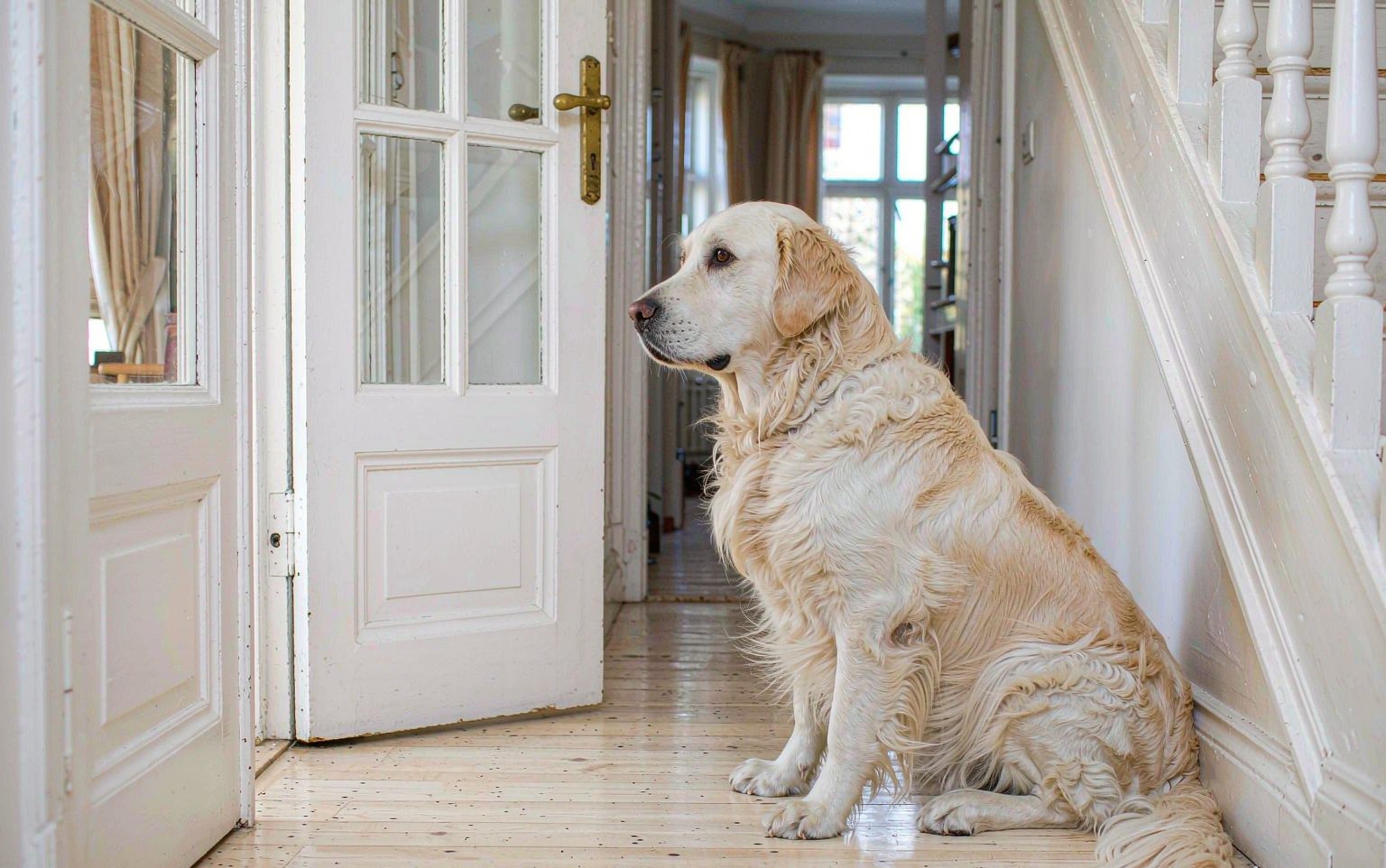
Why the Doorbell Hits So Hard
Dogs hear an approaching visitor long before we do, so the bell arrives at the end of a build-up rather than out of nowhere. For a cat, the same event is worse: the door opens and the territory is suddenly full of unfamiliar people, shoes and noise. Repeated without a plan, every ring rehearses the reaction and makes it faster and louder.
Step One: Take the Sound Out of Real Life
For a few weeks, stop using your own bell. Record the sound on a phone, put a note on the door asking visitors to text rather than knock, and let the doorbell exist only in training. Unexpected rings during this window slow everything down and undo progress. If you cannot avoid them, mask the sound with white noise or background music and keep training sessions separate from real arrivals.
Step Two: Pair the Sound With Something Good
- Play the recording quietly enough that your dog notices but does not react.
- The instant the sound starts, drop a high-value treat or toss a favourite toy.
- Repeat in short sessions of two to three minutes, once or twice a day.
- Raise the volume only when your pet stays calm at the current level.
- If barking starts, the sound is too loud — go back a step and stay there longer.
The goal is a pet who hears the bell and turns to you, because the bell now predicts a reward rather than an intruder. Some dogs reach full volume in days; most take several weeks of short, boring practice.
Step Three: Give the Door a Job
Once the sound is neutral, teach an alternative behaviour and practise it away from the door first. A mat by the entry, a “go to your bed” cue, or sending a toy-driven dog to fetch one specific toy all work, because each replaces rushing at the door with a task. Then add a real helper: they knock, your pet goes to the mat, and the guest enters and ignores the pet until it is settled. Keep a gate or a leash in play during practice so the old behaviour never gets rehearsed.
What About Cats?
Cats rarely get a training plan, but they benefit from one just as much. Set up a quiet room with a bed, water and a litter box, and let your cat retreat there before guests arrive rather than after the doorbell. A cat who can leave the room is far less likely to hide for the rest of the evening. Ask visitors to ignore the cat completely, avoid direct eye contact and let it approach on its own terms, with a treat dropped on the floor rather than offered by hand.
The patient version. Control the sound, pair it with something good, teach a job for the door, and give cats a retreat of their own. Punishment reliably makes this particular reaction worse, not better.