A cat tree is not decoration. It is vertical territory: a lookout, a scratching surface, a nap spot and a way to stay out from underfoot. That is why a tall, handsome tower can sit untouched for years while a plain, sturdy one gets used every single day.
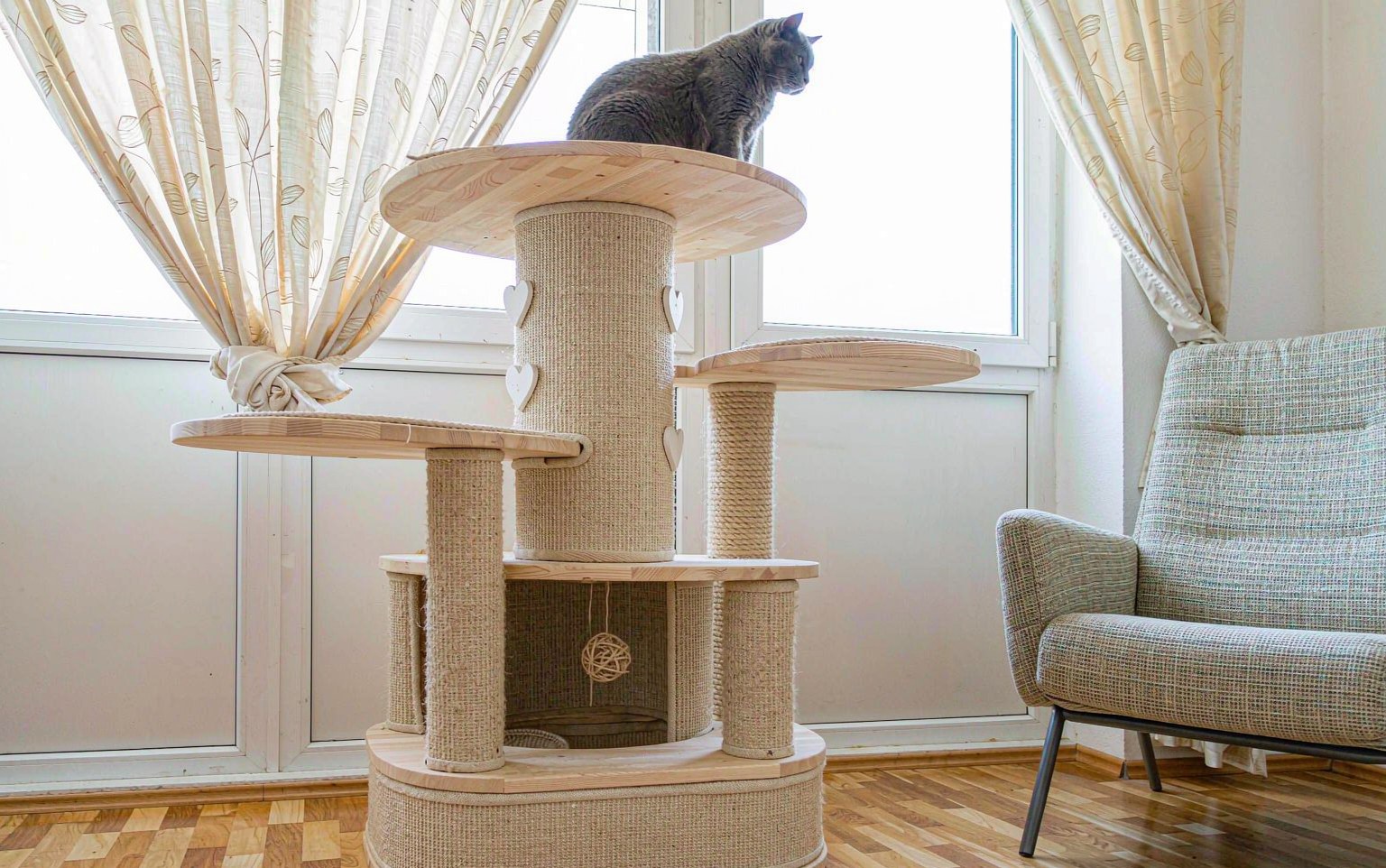
What a Cat Tree Is Actually For
Cats use height for three things: watching, resting and getting away. A perch above the room lets a cat monitor the household without being stepped over, which is why a cat tree often becomes the preferred bed in a home with dogs or several cats. The scratching surface matters just as much — a well-used sisal post is the simplest way to protect a sofa.
Stability Comes Before Height
A tree that shifts when your cat lands will be abandoned, and a tall tree that topples is a genuine hazard. Check three things: overall weight, the width of the base relative to the height, and how solid the joints feel. Press the top perch with one hand before you commit. Tall units should include anti-tip hardware, and in a home with a hard-jumping cat, fit it.
Sizing: Height, Perches and Scratch Posts
| Feature | Target | Why it matters |
|---|---|---|
| Tree height | Around 5 feet for an average adult cat | Above the furniture, real lookout height |
| Kittens and seniors | Lower, with closely spaced steps | Safer descent, less risky jumping |
| Top perch | Wide enough to lie curled up | A cramped perch gets ignored |
| Scratch section | Long enough for a full stretch | Scratching is a stretch, not a swipe |
| Post diameter | Thick rather than thin | Thin posts do not satisfy claws |
Materials That Survive Claws
Sisal-wrapped posts are the standard for good reason: the fibre is rough, it takes repeated scratching and it can be re-wrapped when worn. Carpet-covered posts are a common mistake, because they teach a cat that carpet is a scratchable surface — and floor carpet is usually the next target. For the frame, denser and heavier beats light and cheap, since weight is what keeps the tower upright. Platform covers in short faux fur are easier to keep clean than deep plush, which traps hair and holds odour. If the tree will live in a small flat, a compact model with two solid levels beats a dramatic tower with a narrow base, because a cat will not use a structure it does not trust.
Place It Where the Cat Already Goes
The biggest reason a new tree goes unused is placement. Put it in a living area near a window, in a spot your cat already chooses, rather than in an unused back room. Keep it clear of walkways where a sleeping cat would be startled, and check clearances before you buy: ceiling height, ceiling fans, heaters, curtain cords and anything breakable on a nearby shelf. A cat tree should never give a direct route to an unsecured window or a balcony rail.
Assemble it fully before tightening every bolt, then recheck the joints — fasteners loosen in transit. If it still rocks on a hard floor, anchor it to a wall stud or choose another model.
A simple test. Take the top perch in one hand and push gently. If it moves more than you would want under a landing cat, it will move under your cat too.