Senior pets rarely stop eating dramatically. Instead, the margins shrink: appetite becomes less reliable, digestion a little slower, and stiff joints make the trip to the bowl harder than it used to be. The good news is that the fixes are small, cheap and mostly a matter of routine. From around age seven for cats, and seven to ten for dogs depending on size, a handful of feeding adjustments pays off more than any new bag of food.
More Meals, Smaller Portions
Large single meals get harder to finish with age. Splitting the same daily calories into three or four smaller meals keeps appetite steadier, is easier on digestion, and gives an older pet something to look forward to across the day. The total stays exactly the same; only the schedule changes. A predictable rhythm also softens the late afternoon pleading that many older pets develop. This also makes it much easier to notice the day a pet leaves food behind, which is a small but genuinely useful early signal worth acting on.
Make the Bowl Easy to Reach
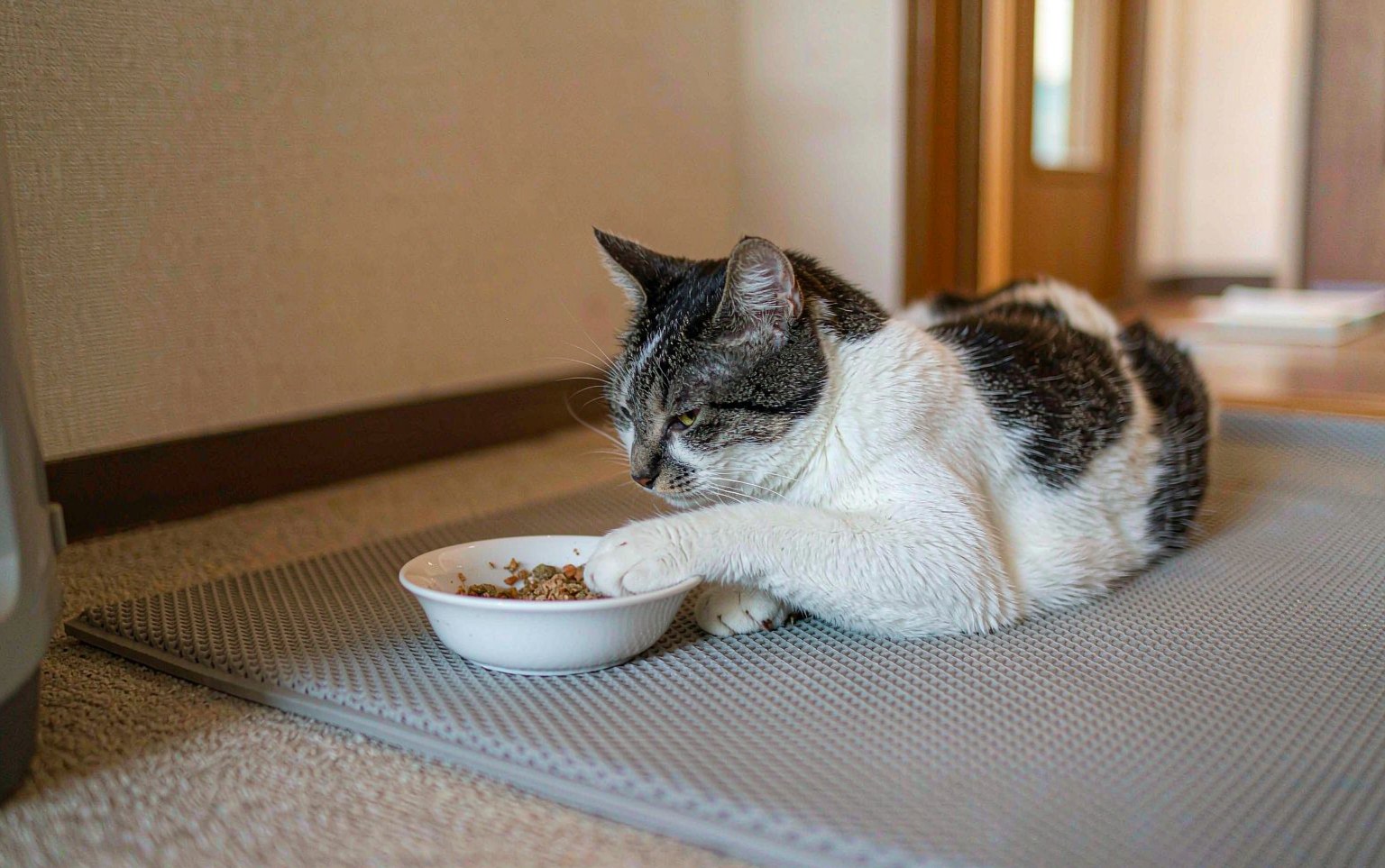
Stiff joints change posture, and a deep bowl on a slippery floor asks an older neck and unsure legs to work overtime. A shallow, wide dish on a non slip mat, placed where the pet does not have to climb stairs or cross smooth flooring, removes most of that friction. Some senior dogs eat more comfortably with the bowl raised slightly toward chest height, while others prefer it low. Watch what your pet actually chooses rather than following a fixed rule. Consistency helps too: a feeding spot that never moves lets muscle memory do most of the navigating.
Watch Weight in Both Directions
- Weight gain creeps up when activity drops but portions do not. Keep the daily calorie budget honest, and weigh portions rather than scooping by eye.
- Weight and muscle loss matter just as much in older animals. Ribs that have become easy to feel and a slowly narrowing waist deserve attention, not more guesswork.
- Monthly weigh ins at home turn slow drift into a visible number. Use the same scale at the same time of day for a fair comparison.
Texture, Temperature and Hydration
Worn teeth and tender gums can make hard kibble a chore. Softening it with warm water, mixing in wet food, or serving wet food gently warmed to around body temperature all make dinner easier and more inviting. Warmth matters especially for ageing cats, whose sense of smell fades first, so a barely warm bowl is worth the extra minute. Add extra water bowls along the routes your pet already walks each day; older animals need the encouragement, and moisture rich food quietly does part of the job for you.
None of these changes requires new equipment or a kitchen redesign. Smaller meals more often, a shallow bowl on a mat, portions weighed against a monthly weigh in, and food served warm and soft: four small habits that help the oldest members of the household keep eating like themselves for longer. And if weight is moving quickly in either direction despite steady portions, that is worth a proper look rather than another guess.