Every blink spreads a film of tears across a dog’s eye. When the watery part of that film dries up, the surface of the eye becomes painfully inflamed — a condition veterinarians call keratoconjunctivitis sicca, or KCS. It is one of the most common eye diseases in dogs, and it is frequently mistaken for ordinary conjunctivitis that simply keeps coming back.
What Is Actually Failing
The tear film has several layers, and KCS specifically means a deficit in the aqueous layer produced by the lacrimal gland. In the great majority of dogs the cause is immune-mediated: the body’s own immune system gradually destroys the tear-producing tissue. Other causes include certain medications, damage from surgery in which a tear-producing gland was removed, viral infection such as canine distemper, nerve damage, congenital underdevelopment of the glands, hormonal disease, trauma, and cases where no cause is ever identified.
Whatever the trigger, the outcome is the same. Without adequate tears the cornea dries, inflames, and begins to change permanently.
The Signs Owners Notice First
- A thick, sticky, rope-like grey or yellow discharge
- Squinting, blinking more than usual, or rubbing at the face
- A dull, cloudy, or hazy look to the surface of the eye
- Redness that is treated as conjunctivitis and then returns
- Brown pigment and fine blood vessels creeping across the clear cornea
- A dry nostril on the same side as the affected eye, because tears normally drain into the nose
In advanced cases the pigment and vessel growth can permanently cloud vision, and a corneal ulcer may develop on top of the dryness.
How It Is Diagnosed
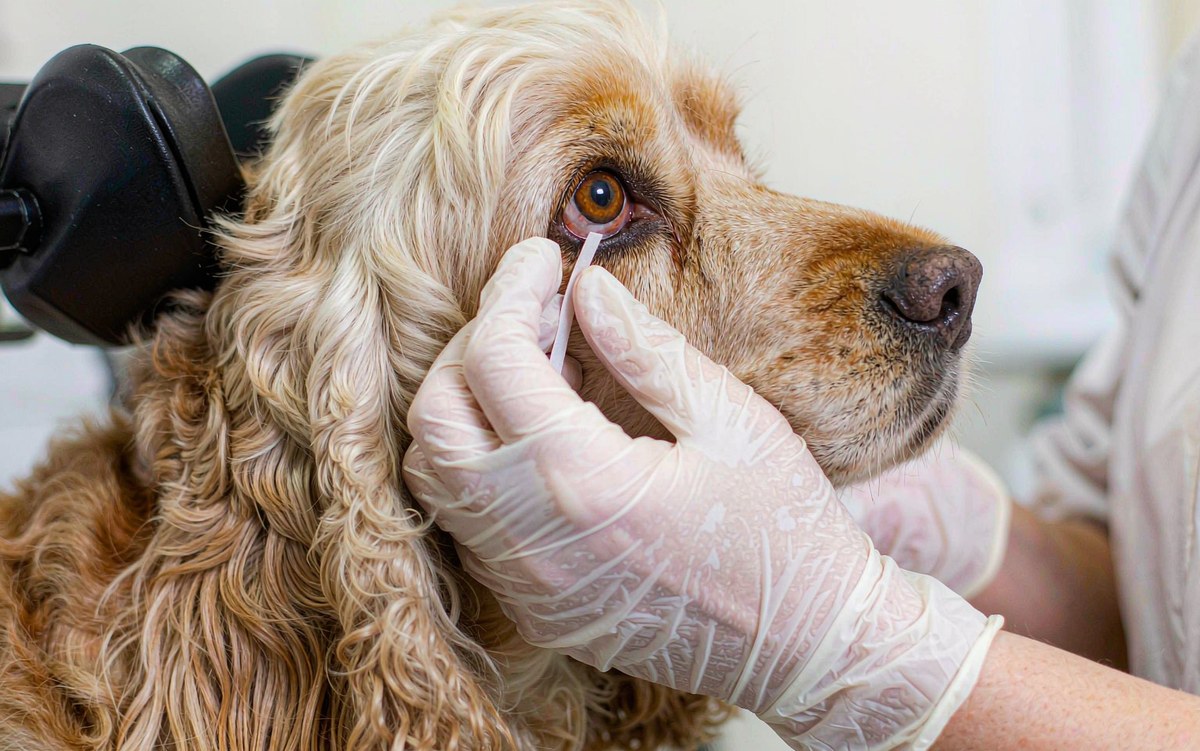
Diagnosis is straightforward once the condition is suspected. A Schirmer tear test places a small strip of paper in the lower eyelid for a minute and measures how much moisture the eye produces. A fluorescein stain is typically used at the same time to check for a corneal ulcer, and a full eye examination helps rule out other causes of a red, painful eye. Because KCS can follow injury, infection, or medication, your veterinarian will also ask about recent illness, drug history, and any previous eye surgery.
Treatment Direction
Treatment is rarely surgical first. Most dogs are managed with medication for life, in three overlapping layers:
| Goal | Typical approach |
|---|---|
| Stimulate the gland | T-cell inhibitor eye medications such as cyclosporine, or tacrolimus if the response is not adequate |
| Replace what is missing | Artificial tear drops, gels, and ointments used alongside tear stimulants |
| Control infection and ulcers | Antibiotic eye medication when bacteria or a corneal ulcer is present |
For dogs that do not respond to medical management, a surgical option exists: parotid duct transposition, in which a salivary duct is redirected so that saliva reaches the eye surface and acts as a tear substitute. Even after that procedure, ongoing medication and monitoring are usually still needed.
Breeds Worth Watching Closely
Immune-mediated KCS is more common in cocker spaniels, West Highland white terriers, Cavalier King Charles spaniels, Boston terriers, miniature schnauzers, shih tzus, pugs, Lhasa apsos, and other short-nosed breeds. Small breeds such as Chihuahuas, pugs, and Yorkshire terriers can also be born with underdeveloped tear glands, so a young dog is not automatically safe from dry eye.
When to Call Your Veterinarian
Any dog with a recurring red eye, a thick discharge, or a habit of squinting should have tear production measured before another round of antibiotic drops is prescribed. Dry eye is managed rather than cured, and early treatment preserves both comfort and vision. Never use leftover eye medication from a previous episode, and never give a dog a human eye preparation without veterinary guidance.