A pet bed is not just a soft spot on the floor. It is where your cat or dog spends most of the day, and it is the one piece of furniture in the house that has to cope with claws, fur, drool, accidents and your washing machine. Most beds that get ignored were bought on size and colour alone, while the filling, the cover and the shape decided the outcome.
Start With How Your Pet Actually Sleeps
Watch your pet for one evening and match the bed to the habit, not to the look:
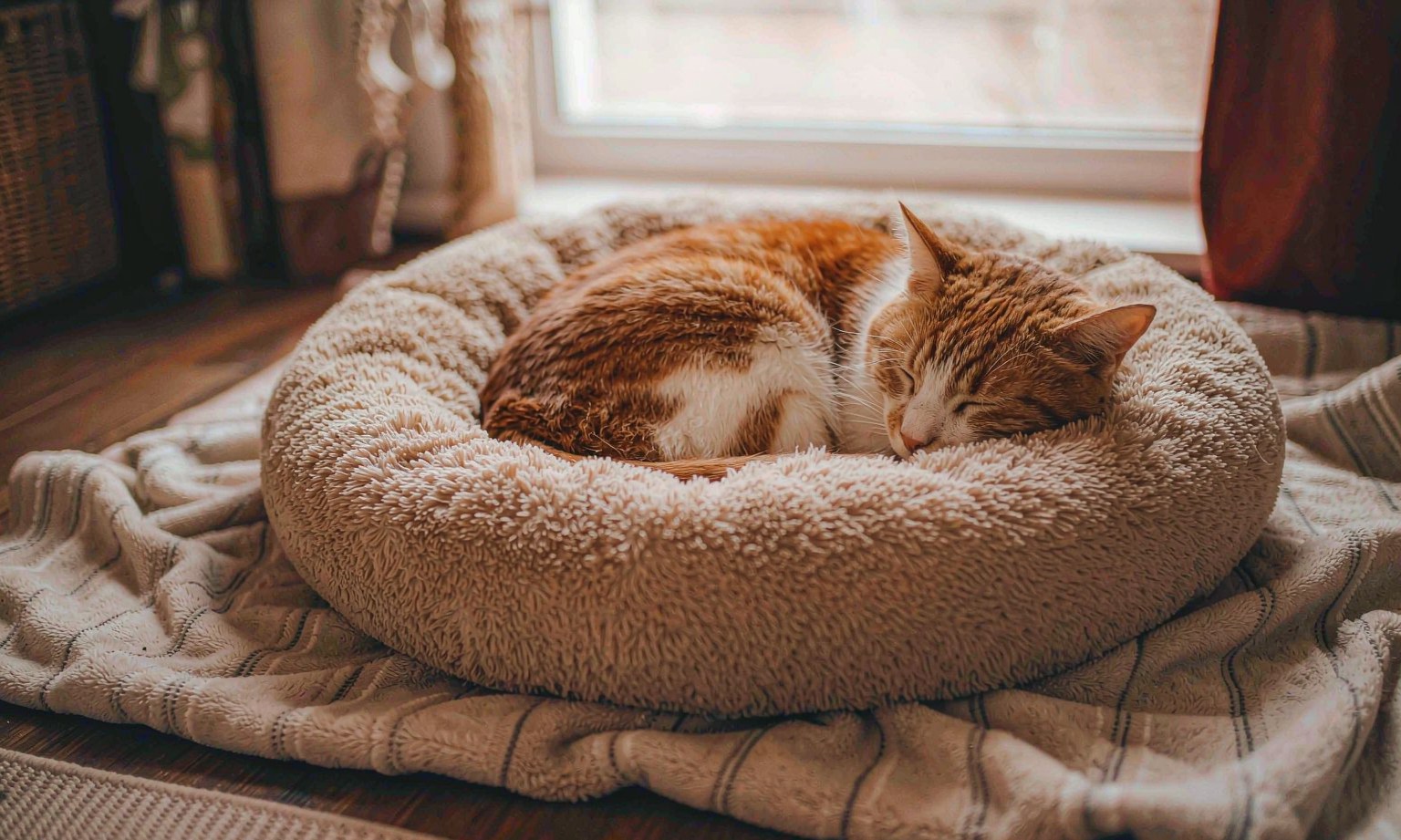
- The curler tucks into a tight ball. This pet wants a bolster bed or a donut bed, where the raised rim gives the head and back something to press against.
- The sprawler flops out on one side. A flat, supportive pad works better than a nest, because a deep bowl of filling stops a long body from stretching out.
- The nester or hider digs, burrows or disappears under the bed. A cave or hooded bed, or a crate with a breathable blanket over it, suits this pet far better than an open mattress.
- The heat seeker picks the sun patch, the radiator or your laptop. This pet will avoid a thick memory foam bed in summer unless you offer a cool alternative.
What Goes Inside Determines Comfort and Lifespan
| Filling | Best suited to | Practical notes |
|---|---|---|
| Solid memory or orthopedic foam | Older pets, large breeds, stiff joints | Holds shape for years, but retains heat and the core must never go in a washing machine |
| Egg-crate or convoluted foam | Budget-friendly everyday sleeping | Lighter and more breathable, but compresses faster than solid foam |
| Polyester fibre fill | Cats, small light dogs, tight budget | Plush and cheap, but flattens within months and loose fill is a risk for diggers |
| Cooling gel layer | Thick-coated dogs and hot climates | The gel is sealed inside, so only the cover gets washed |
| Raised cot with mesh panel | Summer, heavy chewers, messy eaters | Air circulates underneath, hoses clean, and there is no filling to pull out |
Cover Fabric and the Cleaning Reality
The cover is what your pet actually touches, and it decides whether the bed survives the year. Tough weaves such as canvas or ballistic nylon outlast soft plush in a home with a digger, while fleece and faux fur are the ones cats choose most often. Whatever you pick, three features matter more than the fabric name: a removable, machine-washable cover; a waterproof liner between cover and filling, which protects the foam from accidents and odour; and a non-slip base so the bed does not skate across a hard floor every time your pet jumps on.
Budget for a spare cover if you can. Rotating a clean cover while the other is in the wash is what keeps a foam bed usable for two to four years instead of one.
Seasonal Swaps Beat One Bed for All Year
No single bed handles a hot July and a cold January equally well. A practical two-bed system is cheaper than replacing one worn-out bed every year:
- Warm months: raised cot or a breathable cotton cover, placed out of direct sun; add a cooling pad on the hottest days.
- Cold months: a bolster or cave bed with a fleece cover, moved away from draughts and off bare tile.
- All year: keep the supportive foam base and swap the topper, so your pet keeps the same familiar sleeping spot while the surface changes.
Do Not Skip Sizing
Measure your pet from nose to tail while they are lying in their favourite position, then add a few inches of slack. A bed that is too small forces the same cramped posture every night, while one that is far too large loses the sense of enclosure that makes a bed feel safe to a cat. For foam beds, thickness matters as much as footprint: if you can feel the floor through the bed with your hand pressed down, there is not enough support.
In short: choose the shape from how your pet sleeps, choose the filling from their age and joints, and choose the cover from how much dirt and fur the household produces. Then plan the seasonal swap before you need it. A bed that matches all three gets used every day, and that is the only real measure of whether it was worth buying.