A wagging tail is the most trusted, and most misread, signal in dog body language. Generations of people have been taught that a wag means safe to approach. The more useful truth is that a wag tells you the dog is emotionally aroused. Which emotion is running, and what happens next, depends on everything around the tail. Researchers have spent two decades decoding the wag in laboratory studies, and their findings are genuinely practical for anyone who lives with or simply meets dogs.
A Wag Is Arousal, Not a Promise
Happy dogs wag. So do frightened dogs, confident dogs, and dogs about to bite. Tail wagging reports the intensity of feeling, not its friendliness. The classic dangerous combination is a fast wag with a stiff body, a hard stare, and a closed mouth: high arousal heading somewhere unwelcome. Before you or your children reach out to any wagging dog, read the rest of the animal. A soft, wiggly body with an open, relaxed mouth is welcoming; a frozen posture with forward-leaning weight is not.
Height, Speed, and Stiffness
| Tail you see | What it often means |
|---|---|
| High, stiff, fast, sometimes vibrating | High arousal: excitement or a challenge; look twice |
| Mid-height, wide, loose sweeps | Relaxed, friendly greeting, the classic happy wag |
| Low or tucked, small slow wag | Uncertain, worried, or appeasing; do not press for contact |
| Straight out and rigid | Alert and assessing; approach with care |
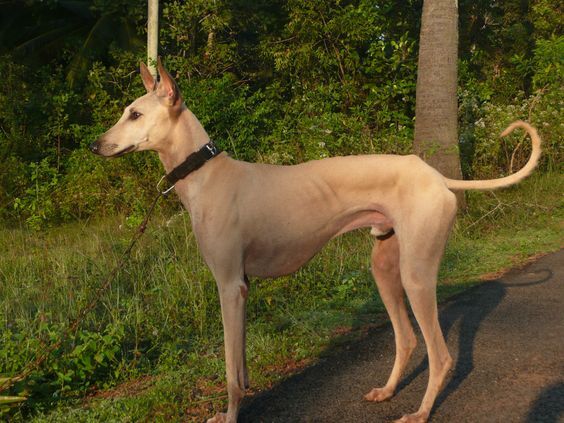
Know the breed baseline, too. A husky’s tail normally curls over the back and a greyhound’s hangs low, so judge each dog against its own resting position rather than against a chart.
The Left-Right Secret
One of the stranger discoveries in dog cognition is that wags are asymmetric. In a 2007 study in Current Biology, Quaranta, Siniscalchi, and Vallortigara found that dogs seeing something appealing, like their owner, wagged with a bias toward their right side, while dogs facing something threatening, such as an unfamiliar dominant dog, biased their wags to the left. The bias reflects brain lateralization: approach-related positive feelings are processed more by the left hemisphere, which drives the right side of the body. Follow-up work in 2013 went further. Dogs watching another dog wag with a left bias showed higher heart rates and more stress signs, which means dogs themselves read the asymmetry. You can spot it too at close range: watch which side of the spine the tail tip sweeps toward.
Reading a Wag in Real Life
- Judge the whole dog, never the tail alone: ears, eyes, mouth, and body weight all count.
- Watch how the wag develops. A loose sweep that turns stiff and high is your cue to slow the situation down before it picks a direction.
- Teach children that a wagging tail is not permission to hug.
- Give a tucked-tail dog space and time rather than interaction.
- Remember that docked or naturally short tails carry less information, and other dogs read that too.
Treat the tail as one sentence in a paragraph. On its own it tells you the dog feels something strongly. Combined with the body, face, and situation, it tells you what to do next: usually approach, occasionally give space, and never assume.