A walk with a scavenging dog is a walk spent scanning the pavement. Every dropped chip, half-eaten sandwich, and mystery wrapper becomes a race between your dog’s nose and your arm. Scavenging is not a sign of a bad diet or a badly behaved dog — it is a normal canine habit that has simply become too rewarding. With the right setup, most dogs can learn to walk past the good stuff instead of inhaling it.
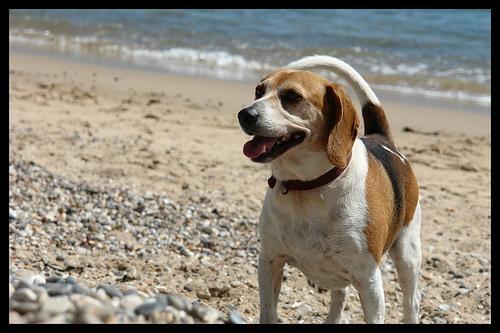
What Scavenging Actually Looks Like
Scavenging is more than eating. Watch for the early signals: a sudden drop in walking speed, the nose locking onto one spot, a head dip you can feel through the leash, and a hard swallow. Catching the first two signals gives you a full second to act, which is often all you need.
A dog who swallows first and asks questions later is usually a dog who has been allowed to win the race repeatedly. Speed is the habit to change, not curiosity.
Management First, Training Second
You cannot train your way out of a problem you keep rehearsing. Start here:
- Choose routes you can scan — quieter streets and known clean paths instead of busy shopping strips.
- Keep a fixed-length leash in high-risk areas so you can steer rather than yank.
- Carry a treat pouch with two values: everyday rewards and a jackpot for a fast response.
- Practise attention cues at home, in the kitchen, long before you need them outdoors.
- Walk after a meal, when the search drive tends to sit lower.
Teaching a Reliable Swap
The most useful skill is a swap: your dog gives up whatever is already in the mouth for something better.
- Name it indoors. Offer a low-value toy, say your swap cue, then pay with food. Repeat until the cue predicts food every time.
- Raise the stakes slowly. Move from a toy to a piece of plain bread, then to something more tempting. Increase difficulty only while your dog is reliably fast.
- Never pry the mouth open. Reaching in teaches a dog to swallow faster. If the item is food-safe, trade. If it is dangerous, use the swap cue and keep walking.
- Rehearse on real walks with nothing around. Then practise near one small, safe distraction before you test it beside actual litter.
| Setup | Why it helps |
|---|---|
| Fixed-length leash | Keeps your dog inside steering distance |
| Two treat values | Makes trading with you worth more than the find |
| Cleaner routes | Buys the second you need to react |
| A practised recall | Backs up the swap when you are a beat too late |
Giving the Walk a Shape
Structure helps more than constant vigilance. Open with five minutes of loose sniffing so the nose gets paid early, then switch to a focused stretch where you walk past distractions on a shorter leash. Finish with a sniff break and a slow, boring walk home.
If your dog is swallowing before you can call a warning, stay on the safest side of the street and shorten the route while you train. And if scavenging appears suddenly in a dog who never did it before, or your dog repeatedly eats non-food items, have a veterinarian check them rather than assuming it is only a training issue.
Bottom line. Scavenging on walks is a habit built by repetition, so it can be rebuilt the same way: manage the route, pay the nose early, and make trading with you more rewarding than eating first.