A hernia happens when abdominal contents push through a weak spot or hole in the muscle wall and sit under the skin. The contents may be harmless fat or omentum, or they may be a loop of intestine, part of the bladder, or the uterus. Where the defect sits gives the hernia its name, and how the contents behave inside it decides how urgent the problem is. Most hernias in dogs are repaired surgically, and the ones that trap tissue are emergencies.
Three Ways a Hernia Can Behave
- Reducible: the contents are soft and can be gently pushed back into the abdomen
- Irreducible: the contents have adhered to the opening and cannot be returned without surgery
- Strangulated: the tissue is entrapped and its blood supply is cut off, so it begins to die. This is a life-threatening emergency
Umbilical Hernia
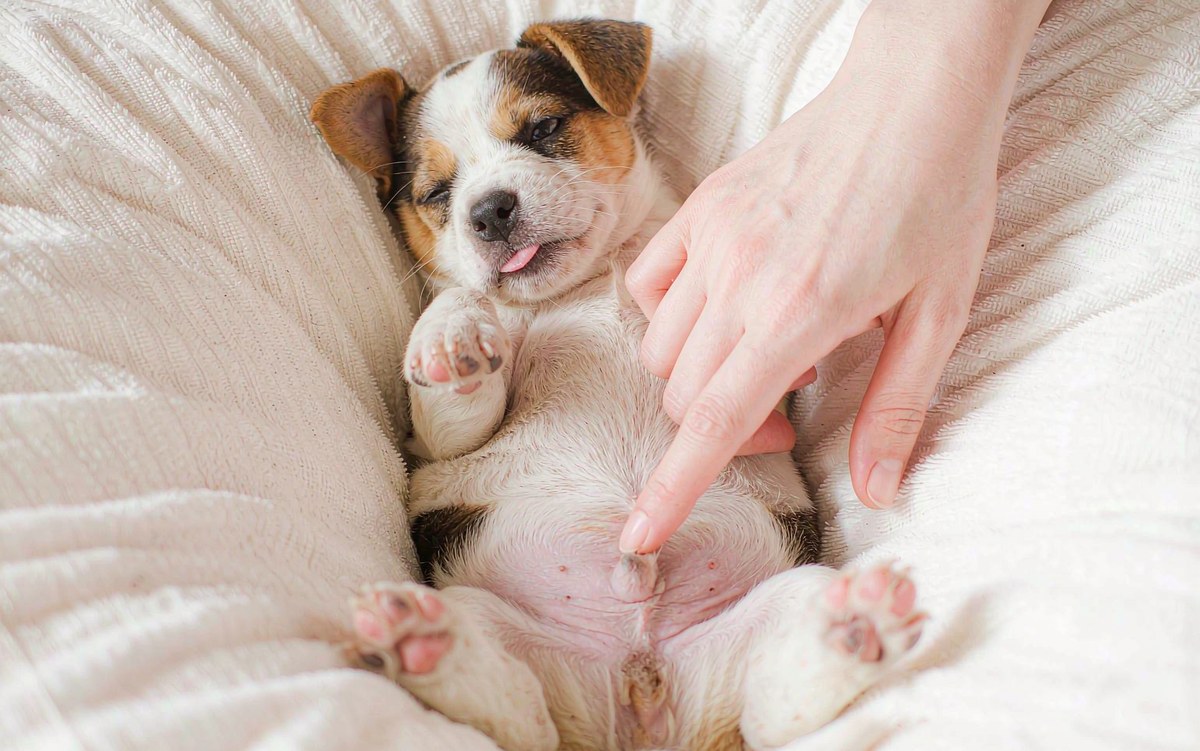
This is the most common hernia in dogs, and it forms around the navel when the umbilical ring does not close completely after birth. It usually appears as a soft, painless swelling on the midline just below the ribcage that gets more obvious when the puppy stands, strains, cries or barks. Many small hernias close on their own by three to four months of age. Larger ones, or those with intestine inside, are repaired surgically, very often at the same time as the spay or neuter so the dog only goes under anaesthesia once. Certain family lines are over-represented, and breeds including Weimaraners, Pekingese, Basenjis and Airedale Terriers are often listed, which suggests at least a partial genetic component.
Inguinal Hernia
An inguinal hernia pushes through the inguinal canal in the groin and can appear on one side or both. It may be present from birth or acquired later, and the acquired form is linked to blunt trauma such as a road accident or bite wound, obesity, and the raised abdominal pressure of pregnancy. Older, unspayed female dogs are most at risk because hormonal and anatomical factors weaken the tissue, while young male dogs of predisposed breeds such as Pekingese, Cairn Terriers, West Highland White Terriers, Retrievers, Cocker Spaniels and Dachshunds are more likely to have the congenital form. Conditions that affect tissue strength, including Cushing’s disease and diabetes, also raise the risk. A soft, non-painful groin swelling with no other signs is the uncomplicated version.
| Situation | What the owner sees | What it means |
|---|---|---|
| Uncomplicated | A soft swelling in the groin, no discomfort | Usually just fat or omentum; plan the repair with your vet |
| Complicated | Painful, warm swelling, vomiting, retching, straining to urinate or defecate, bloody urine, lethargy, fever, abdominal pain, collapse | The contents are trapped; emergency surgery without delay |
Diagnosis and Treatment Direction
Most hernias are found on a physical examination, when the vet feels the swelling and the edge of the defect. When it is unclear what is inside, contrast radiographs or an abdominal ultrasound answer the question. Sampling the contents with a needle carries risk and is rarely recommended. If your dog is pregnant, or is being treated for another condition such as diabetes, say so, because it changes the surgical plan.
Surgical repair is the mainstay of treatment: the contents are replaced in the abdomen, the edges of the defect are cleaned up, and the opening is closed with permanent suture. Surgical mesh is used when the defect is unusually large. Small uncomplicated hernias in an otherwise healthy dog may be monitored with a clear plan rather than operated on immediately, but a hernia that has trapped bowel needs surgery at once, and a damaged section of intestine may have to be removed. Having the dog spayed or neutered at the same time lowers the chance of recurrence. After surgery, keep the incision clean and dry, use a recovery cone or suit, restrict activity for ten to fourteen days, and give only the pain medication your veterinarian prescribes. Human painkillers must never be used in dogs. Recovery is usually quick when the hernia is corrected before any organ is damaged, and recurrence after repair is uncommon.
At home, check the belly and groin when you handle your puppy, do not breed a dog with a history of hernias, keep your dog at a healthy weight, and secure your dog in the car to reduce trauma. If a lump in those areas becomes hard, warm or painful, treat it as an emergency rather than waiting for a routine appointment.