Very few cats enjoy having their claws trimmed, but the fight is not inevitable. Claw care becomes a two-minute routine when the cat has already been taught that paws are safe, clippers are unremarkable, and treats follow. It is also genuinely useful: overgrown claws hurt, and they are one of the most common overlooked problems in indoor and senior cats.
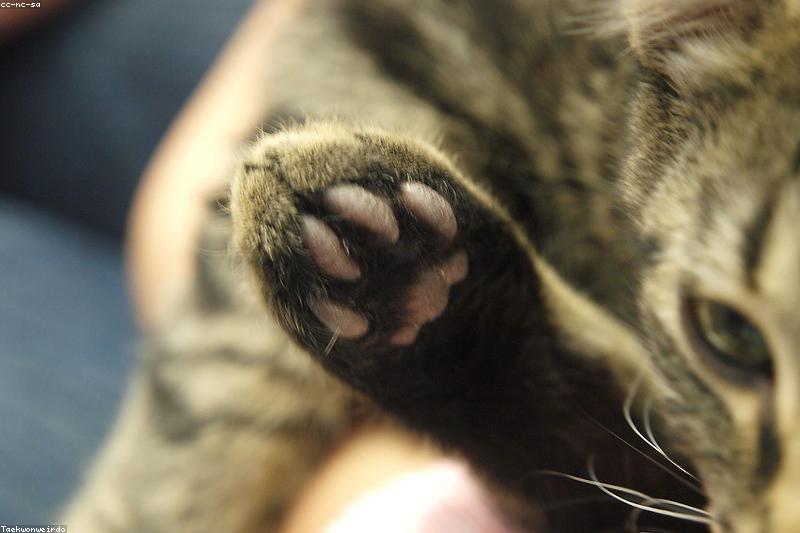
When Claws Actually Need Trimming
An outdoor cat who climbs, hunts, and scratches wears her claws down naturally and may never need help. Indoor cats, and especially older cats who scratch less because their joints ache, do not get that wear. Overgrown claws can curl back into the paw pad, split lengthwise, or snag on carpet and bedding. Two points are worth stating clearly: the goal is length, not dullness — sharp claws are normal and healthy — and trimming is only for claws that are too long, not simply because they scratch. If you are unsure whether your cat needs it, ask your vet or a vet nurse to check.
Gear: Three Things, No Substitutions
- Cat nail clippers — scissor or plier style. Human nail clippers and household scissors squash the claw and cause it to split
- Styptic powder or cornflour, kept within reach in case the quick is nicked
- High-value treats — something she only gets for this — and, optionally, a second person to stroke and feed while you clip
Before You Cut: A Desensitisation Week
- Pick a moment when your cat is already relaxed — after a meal, when she is dozy. Quiet room, no other pets, no birds or action visible through the window.
- Sit her on your lap. Hold one paw for a count of three, release, and treat. If she pulls away, follow her movement rather than squeezing; keep the contact gentle.
- Next session, press the pad lightly so one claw extends, then release immediately and treat.
- Repeat every other day on a different toe until all the front toes have been handled without drama.
- Let her sniff the clippers. Then, while massaging a toe, clip a piece of uncooked spaghetti near her — the sound and motion become unremarkable before they ever touch a claw.
The Trim: One Claw at a Time
- Cat on your lap, facing away from you, so you can reach the front paws comfortably.
- Take one toe, press the pad until the claw extends, and look for the quick — the pink core containing blood vessels and nerves.
- Clip only the white tip, about 2 to 4 mm ahead of the quick, aiming for a clean cut at roughly 45 degrees. Cutting a little less than you think is correct is always the better choice.
- Release the toe and treat immediately. In early sessions, stop after one or two claws and end on a success.
- Do not forget the dew claws on the inside of the front legs. Back claws often need less attention than front ones.
A rhythm of every 10 days to two weeks keeps claws at a comfortable length without any single session becoming a test of endurance.
If Something Goes Wrong
- You nicked the quick and it bleeds: stay calm, dip the claw in styptic powder or cornflour, or hold a little cotton wool against it until bleeding stops. Call your vet if it does not.
- Your cat is escalating: stop, end the session, and try a single claw tomorrow. Shouting or restraining tightly teaches her that clippers mean trouble and makes every future attempt harder.
- Declawing is not an option. It is the amputation of the end of each toe, and major veterinary and animal welfare bodies advise against it.
- Be cautious with claw caps. They prevent normal claw retraction and scratching, and many behaviour specialists consider them stressful; if furniture damage is the real problem, add more scratching posts and place them exactly where she already scratches.
- Sudden overgrowth in an older cat is worth a vet visit — nails she can no longer wear down are often an early clue to arthritis pain.
The measure of success is not perfectly manicured claws. It is a cat who stays on your lap when the clippers come out, and a house where furniture, carpets, and toes all survive intact.