Live plants have a reputation for being difficult, and that reputation comes almost entirely from people starting with the wrong species. Demanding carpeting plants and red stem plants need strong light, careful fertiliser schedules and injected carbon dioxide, and they fail loudly when any of that slips. The hardy species that fill most beginner tanks need none of it. They grow slowly, tolerate ordinary tap water, and reward patience with a tank that is calmer, greener and noticeably more stable than a bare one.
What Low-Tech Really Means
A low-tech planted tank leans on stability instead of equipment. That means a standard full-spectrum LED on a timer for six to seven hours, a gentle flow from the aquarium filter, and a lean liquid fertiliser once or twice a week. Carbon dioxide injection is not required and, in a low-light setup, is usually not even useful, because the plants cannot use the extra carbon without more light. What matters far more than any additive is consistency: the same photoperiod every day, a steady temperature, and a weekly partial water change.
Species That Forgive Beginners
| Plant | Light | How to plant it | Why it works |
|---|---|---|---|
| Java fern | Low | Tie the rhizome to wood or rock, never bury it | Almost impossible to kill, and fish leave the tough leaves alone |
| Anubias | Low | Same, attach to hardscape | Thick, long-lived leaves; individual plants last for years |
| Cryptocoryne | Low to medium | Root it in the substrate, then leave it alone | Fills midground once established, needs almost no care |
| Hornwort | Low | Float it or anchor it loosely | Grows fast, absorbs nitrate and shelters fry |
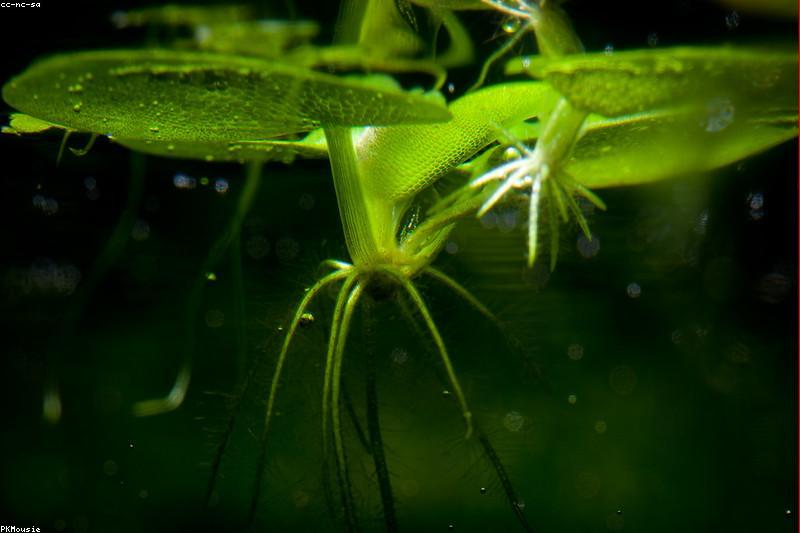
| Floating plants | Low | Just float them, no substrate | Shade the tank, cut algae and calm surface-dwelling fish |
Start with two or three of these rather than ten species at once. A tank that is densely planted from the beginning is actually easier, because growing plants outcompete algae for nutrients.
Planting Without Killing Them
- Keep the rhizome exposed. The thick horizontal stem on java fern and anubias rots if it is buried, which is the single most common beginner mistake.
- Attach with cotton thread or aquarium-safe glue and let the roots grip the wood naturally over a few weeks.
- Use root tabs under hungry root feeders such as Amazon sword and cryptocoryne if your substrate is plain gravel.
- Expect melt. Many plants are grown above water at the nursery and drop their old leaves after planting. Leave them, keep the roots in place, and new submerged leaves appear within a few weeks.
- Avoid anything labelled aquatic that is really a houseplant. Lucky bamboo, peace lily and mondo grass rot slowly underwater.
Light, Fertiliser and Algae
Set the light on a timer and resist the urge to extend it. Six to seven hours suits most low-tech tanks, and going beyond eight reliably grows algae rather than plants. If you see green dust on the glass, brown film on leaves or long strands on the decor, shorten the photoperiod by an hour before you change anything else, and check that the tank is not sitting in direct sunlight. Dose a lean all-in-one liquid fertiliser once or twice a week, and never double the dose to speed things up. Rooted plants benefit from a root tab replaced every couple of months.
Trim when growth reaches the surface, removing older leaves to keep light reaching the lower stems, and thin floating plants weekly so they never cover more than about a third of the surface. Keep the aquarium filter running gently, because most plants dislike strong current. Then do the least dramatic thing possible: nothing, for a month. A planted tank looks sparse for the first few weeks and then visibly fills in, and by the second month the same water changes you were already doing will hold better water quality than they did before.