Dogs cool themselves almost entirely by panting. They have sweat glands only on their paws, which means a hot, humid day can raise their core temperature faster than their body can shed it. Once that happens, heatstroke can develop in minutes and become fatal. The good news is that almost every case is preventable, and the warning signs are easy to learn. Here is how to keep your dog safe through the hottest months.
What Heatstroke Actually Is
Heatstroke is a life-threatening emergency caused by a dangerous rise in body temperature after prolonged exposure to heat or strenuous exercise. Core temperatures above roughly 40°C (104°F) put organs at risk; sustained temperatures above 41°C (106°F) can cause clotting failure, organ damage, and death. Humidity matters as much as temperature, because panting becomes far less efficient in moist air.
Which Dogs Are at Highest Risk
All dogs can overheat, but some reach the danger zone much faster.
| Risk factor | Examples | Why it matters |
|---|---|---|
| Flat-faced breeds | Pug, French Bulldog, Boston Terrier, Boxer | Narrow airways make panting inefficient |
| Thick or double coats | Husky, Malamute, Great Pyrenees | Heavy insulation traps heat |
| Age and weight | Puppies, seniors, overweight dogs | Weaker heat regulation and more mass to cool |
| Health conditions | Heart disease, laryngeal paralysis, obesity | Compromised breathing or circulation |
Early Warning Signs Versus Emergency Signs
Acting at the early stage is what saves dogs. Escalate immediately if you see the emergency signs.
- Early: heavy panting, seeking shade, whining, drooling, reluctance to play, bright red gums
- Emergency: panting stops, difficulty breathing, staggering, vomiting or bloody diarrhoea, confusion, seizures, collapse
A dog that stops panting in intense heat is not recovering — it is deteriorating. Call your vet and start cooling on the way.
A Prevention Checklist for Hot Days
- Walk in the early morning or after sunset; the hottest window is roughly 3–5 p.m., not noon
- Test the pavement with the back of your hand for ten seconds — if you cannot hold it there, paw pads can burn
- Carry water and a collapsible bowl, and offer drinks every 15–20 minutes
- Provide shade and fresh water at all times, changing outdoor water once or twice daily since it heats up
- Skip intense training, fetch marathons, and long hikes on humid days
- Keep high-risk dogs indoors with air conditioning or fans during extreme heat
- Never leave a dog in a parked car, even in shade with windows cracked — interiors can exceed 60°C within minutes
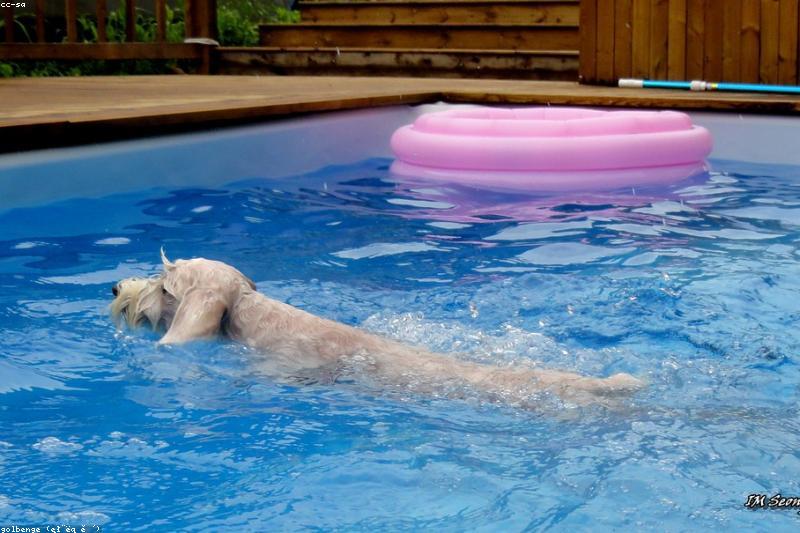
- Choose cool coats, elevated beds, or a wading pool over shaving your dog’s coat, which removes sun and insect protection
Emergency First Aid: Cool First, Travel Second
- Move the dog to shade or an air-conditioned space immediately.
- Remove the collar or harness and wet the belly, armpits, groin, paws, and ear bases with cool — not ice-cold — water.
- Increase airflow with a fan or open windows. For double-coated breeds, soak down to the skin.
- Swap wet towels every few minutes; a towel left in place traps heat instead of releasing it.
- Offer small amounts of cool water if the dog is conscious. Never force fluids into a dog that cannot swallow.
- Drive to a veterinary hospital now, even if your dog seems to recover. Internal damage often appears hours later.
Do not use ice baths or alcohol rubs. Extreme cold constricts surface blood vessels and can trap heat inside the body, delaying the cooling you are trying to achieve.
Everyday habits that make the difference. Heat safety is mostly about scheduling and water. Plan walks around the coolest hours, keep a bottle of water in the car and by the door, and check the forecast humidity before a long outing. Dogs with flat faces or heart conditions deserve a lower threshold — a fifteen-minute stroll may be their entire safe allowance on a muggy afternoon. When in doubt, remember the simple test used by veterinary hospitals: if it is too hot for you to be active outside, it is too hot for your dog. With a little planning, summer stays fun for both of you.