Few things startle a dog owner faster than cherry eye. One day the eye looks normal; the next, a smooth pink-red mass sits in the inner corner, looking exactly like its namesake. It seems dramatic, but the underlying problem is surprisingly small: a tear gland that slipped out of place. Knowing what it is, and what not to do about it, protects your dog’s eyes for life.
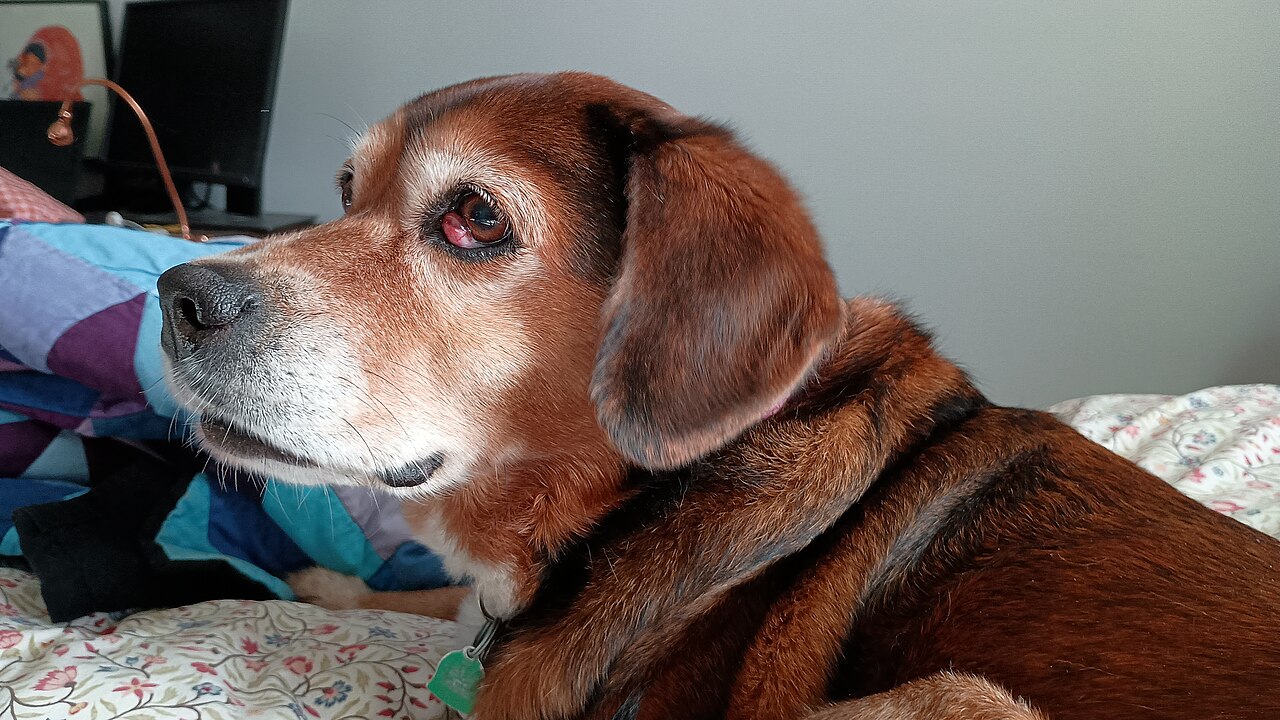
What Cherry Eye Actually Is
Dogs have a third eyelid, the nictitating membrane, that sweeps across the eye for protection. Tucked behind it sits the gland of the third eyelid, which produces roughly 30 percent of the eye’s tears. Cherry eye happens when the connective tissue anchoring that gland weakens and the gland flips up over the eyelid’s edge. Once exposed to air, the gland dries out, swells, and reddens; if your dog rubs it, it can bleed. It is not an infection and not a tumor. It is misplaced anatomy that has become irritated.
Which Dogs Get It, and When
Cherry eye is largely genetic, so it clusters in certain lines. Most cases appear before two years of age, often within the first year. The breeds that show up most often share a build: either flat faces or loose facial tissue.
| Higher-risk breeds | Why they are prone |
|---|---|
| English and French Bulldogs, Boston Terriers, Pugs | Brachycephalic faces with prominent eyes |
| Cocker Spaniels, Beagles, Lhasa Apsos, Shih Tzus | Weak connective tissue around the gland |
| Mastiffs, Great Danes, Cane Corsos | Large heads with loose orbital tissue |
Either one or both eyes can prolapse. When both are affected, the second eye often follows months after the first, which is why owners of predisposed breeds should check both corners during grooming.
Treatment: Reposition the Gland, Never Remove It
Some very early cases pop in and out, and a vet may try massage plus lubricating and anti-inflammatory drops first. Recurrence is the rule, though. The accepted treatment is surgery that tucks the gland back into a pocket and sutures it in place, a technique that preserves tear production. Success rates for a first surgery run around 80 to 90 percent, and some breeds need a revision later. What you should refuse is the old-school fix: removing the gland. That operation was once common, but it condemns many dogs to lifelong dry eye that needs daily drops forever. Modern vets reposition; they do not excise.
Aftercare and Recovery
Recovery is straightforward if you hold the line for two weeks. Your dog will wear an e-collar around the clock, get antibiotic and anti-inflammatory drops several times a day, and need restricted activity. A calm setup matters more than people expect; many owners rest their dog in a padded dog crate so that rough play and rubbing are physically impossible. Call your vet if swelling worsens after day three, if discharge turns yellow-green, or if the gland reappears, because an early revision is far simpler than a late one.
Cherry eye looks far worse than it is. Caught early and repaired with a gland-preserving technique, most dogs heal within two to three weeks and never think about it again. Just keep an eye on the other corner, because in predisposed dogs, both glands tend to take turns.