Watch a healthy parrot groom and you will see it dip its beak into the base of the tail again and again. That motion collects oil from the uropygial gland, better known as the preen gland, a small structure most owners never think about until something goes wrong. It is small, but a surprising amount of feather health depends on it.
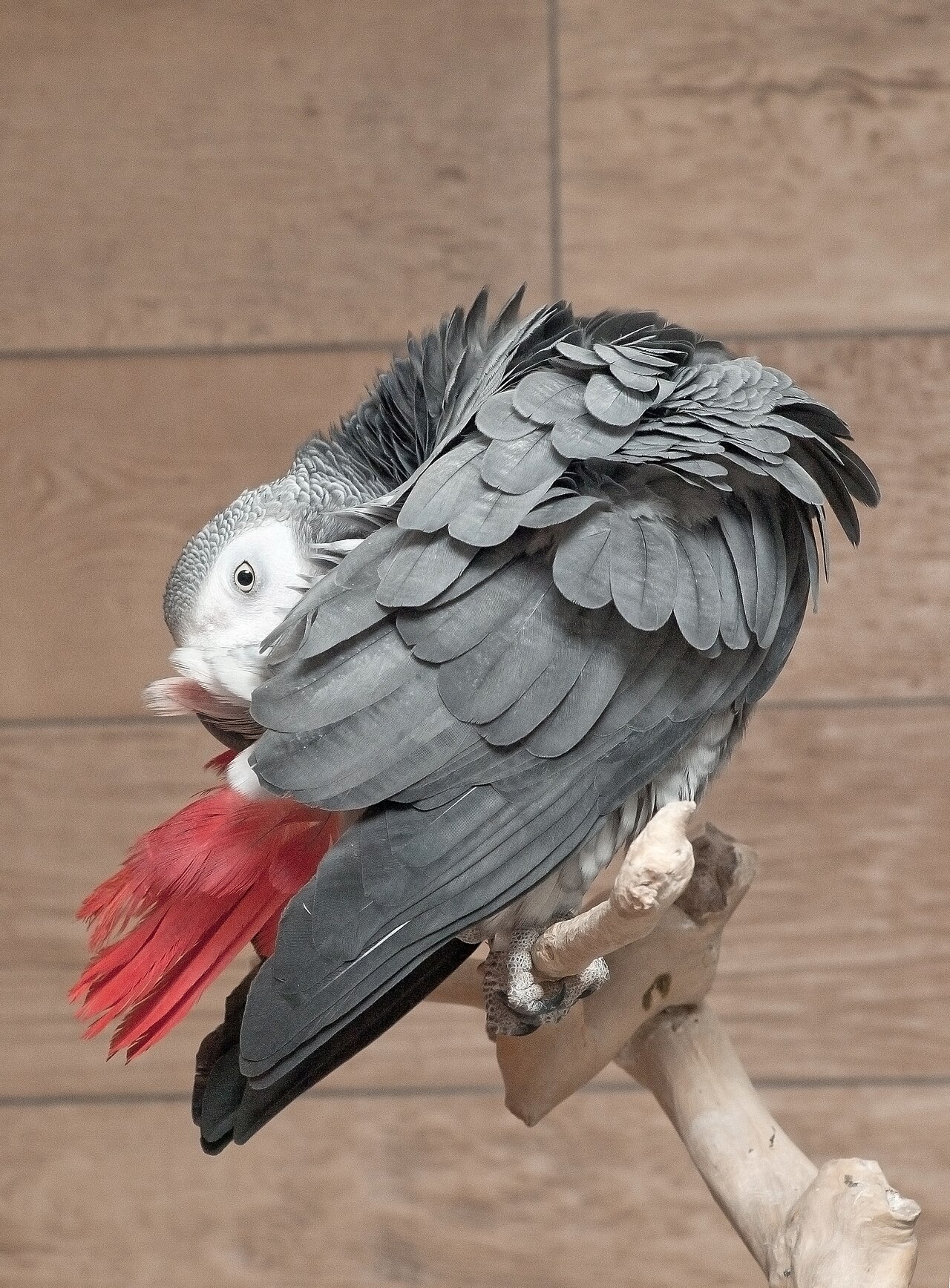
What the Preen Gland Does
The gland sits on the back at the base of the tail, typically with two lobes and a tiny papilla that releases its secretion when the beak presses it. The oil keeps feathers flexible and water-resistant, protects the barbules from wear as feathers are drawn through the beak, and carries mild antibacterial and antifungal properties that guard against feather-degrading microbes. Sunlight even converts provitamin D in the oil into active vitamin D, which the bird then ingests while preening. Not every species has one: Amazons, Hyacinth Macaws, and a few other parrots naturally lack a preen gland and rely on powder down instead.
Warning Signs at the Tail Base
A normal gland is small, smooth, and easy to miss under the feathers. Problems announce themselves at the tail base, and the list below deserves a same-week vet visit rather than a wait-and-see approach:
- Swelling, a visible lump, or asymmetric lobes above the tail
- Redness, scabbing, bleeding, or a sticky discharge at the gland opening
- Feather picking focused on the tail base, or feather loss over the gland
- Dull, brittle feathers that no longer shed water the way they used to
- Obvious discomfort, or a bird that stops preening altogether
One rule above all: never squeeze or try to express the gland yourself. The tissue is delicate, and pressure can rupture it or drive infection deeper.
Impaction, Infection, and Tumors
Three problems dominate. Impaction means the opening has clogged and oil is backing up; mild cases often respond to warm compresses under veterinary guidance. Infection turns the gland hot, swollen, and painful, sometimes forming an abscess that needs culture-guided antibiotics or surgical cleaning. Tumors are uncommon but real, and any firm, persistent enlargement deserves a biopsy, since infection and cancer can look identical from the outside. Nutrition threads through all three: diets short on vitamin A have been linked to abnormal gland tissue and plugging, so seed-only birds are the classic risk group.
Supporting Healthy Preening Every Day
You cannot maintain the gland directly, but you can make its work easy. Offer regular bathing or misting opportunities, keep household humidity around 50 to 60 percent, feed a balanced diet with real vitamin A sources, and keep the enclosure clean so bacteria stay down. It also helps to know which system your species runs on.
| Oil-based birds | Powder-down birds | |
|---|---|---|
| Typical species | Most parrots, conures, macaws | Cockatoos, African Greys, Cockatiels |
| Household dust | Less | Noticeably more |
| Gland issues | Can develop impaction or infection | Rarely a problem |
Most birds go their whole lives without gland trouble. A bird eating well, bathing often, and preening freely in a clean bird cage is running its own maintenance program. Your job is simply to keep watching the tail base at bath time, so that if anything changes, you are the first to know.