Few bird emergencies are as startling as a fresh blood feather. One moment the bird is fine; the next there is blood on a wing, on the perch, and on the cage bars, and a small bird does not have much blood to spare. The good news is that the great majority of these bleeds stop with calm, correct first aid.
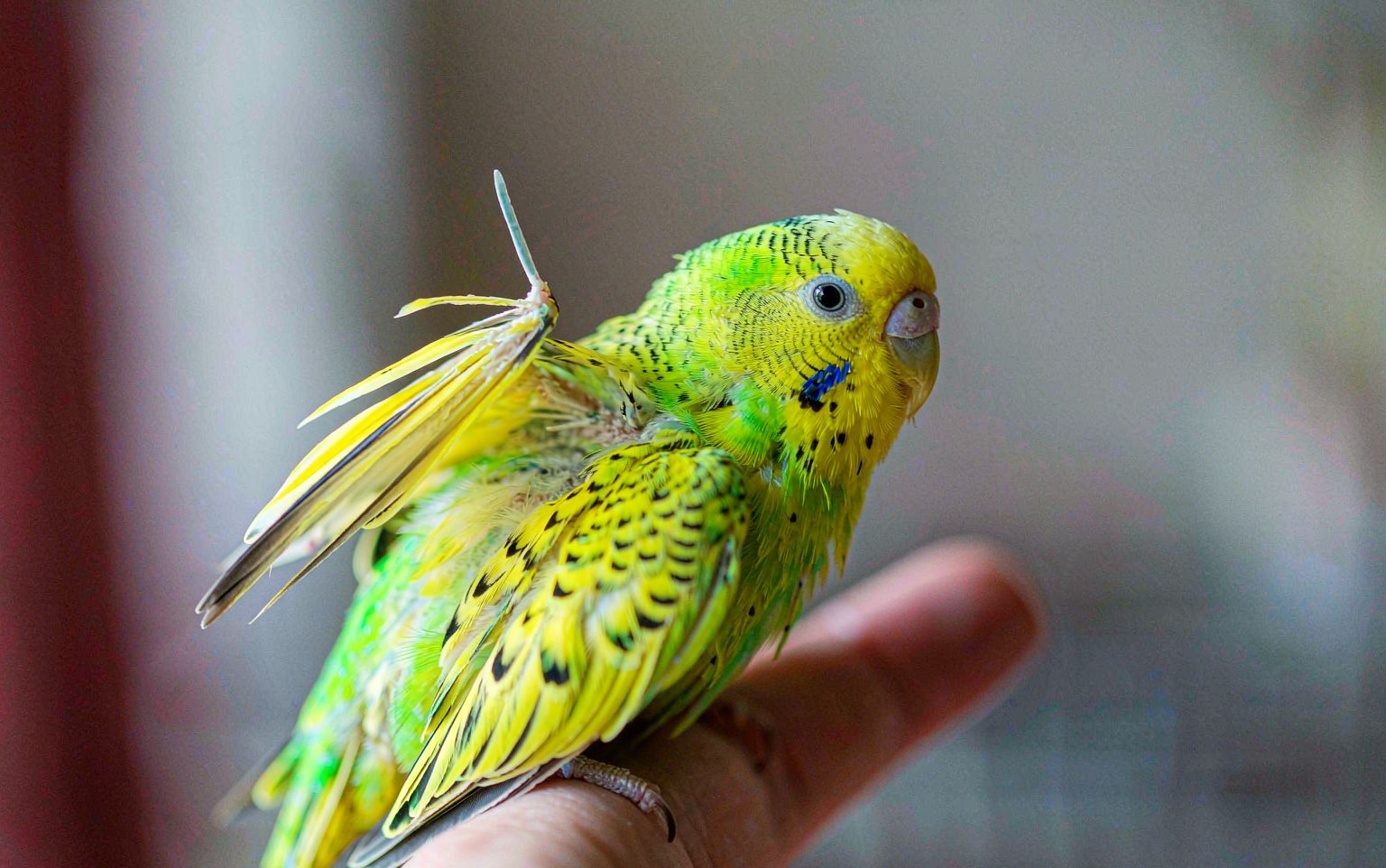
Knowing what a blood feather is — and what your limits are — turns a panicked ten minutes into a manageable one.
What a blood feather actually is
A blood feather, also called a pin feather, is a brand-new feather still growing in its follicle. While it grows, the shaft carries a live blood supply, which is why the base looks dark blue, or pink in small feathers. As the feather matures, the blood recedes and the supply stops.
That live supply is the whole problem. A mature feather that snaps is a cosmetic annoyance. A blood feather that snaps is an open blood vessel.
Blood feather or nail injury?
Before you handle the bird, work out where the blood is coming from — the two need slightly different handling.
| Clue | Blood feather | Nail injury |
|---|---|---|
| Where blood appears | Wing or tail; shaft visibly damaged | Toe, perch, or cage floor |
| Usual trigger | Night fright, collision, rough handling, moult | Trim cut too short; nail caught in fabric |
| Bird’s behaviour | Flapping, holding a wing out | Favouring one foot, poor grip |
First aid in the first three minutes
Stay calm, dim the lights, and reduce flapping first — a bird that keeps flying keeps bleeding.
- Towel the bird gently, but only if you must, and keep handling brief. Small birds overheat quickly.
- Apply firm direct pressure to the broken shaft with clean gauze for one to two minutes.
- If pressure alone does not stop it, add styptic powder, cornstarch, or plain flour to the damaged tip and press again.
- Move the bird to a quiet, dim, warm hospital setup with low perches so it cannot knock the feather again.
- Most bleeds stop fully within about 30 minutes. Watch for a restart.
If the bird is weak, cold, puffed up, breathing with effort, or not perching, treat it as an emergency and go straight to an avian vet.
What not to do — and when to call for help
- Do not pull the feather yourself unless your vet has trained you and you have no access to care. A bad pull damages the follicle permanently, and a pulled shaft leaves an open vessel that can bleed harder.
- Never pack powder into the follicle. Styptic powder, cornstarch, and flour belong on a broken tip, not inside an open follicle.
- Do not use hydrogen peroxide, alcohol, or ointments — they damage feather structure and complicate treatment.
- Do not keep checking every few seconds. Disturbing the site restarts the bleed.
Call your avian vet if bleeding lasts more than two to three minutes despite pressure, if it restarts repeatedly, if blood comes from the beak or vent, or if the source is unclear. Birds hide illness well, and by the time symptoms are obvious, a lot of blood may already be lost.
Bottom line. Pressure first, styptic second, and the vet if it does not settle. Keep styptic powder in your bird kit, and treat a snapped blood feather as urgent rather than cosmetic. General information only — always confirm with an avian veterinarian.