The first time it happens it feels like a mistake. You scoop your chinchilla up, he twists, and a palm-sized tuft of fur comes away in your hand while he lands on a shelf looking perfectly fine. That is fur slip, and it is not a sign of illness or a grooming failure: it is a defence mechanism built into the coat itself.
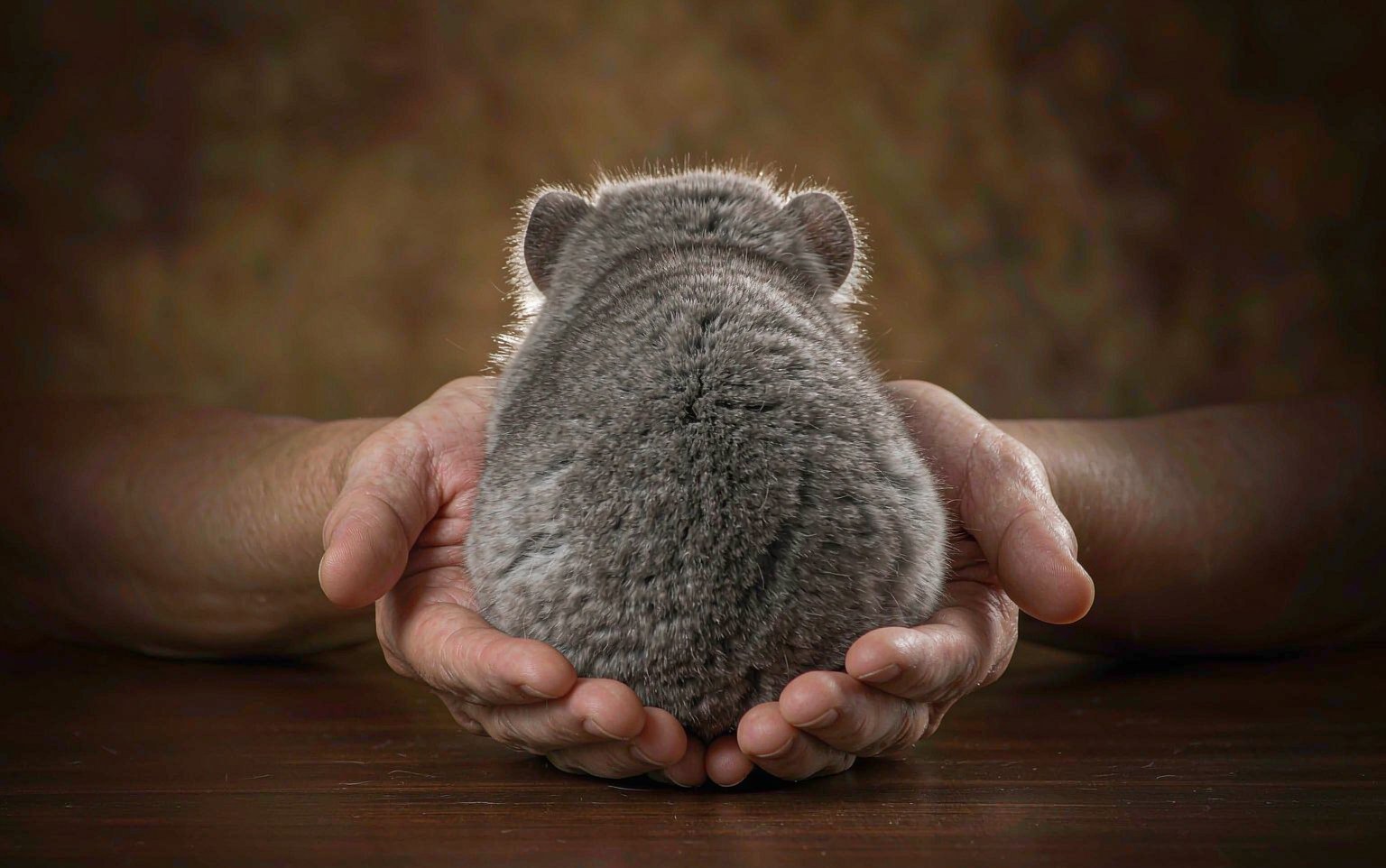
Why Chinchilla Fur Releases So Easily
Wild chinchillas live in rocky, open country where a predator’s first contact is usually a mouthful of fur. Instead of fighting, the coat gives way. The follicles are unusually loosely anchored, and up to 60 hairs can grow from a single follicle, so a patch releases as a clean unit. The skin underneath is normally smooth and undamaged, which is exactly the point: the animal escapes and the coat pays the price.
The trade-off is that the same reflex fires in a living room. Your hand is not a predator, but a sudden grip feels identical to one. Regrowth is slow, typically six to twelve weeks and sometimes longer, and the new patch occasionally comes in a slightly different shade.
The Triggers You Can Control
- Grabbing instead of supporting. Lifting by the fur, the scruff or the tail is the most common cause by far.
- Chasing and cornering. A chinchilla pursued around the cage is already primed to release.
- Loud noise or fast movement during handling, especially from children or other pets.
- Predator scent. Dogs and cats nearby raise stress even when they never touch the cage.
- Fights between cage mates, which can leave bald patches on both animals.
- A new or still-untrusting owner, where any handling still reads as a threat.
What to Do Right After a Fur Slip
Stay calm; the release itself is not painful. Put your chinchilla back and leave him undisturbed for the rest of the day instead of continuing the session. Check the bald area once for broken skin, redness or bites. The skin is usually intact, but open sores, ring-shaped crusts or heavy flaking point to something other than fur slip and need a vet.
Skip the dust bath for 24 hours over a fresh bald patch, because fine dust on exposed skin is irritating, then resume the normal schedule. Avoid unnecessary handling while the coat regrows and keep the routine predictable: same feeding times, same quiet room, same familiar cage layout.
Handling That Prevents a Repeat
| Instead of this | Do this |
|---|---|
| Grabbing a handful of fur | Slide one hand under the chest, one under the hindquarters |
| Lifting by the tail | Support the body; treat the tail base as a guide, not a handle |
| Reaching in while he sleeps | Wait until he is awake and has seen you approach |
| Scooping him out of the cage | Let him walk into a carrier or onto your forearm |
One release is simply a lesson about grip, and most owners only see it once or twice in a chinchilla’s life. Repeated releases without an obvious trigger are different: they can reflect a stressful environment, nutritional gaps or an underlying skin problem, and deserve a veterinary conversation rather than another tweak to your handling technique. Keep a simple note of when each patch appears and how long it takes to close over, because that record is the single most useful thing you can hand a vet.
General husbandry guidance only. Persistent or unexplained fur loss should be assessed by an exotic-species veterinarian to rule out fungal, parasitic and hormonal causes.